


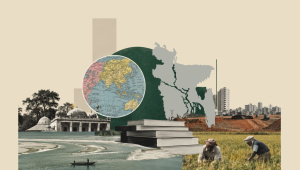
Can Bangladesh produce its own knowledge?
8 September 2026
True emancipation for the Global South lies not in opposing the North, but in building a rigorous research culture.
8 September 2026
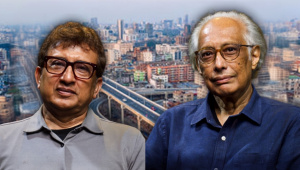
Kazi Khalid Ashraf & Adnan Zillur Morshed on Dhaka's Future / What kind of city do we really want?
19 August 2026
Every year, nearly half a million people move to Dhaka, a population equivalent to an entire city like Cumilla or Mymensingh. As that pressure mounts, how much longer can Dhaka keep absorbing it?
19 August 2026
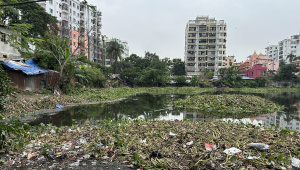
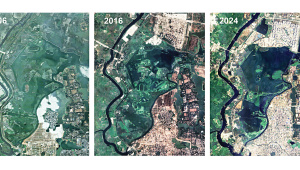
Restore Askar Dighi, revive Chattogram’s ecological memory
3 August 2026
In any civilised society, a historic reservoir such as Askar Dighi would have been protected as a public heritage asset. What can we do today?
3 August 2026
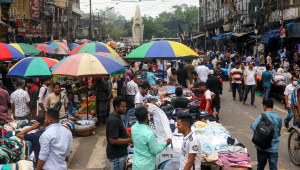
The moral calculus of footpath evictions in Dhaka
27 April 2026
The footpaths of Dhaka have again become a political flashpoint of late.
27 April 2026
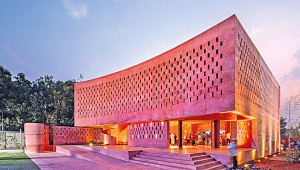
The promises and perils of a ‘Notun Tej’ in Bangladeshi architecture
28 February 2026
Nearly a hundred years ago, in 1927, something “revolutionary” happened in Stuttgart, Germany.
28 February 2026
What does ‘good history’ look like?
4 November 2025
No historian should be able to answer the question on good history without a degree of trepidation, ambivalence, and uncertainty.
4 November 2025

Bangladesh’s eunomia problem
10 January 2025
In the ancient Greek society, eunomia outlined how things should be in an ideal society.
10 January 2025
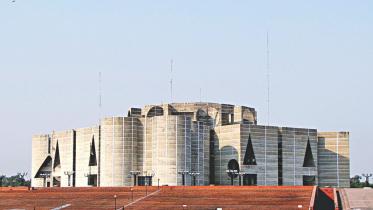
How politics and architecture blended in Dhaka
The American architect Louis Isadore Kahn's Parliament building in Dhaka is considered one of the architectural icons of the twentieth century. Intriguingly, Kahn was not the first choice for the project.
19 August 2018
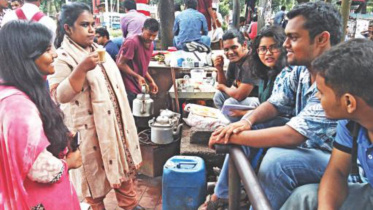
An architectural gem at the political heartland
We know the 1960s in the then East Pakistan as a decade of political agitation. Bangalis fought for self-rule. Streets were filled with activists demanding political emancipation.
6 August 2018
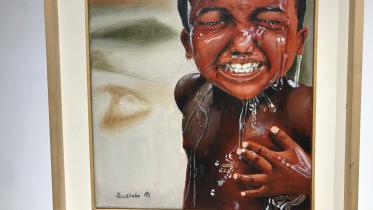
The city and its next generations
It is easy to be stressed out quickly in Dhaka. Roads are insanely congested. Footpaths are far from walkable. The air is unbreathable and the city is often a “smellscape.” Life is not a piece of cake in Dhaka.
30 July 2018
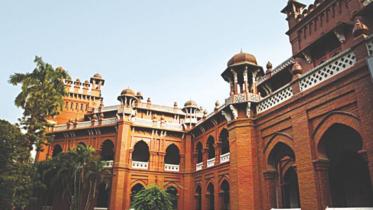
Want to understand the Partition of Bengal? Visit Curzon Hall
On October 16, 1905, Dhaka became the capital of the newly-created province of East Bengal and Assam, in the wake of what is known as the Partition of Bengal (1905–1911).
23 July 2018
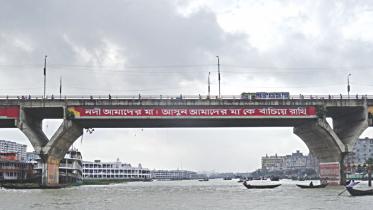
Heartbreak at Sadarghat
Last week I went to Sadarghat with my team to work on a documentary on Dhaka's urban story. We arrived at the launch terminal in the wee hours, just when launches arrive from the country's riverine south. The terminal was quite a sight.
16 July 2018
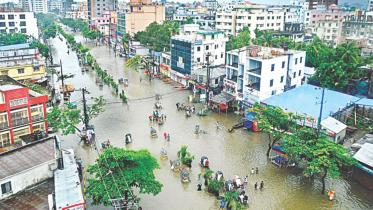
Chattagram, an orphaned city
I went to Chattagram to celebrate Eid with my family. It took me two hours and a half to reach home from the city's Shah Amanat International Airport.
2 July 2018
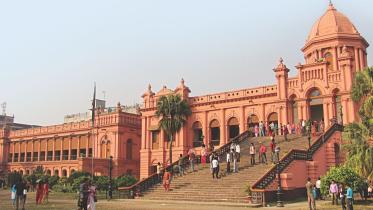
A Palace on the River: Ahsan Manzil
To visit Ahsan Manzil (construction: 1859–1872; historic preservation: 1985–1989; inauguration: as a museum 1992) is to learn the colonial-era history of Dhaka. The 5.5-acre premises of this palace remain today as an architectural reminder of the elite life of the Nawabs of Dhaka during the heyday of the British Raj in the 19th and early-20th centuries.
1 July 2018
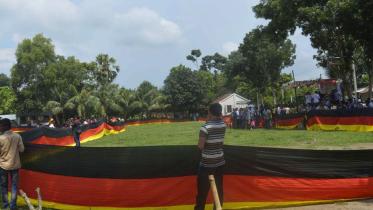
Making sense of Bangladesh's World Cup obsession
British newspaper, The Telegraph, recently reported on Bangladesh's quadrennial FIFA World Cup frenzy this way: “Rival supporters of Argentina's Lionel Messi and Brazil's Neymar fought with machetes in the town of Bandar. One man and his son were critically wounded in the incident, according to police reports.”
25 June 2018
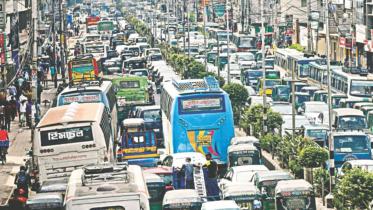
How do we save Dhaka streets from apocalypse?
As the Ramadan market heats up, Dhaka streets are more infernal than ever! Many have asked what would happen to the city's notorious traffic congestion after the JICA-funded metro rail begins operation (Line-6; Uttara to Bangladesh Bank; 16 stops; 20.10 km; 60,000 people/hour). Would it improve Dhaka's road scenario, or be the same old same old?
4 June 2018
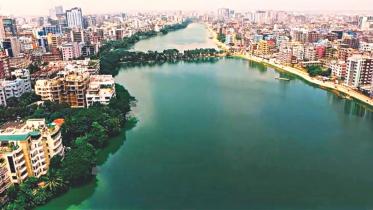
Why Dhaka may disappear one day, like Mohenjo Daro
This was Samayeen Cooper's maiden visit to the country of his grandparents, from his mother's side. He quickly glanced at his watch: 5:37 PM local time, December 14, 2044!
28 May 2018
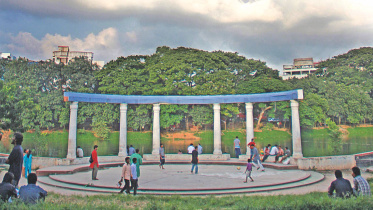
Facing the fear of losing identity
Recently I was invited to present a TEDx talk at the George Washington University in Washington, DC. The theme of the daylong event was “Fear Itself.” I would like to share my talk here, hoping to bring readers' attention to one of the key pathologies of our times.
13 May 2018

Reimagining urban nodes in Dhaka
Dhaka is an intense city. If you find yourself in Gulistan or Farmgate, you understand what urban intensity is. These are examples of extreme urban nodes.
21 February 2018
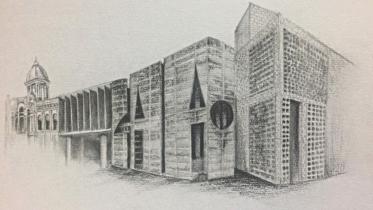
Does architecture define a "new" Bangladesh?
The architectural scene in Bangladesh has been thriving with a “new” energy over the past two decades or so. Bangladeshi architects have been experimenting with form, material, aesthetics, and, most importantly, the idea of how architecture relates to history, society, and the land.
21 February 2018
Why Dhaka is not a walkable city, yet!
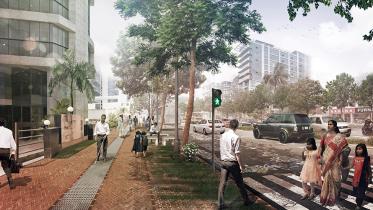
I have been walking around Dhaka, kind of randomly, for the past few months. It was not for health reasons. I was mostly interested in doing a personal assessment of the capital city's walkability.
12 January 2018
Muzharul Islam: An activist architect
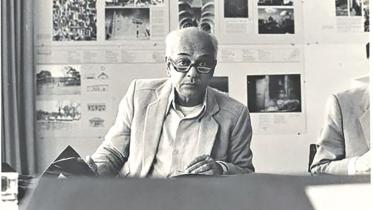
Today, December 25, is architect Muzharul Islam's (1923-2012) 94th birth anniversary. Not only was he Bangladesh's pioneering modernist architect, he was also an activist designer who viewed architecture as an effective medium for social transformation.
24 December 2017
"Khamarbari"— destruction of a heritage site
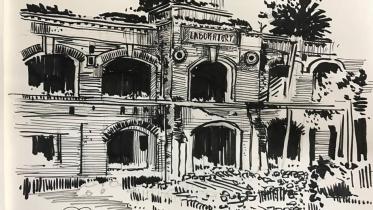
Imagine yourself in the year 1905. Governor General Lord Curzon has just implemented the Partition of Bengal. Curzon Hall and the Supreme Court were yet to be built.
30 October 2017
The death and life of great global cities
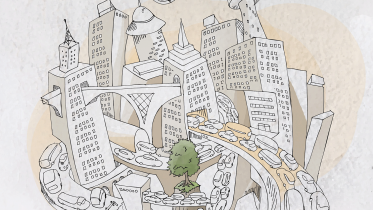
Dhaka was frequently decorated with flyovers, expensive roadside beautification projects including bonsai galleries, and water fountains, while ordinary city people struggled hard to eke out a minimal existence. There was a lot of anger on the street.
29 October 2017
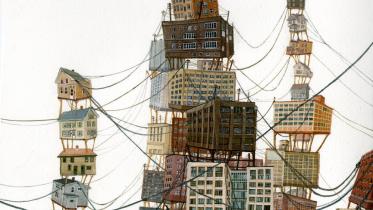
Calming down in Dhaka East
The broader planning question here is: should we let Dhaka expand more or de-escalate its growth frenzy? Should we save Dhaka from over-development by investing in other cities of Bangladesh, thus encouraging decentralisation?
9 August 2017
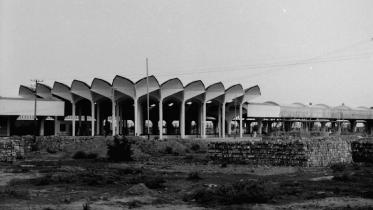
A quiet masterpiece that serves as Dhaka's gateway
These buildings also had a political history. They were the products of what the military regime of Muhammad Ayub Khan called the “Decade of Development” (1958-68), intertwined with West Pakistan's shrewd political strategy of placating East Pakistan's agitating Bengalis through architectural and infrastructure development.
23 July 2017

The Unfinished Task of Teaching History
Teaching history has always been tricky. I have been examining how history is taught in architecture programmes in Bangladeshi
3 June 2017