


ESSAY / Philosophical fraternity of Rabindranath Tagore and Anwar Ibrahim
10 May 2025
In a lecture, Rabindranath proclaimed, “I hope that some dreamer will spring from among you and preach a message of love and therewith, overcoming all differences..."
10 May 2025
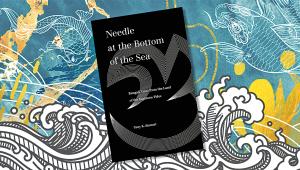
BOOK REVIEW: FICTION / Sufism and the emergence of Bengal’s syncretic culture
28 August 2024
Review of ‘Needle at the Bottom of the Sea: Bengali Tales from the Land of the Eighteen Tides’ (University of California Press, 2023) translated by Tony K. Stewart
28 August 2024

ESSAY / Begum Rokeya: A redoubtable Muslim feminist and educationist
5 July 2024
Rokeya Sakhawat Hossain was an autodidact who became a formidable champion of women’s rights and education when women in South Asia, especially Muslim women, were forced to live in subhuman conditions, almost like animals, or even worse than animals
5 July 2024

ESSAY / Rabindranath Tagore’s engagement with Islamic culture and Muslims
10 May 2024
The English poet W.B. Yeats once expressed his profound admiration for Rabindranath Tagore, describing him as “someone greater than any of us”.
10 May 2024
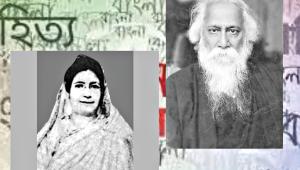
Rabindranath and Rokeya as Educational Pioneers
22 July 2022
Rabindranath Tagore and Begum Rokeya are two iconic figures in South Asian literature and culture. However, their genius was not confined to writing alone but spread in many directions, including the sphere of education.
22 July 2022

A Season of Hope and Despair: Reminiscing My Dhaka University Days
29 April 2022
I am one of the privileged few to have experienced Dhaka University—the nation’s citadel of higher education le plus excellent—from both sides of the spectrum, first as a student and then as an academic.
29 April 2022
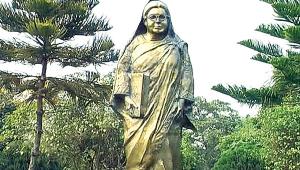
Begum Rokeya’s Non-sectarian, Pluralist-Inclusivist Imagination
4 September 2020
Bengali writer, educationist and pioneering feminist activist, Rokeya Sakhawat Hossain (1880-1932), popularly known as Begum Rokeya, was born at a critical juncture in South Asian history when hostility and bloodshed between Hindus and Muslims was a recurrent experience.
4 September 2020

Nationalism, Patriotism, Cosmopolitanism: Tagore’s Ambiguities and Paradoxes (Part II)
3 April 2020
Like nationalism, Tagore’s perspectives on patriotism are also characterised by certain paradoxes and ambiguities; he was a fervid patriot, yet he openly denounced and deplored the sentiment of patriotism.
3 April 2020

Nationalism, Patriotism, Cosmopolitanism: Tagore’s Ambiguities and Paradoxes (Part I)
The American writer Ralph Waldo Emerson once said, “A foolish consistency is the hobgoblin of little minds, adored by little statesmen and philosophers and divines.” Certainly, Tagore was above this puerile mindset.
27 March 2020