


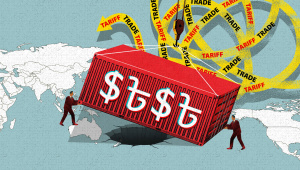
Bangladesh needs to reform its trade policy to boost exports
1 October 2026
Traditional protection is becoming costly in the pursuit of competitiveness
1 October 2026
Quarterly monetary policy: Is caution enough?
1 October 2026
Bangladesh Bank’s first-ever quarterly Monetary Policy Statement is an important institutional change.
1 October 2026
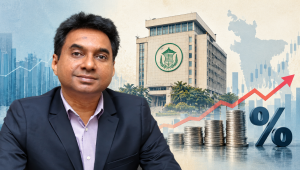
Bangladesh’s first quarterly monetary policy: is caution enough?
30 September 2026
The decision to keep the repo rate unchanged at 9.5 percent is understandable.
30 September 2026

Opinion / Fuel price hike: Who bears the cost?
21 September 2026
The government has yet to explain clearly how it intends to contain these additional inflationary pressures
21 September 2026
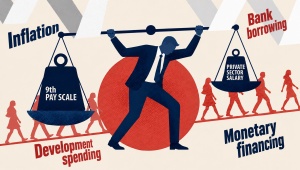
The fiscal risk of a pay rise without revenue reform
9 September 2026
For Bangladesh’s government employees, the new pay scale brings understandable relief after years of high inflation and rising living costs.
9 September 2026
Bangladesh’s external cushion is wearing thin
4 August 2026
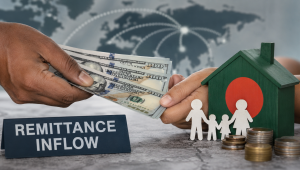
Bangladesh’s latest external sector numbers deserve closer scrutiny than the reassuring headline of rising remittances suggests. A closer reading reveals an economy gradually losing one of its traditional sources of resilience: steady inflows of concessional foreign financing.
4 August 2026
Opinion / Bangladesh's external cushion is wearing thin
3 August 2026
While remittances continue to support foreign exchange earnings, the simultaneous decline in foreign loan commitments and disbursements, coupled with rising debt repayments, points to a tightening external financing environment
3 August 2026
A trillion-dollar ambition needs a stronger investment climate
29 July 2026
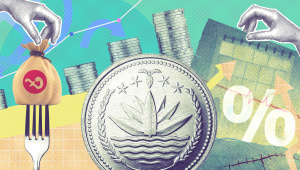
The other day, Prime Minister Tarique Rahman reaffirmed his government’s commitment to transforming Bangladesh into a $1 trillion economy by 2034. While the ambition is welcome, there is a policy puzzle that needs to be encountered
29 July 2026

What should be our development strategies during Covid?
Seeing the varying degrees of Covid that the world has experienced over the last one and a half years, we can safely assume that this pandemic is here to stay.
1 September 2021
Challenges facing SMEs during pandemic
In Bangladesh, small and medium enterprises (SMEs) have heterogeneous characteristics, which are evident from their diverse business activities. However, the discussion on SMEs has a fundamental problem related to the definition and scope.
3 August 2021
Covid-19 recovery: Contexts and priorities in Bangladesh
Around a year and a half have passed since the onset of the Covid crisis.
4 July 2021
Expectations from budget
This year’s national budget will be the second to be implemented amid the ongoing unprecedented economic and social crisis brought on by Covid-19.
2 June 2021

Stimulating private investment in times of pandemic
In Bangladesh, despite the gradual rise in the investment-GDP ratio over the past three decades, private sector investment, in proportion to GDP, had remained stagnant for years even before the onset of Covid-19. The Covid-19 crisis intensified the problem.
8 May 2021

Strategies to address Covid-19 induced labour market challenges
Covid-19 deeply affected the labour market in Bangladesh. It intensified some of the existing challenges and brought about a new set of problems. A large number of people either lost employment or income and many are also experiencing intense job insecurity and uncertainty.
17 April 2021

Regional integration in the Bay of Bengal: In search of a new agenda
Academics, policymakers and other stakeholders in the Bay of Bengal region and beyond agree on the need for greater integration in this region.
22 March 2021

How much has the labour market recovered?
Despite signs of recovery in the economy, there is no denying the fact that the impact of Covid-19 on the labour market can be far reaching.
20 March 2021

Strategies to tackle pandemic induced poverty in Bangladesh
The Covid-19 pandemic has resulted in an unprecedented rise in poverty in Bangladesh in a very short time span.
2 February 2021
Setting development priorities right in 2021
As the Covid-19 pandemic left a deep dent on the development trajectories of Bangladesh, the country must set its development priorities right in 2021. Bangladesh aims to achieve the stiff Sustainable Development Goals (SDGs) by 2030, and it aspires to become an upper-middle-income country by 2031.
2 January 2021

Covid-19 and the road to recovery in Bangladesh
Covid-19 has generated hugely distressing effects on the economy of Bangladesh.
3 November 2020
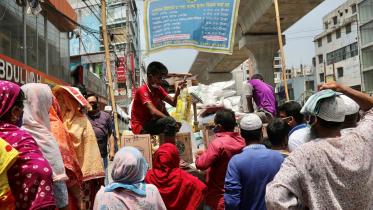
Eight new development challenges triggered by Covid-19
Covid-19 has brought about an unprecedented crisis in human history in terms of its dimension and scale.
7 October 2020
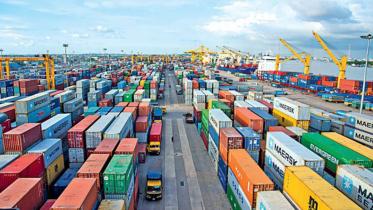
Covid-19 and the challenges of trade for Bangladesh
The Covid-19 induced economic crisis has affected the export and import of Bangladesh by large margins. The economic crisis has been exacerbated by the closure or limited operation of businesses during the lockdown at home and abroad.
5 September 2020
The budget falls short to be Covid-19 responsive
The fundamental objective of the budget for the next financial year (FY21) should have been to resolve the unparalleled health and economic threats raised by the Covid-19 pandemic, and to restore economic stability. Though the budget has acknowledged the context, it falls short to be a Covid-19 responsive budget.
13 June 2020
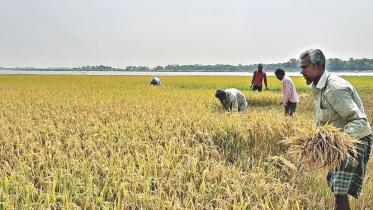
Four key areas that need urgent attention
The economic crisis caused by Covid-19 is deepening in Bangladesh every day.
6 May 2020

Case for a united South Asian response to Covid-19
The effects of Covid-19 on the national economies and the global economy are going to be unprecedented.
8 April 2020
How the SDG costing exercise can help meet the targets
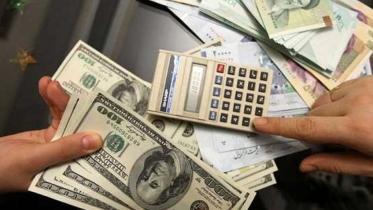
The Sustainable Develop-ment Goals (SDGs) are some ambitious development objectives with a total of 17 goals with 169 targets spanning economic, social and environmental dimensions of sustainable development.
6 January 2020
It is our ‘competitiveness‘ which is holding us back
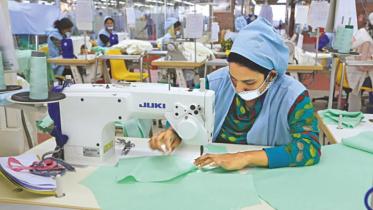
There are two contrasting contexts as far as the competitiveness of Bangladesh economy is concerned. On the one hand, the economic growth rate in Bangladesh has been increasing since 2013;
2 December 2019

Three cases of ‘policy paralysis’ in Bangladesh
“Policy paralysis” can be described as a situation where critically important laws and reforms are not undertaken or, even if undertaken, not implemented as a result of a lack
4 November 2019
The political economy of the fourth industrial revolution
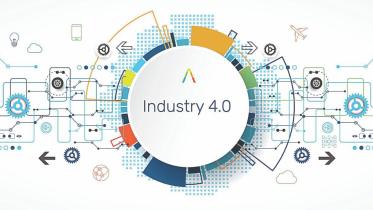
There have been four waves of industrial revolution so far in the history of mankind. The first industrial revolution (from the mid-seventeenth century to the mid-eighteen century) took place in Europe and the United States. Dr Selim Raihan is Professor, Department of Economics, University of Dhaka, Bangladesh, and Executive Director, South Asian Network on Economic Modeling (SANEM). Email: selim.raihan@econdu.ac.bd
25 September 2019