


Budget unlikely to produce real benefits
It is rare to see such a progressive policy framework paired with such a weak fiscal foundation.
The proposed national budget for fiscal year 2026-27 carries the language of a welfare-oriented state with expanded attention to disadvantaged groups, but its weak fiscal architecture and uncertain macroeconomic assumptions may significantly constrain its ability to deliver meaningful benefits, according to an assessment by the Citizens’ Platform for SDGs, Bangladesh.

Presenting its analysis at a media briefing in Dhaka, the platform said the budget’s policy ambitions are not adequately matched by its revenue strategy, expenditure framework and underlying growth model. It argued that while the document signals social priorities, the fiscal design remains fragile and difficult to implement.
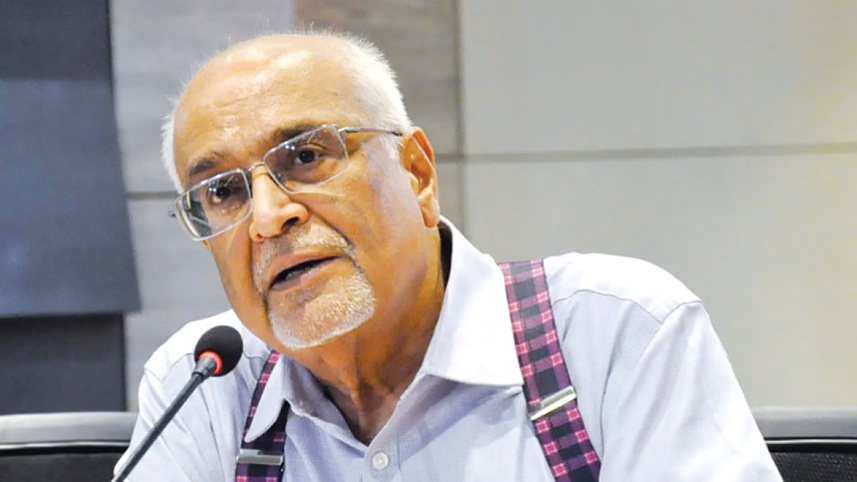
“The policy framework has been built on a weak and almost ineffective fiscal structure. It is rare to see such a progressive policy framework paired with such a weak fiscal foundation,” said Debapriya Bhattacharya, convenor of the platform and Distinguished Fellow at the Centre for Policy Dialogue (CPD).
He questioned the realism of the macroeconomic assumptions underpinning the budget. “It appears weak, inattentive and lacking professionalism.”
The analysis highlighted persistent structural pressures in the economy, noting that growth remains insufficiently inclusive. It pointed to the combined impact of slowing output, elevated inflation, and stagnant real incomes, all of which continue to erode household welfare.
Bangladesh’s economic growth has slowed to just above 4 percent in the current fiscal year, while inflation remains close to double digits, it said, adding the wage growth has lagged behind price hikes, resulting in continued loss of purchasing power for workers.
Food inflation remains particularly high, disproportionately affecting lower-income households that spend most of their income on essential goods. The Citizens’ Platform noted that this imbalance is deepening inequality pressures even during periods of moderate growth.
Domestic savings have also declined significantly over recent years, reducing the economy’s capacity for investment-led expansion. The report warned that weaker savings combined with subdued investment will ultimately constrain job creation.
“The poor are squeezed twice -- first through falling real wages and then through reduced future employment opportunities,” the analysis observed.
The platform also raised concerns over weakening performance in labour-intensive sectors. Manufacturing growth has slowed sharply, while export earnings from the ready-made garments sector have declined in recent months.
Given the sector’s dominant role in export earnings and female employment, any prolonged slowdown could have significant social and labour market implications, it added.
Agriculture, micro, small and medium enterprises, and informal services continue to absorb large portions of the workforce, it said, adding that these sectors are not generating sufficient productivity gains or quality employment opportunities to drive sustained upward mobility.
On the fiscal side, the analysis said, the budget sets ambitious targets for revenue mobilisation, expenditure expansion and deficit management. It aims to raise the tax-to-GDP ratio to just above 10 percent while increasing public spending to nearly 14 percent of GDP, keeping the deficit at a manageable level.
However, the Citizens’ Platform questioned the feasibility of these targets, particularly given past shortfalls in revenue collection. It noted that achieving the projected revenue growth would require a sharp improvement in tax performance from an already weakened base.
A key concern raised was the heavy reliance on indirect taxation. Value-added tax (VAT), customs duties and supplementary duties constitute a major share of expected revenue growth. “Since indirect taxes are not income-sensitive, this structure risks placing a disproportionate burden on lower- and middle-income households.”
Although the tax-free income threshold has been slightly raised, the platform noted that certain income groups face higher marginal tax rates, potentially offsetting some of the intended relief.
The analysis also warned that higher import-stage taxes on fuel, construction materials and consumer goods could gradually raise living costs across multiple sectors.
The budget increases social protection allocations and expands digital payment systems covering millions of beneficiaries, it said. However, the Citizens’ Platform said more than half of total social protection spending remains allocated to non-targeted categories, including public service pensions.
“As a result, the effectiveness of social assistance in reaching the most vulnerable groups remains limited.”
 For all latest news, follow The Daily Star's Google News channel.
 The analysis further argued that the overall allocation still falls short of the adequacy standards outlined in national social security strategies.
Significant gaps persist, particularly for informal workers, urban poor populations and groups such as climate-affected communities and marginalised social minorities. The absence of unemployment protection and a dedicated urban safety net remains a key policy gap.
Several development experts and civil society representatives echoed concerns about implementation challenges across key sectors.
Faiyazuddin Ahmed of WaterAid Bangladesh said the budget does not provide a clear roadmap for ensuring universal access to safe drinking water, despite its legal recognition as a basic right.
He noted the absence of a comprehensive investment strategy to support equitable water provision.
From the education sector, Zarin Mahmud Hossain of CholPori questioned whether digital learning initiatives can succeed without adequate teacher training and infrastructure.
“Many schools already possess equipment that remains underutilised due to connectivity and capacity gaps.”
Tajin Hossain of Educo Bangladesh highlighted the continued invisibility of children in the budget framework. With millions of working-age children outside formal schooling systems, she said the lack of targeted interventions remains a serious concern.
Energy expert Ijaz Hossain, former professor at Bangladesh University of Engineering and Technology (BUET), criticised the continued reliance on large project-based approaches in the power sector and questioned the efficiency of existing subsidy structures.
Farah Kabir of ActionAid Bangladesh called for stronger gender-responsive budgeting, particularly for women in informal employment.
Rasheda K Choudhury, executive director at Ganashakkorota Ovijan welcomed the move to increase the allocation in education spending but stressed the need for stronger implementation and support services for disadvantaged students.
Besides, she said, the washing and hygiene facilities for the students should get priority. “The government should initiate a PPP model to provide hygiene products to schools in villages for free of cost.”
Debapriya Bhattacharya said the broader economic strategy outlined in the budget -- centered on stabilisation, reform and recovery -- must ultimately be assessed from the perspective of vulnerable citizens.
He said that stabilisation efforts depend heavily on inflation control, fiscal balancing, debt management and food security. However, sustainable recovery, he argued, will require deeper structural reforms that go beyond short-term fiscal adjustments.
“Without reforms, economic recovery will not be sustainable,” he said, adding that ignoring the concerns of disadvantaged groups during the stabilisation phase would undermine the very goal of stability.
Comments