


Banks urge BB to exclude SME loans from spread cap

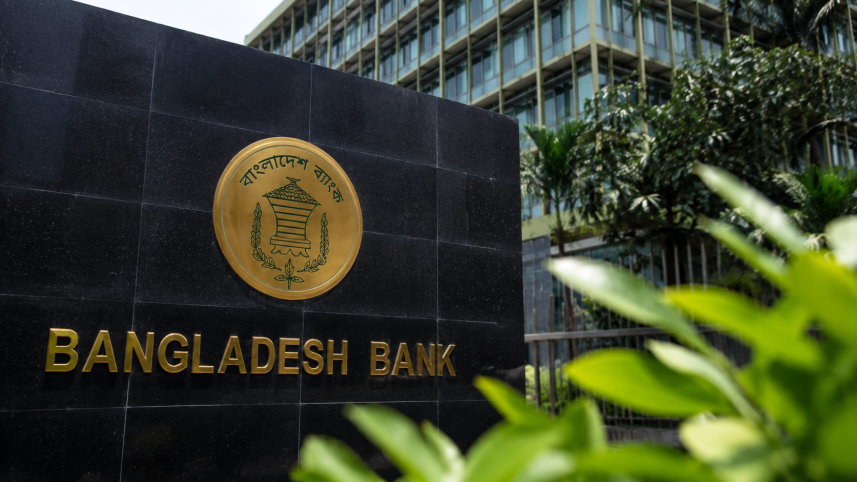
Commercial banks have asked the Bangladesh Bank to exempt small and medium enterprise (SME) loans from its new 4 percent cap on interest rate spreads, arguing that these loans cost more to manage than other types of lending.
The request came in a recent letter to the BB governor from the Association of Bankers, Bangladesh (ABB), a forum of bank executives.

The central bank, on June 29, instructed banks to keep the weighted average difference between their lending and deposit rates, known as the intermediation spread, within 4 percentage points for all sectors except credit cards and consumer finance. Banks earn money by charging borrowers more interest than they pay depositors. That overall gap is the spread the central bank is now capping.
The BB said it took the decision to ensure that borrowing costs remain reasonable for businesses and productive sectors. As of May, the weighted average deposit rate across the banking sector was 6.22 percent, and the weighted average lending rate was 11.92 percent -- a spread of 5.70 percent, well above the new cap, according to central bank data.
Banks say SME loans are more expensive to manage than other loans, mainly because handling many small loans takes more staff time and paperwork per taka lent than handling fewer, larger loans. That’s why SME loans already carry higher interest rates than most others: currently around 15 to 16 percent, compared with 13 to 14 percent for most other loans. Credit card rates are higher still, which is part of why BB left credit cards out of the cap entirely.
Bank executives have pushed back on the cap more broadly, not just for SMEs.
They argue that BB’s calculation is based on the interest rate banks are supposed to charge, but doesn’t account for how much of that money banks actually collect. A large share of loans are now in default, or have had their repayment terms rescheduled, meaning banks often earn little or nothing from them.
Bank executives recently raised the issue directly with BB Governor Md Mostaqur Rahman, urging that the regulator base the cap on their actual returns, not the rates on paper.
Contacted, Mashrur Arefin, chairman of the ABB, told The Daily Star that a rigid 4 percent spread cap distorts market-based loan pricing, which should reflect the policy rate, liquidity, inflation, borrower risk and operating costs -- not an administrative ceiling.
“It weakens monetary policy transmission, limits banks’ ability to price risk, discourages efficient banks from expanding, and may reduce credit growth,” he said.
Mashrur, who is also the managing director of City Bank, said the cap could also undermine banks’ financial intermediation role, discourage competition, and ultimately slow investment, employment and economic growth. “A more effective way to lower borrowing costs is through lower inflation, lower policy rates and stronger competition.”
He said the effect would hit SMEs hardest, since SME lending already involves higher administrative costs, more risk of default, and more monitoring than lending to large corporations.
A flat 4 percent spread cap makes many SME loans commercially unviable, prompting banks to shift toward lower-risk corporate borrowers, the ABB chairman said, adding that this would restrict formal financing for small businesses, weaken entrepreneurship and job creation, and push many SMEs toward costlier informal lenders -- the opposite of the policy’s intended objective.
The difficulty is already familiar to small business owners. Taslima Miji, an SME entrepreneur, said high interest rates are a major obstacle to her business.
“It is very difficult to run a business by borrowing at such high interest rates. Therefore, lending rates should be reduced. However, we often cannot even obtain loans because of the numerous conditions and stringent requirements imposed by banks,” she said.
In FY25, banks disbursed Tk 2,05,493 crore in SME loans, down by nearly 9 percent from FY24, BB data showed.
Officials of the central bank said overall private sector credit growth is currently low, which is why SME loan disbursement did not pick up.
Besides regular SME loan disbursement, the cottage, micro, small and medium enterprise (CMSME) sector will receive Tk 5,000 crore in low-interest loans under the BB-announced stimulus package to revive the country’s struggling private sector.
 For all latest news, follow The Daily Star's Google News channel.
Comments