


Finance Act 2026 needs stronger tax reforms
After the enactment of the Finance Act 2026, a common perception is that these are ambitious and challenging to implement. Our tax-to-GDP ratio has remained stagnant at around 6-8 percent for decades. The world’s minimum average is reportedly 12 percent. If we are to raise it to 15 percent, the revenue target should be at least Tk 15 lakh crore instead of the targeted Tk 7 lakh crore to keep pace with our neighbours and other Asian economies. The question is whether we have prepared the ground for sizeable revenue collection, with widespread tax evasion. The answer is simply no. Our taxation system is characterised by a low tax base and a lack of measures to ensure transparency and reduce tax evasion.
Unlike in recent years, many pro-business measures have been enacted this year. These include reducing deposits required for appeals and tribunal applications; increasing the admissible excess perquisites limit from Tk 20 lakh to Tk 25 lakh; allowing entertainment expenses up to 4 percent of income or actual expenses, whichever is lower; and raising the promotional expense limit from 0.5 percent to 1 percent of turnover. Withholding tax on transportation services has been reduced to 2 percent from 5 percent, while that on cleaning, security and human resource services has been reduced to 1 percent from 2 percent. Quarterly advance tax will now apply to taxpayers whose annual income exceeds Tk 10 lakh, compared with Tk 6 lakh previously.

The allowable acquisition cost of motor vehicles for depreciation has increased from Tk 30 lakh to Tk 60 lakh. The law has also redefined and renamed “Minimum Tax” as “Advance Tax, Final Tax Liability and Turnover Tax”. There is also an incentive for early submission of tax returns. The treatment of disallowances has been simplified. Non-deduction of tax, excess expenditure on entertainment, overseas travel and promotional expenses, free medical samples and excess perquisites are now added to business income. Earlier, these were treated as special business income and taxed separately.
To improve transparency and revenue collection, a new clause requires companies and other taxpayers, except individuals, with turnover of Tk 10 crore or more or capital exceeding Tk 5 crore to have income computation sheets prepared and certified by a chartered accountant, cost and management accountant or income tax lawyer. Our trade sector has expanded from the capital to upazilas and economic growth centres across the country. Yet tax collection from this sector remains frustrating because of corruption and a lack of proper attention and measures by the NBR.
Political will is essential to increase tax revenue to ensure the required growth in tax revenue and economic growth. Ground realities and NBR capacity appear insufficient even to collect the present level of revenue. Honest and regular taxpayers are being pressured into undue tax payments through arbitrary disallowances and faulty assessment orders, while unjustified appeal and tribunal orders cause further suffering. Despite many hopes and measures, foreign direct investment has not improved. Many foreign investors have closed their businesses and left the country. There appears to be no exit interview with these investors.
Corruption, tax evasion, inadequate financial reporting, the absence of tax audits and limited digitalisation remain common problems in our taxation system. Bangladesh still relies heavily on cash transactions, giving ample scope for tax evasion. There is no alternative to digitalisation. These problems need to be reduced to a tolerable level, if not fully eliminated. Tax reforms in Bangladesh are long overdue and challenging, but essential. The question is whether we are paying enough attention to them.
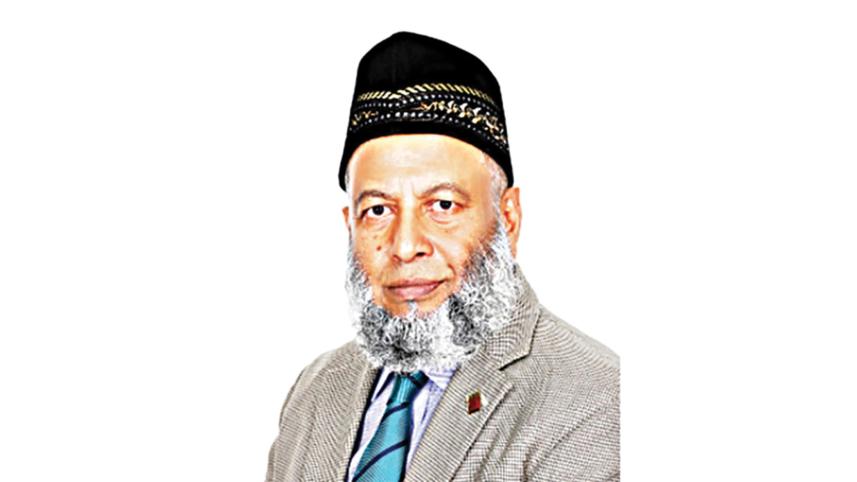
The writer is a senior partner of Hoda Vasi Chowdhury & Co and past president of ICAB
 For all latest news, follow The Daily Star's Google News channel.
Comments