


Tax cuts poised to boost EV market

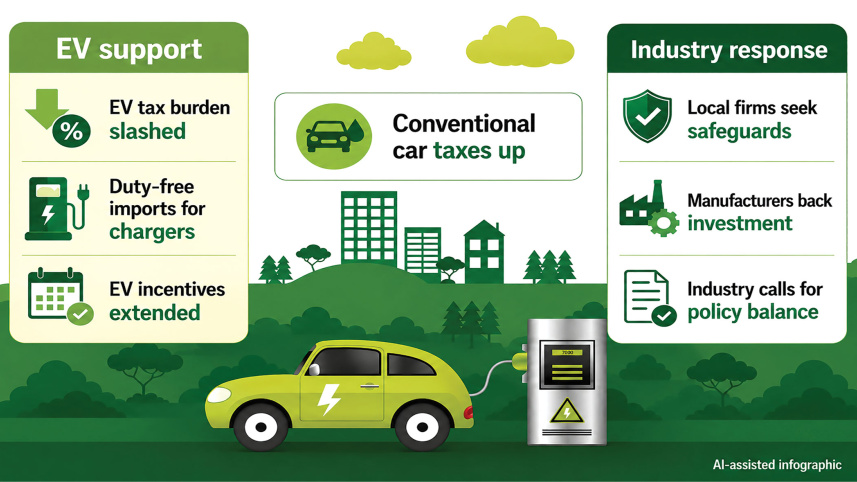
The government’s proposed tax incentives and duty cuts for electric vehicles (EVs) in the fiscal year 2026-27 budget are expected to give a significant boost to Bangladesh’s nascent EV market, industry insiders said.
The measures signal official recognition of electric mobility and could accelerate the country’s shift towards cleaner transport. However, some business leaders warn that the incentives may favour imports over domestic manufacturing.

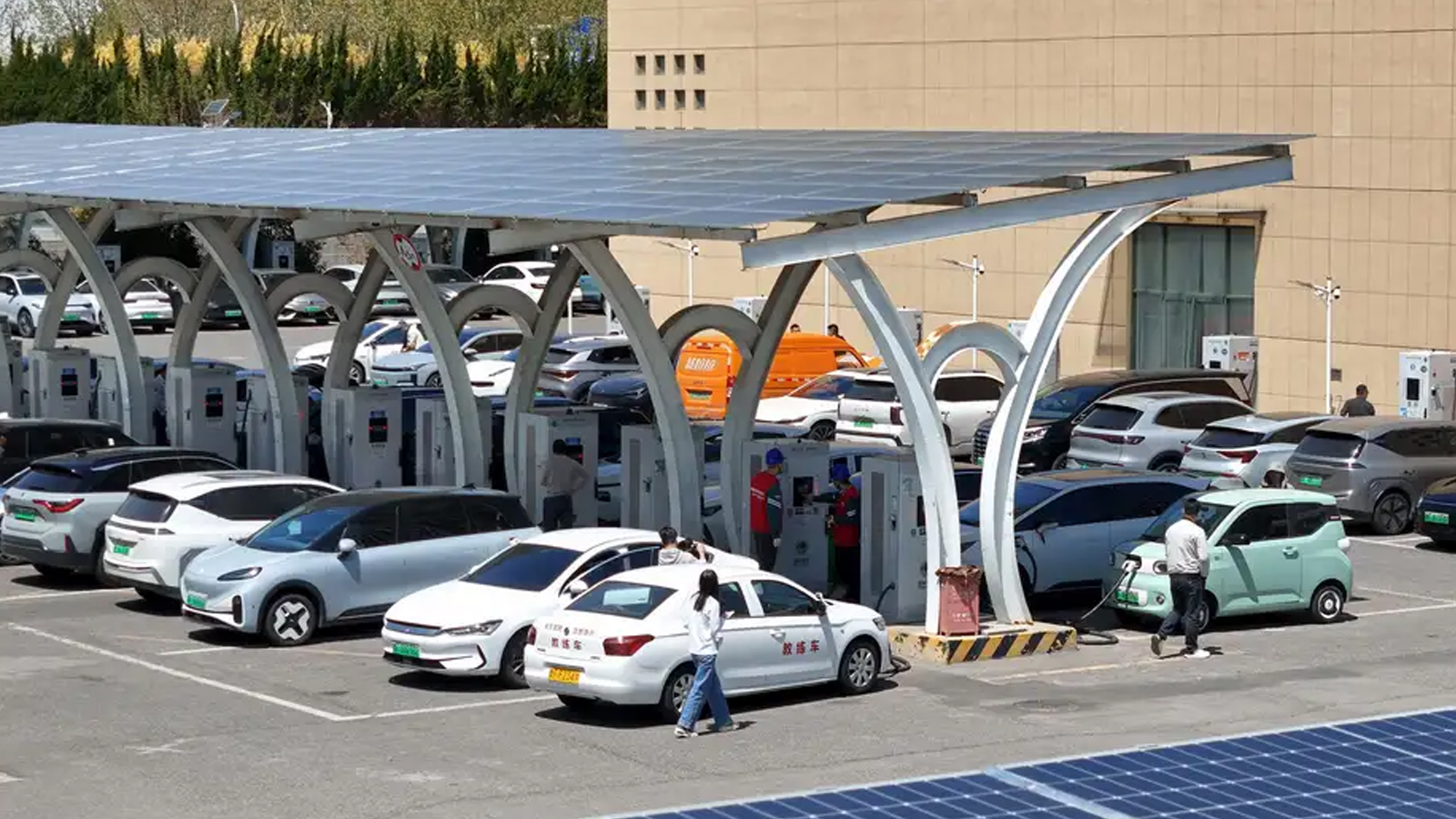
In the proposed budget, the government has extended tax incentives for electric buses and trucks until June 30, 2030, to reduce pollution and strengthen energy security.
It has also proposed substantial tax cuts on imported EVs. The total tax burden on electric cars valued at up to $25,000 will fall to 64 percent from 93 percent, while EVs priced at up to $50,000 will face an 80 percent tax burden.
To support charging infrastructure, all customs duties and taxes on imported EV chargers and charging stations will be removed from the current 39.75 percent rate. Tax concessions have also been extended
To support charging infrastructure, all customs duties and taxes on imported EV chargers and charging stations will be removed from the current 39.75 percent rate. Tax concessions have also been extended to EV manufacturing, battery production, and commercial electric buses and trucks.
According to the Bangladesh Road Transport Authority (BRTA), 669 EVs had been registered in the country as of May 14, 2026.
Formal EV registration began only in September 2022, after the authority introduced guidelines allowing battery-powered vehicles to be registered for the first time. Registrations have risen steadily since then, driven by changing consumer preferences, higher fuel prices and growing awareness of alternative transport options.
At the same time, the government is raising taxes on conventional vehicles. The total tax burden on imported petrol and diesel cars with engine capacities between 1,200cc and 1,600cc is proposed to increase to 155.88 percent from 132.36 percent.
Plug-in hybrid electric vehicles (PHEVs) will also receive tax relief. The total tax burden on PHEVs of up to 1,800cc will fall to 73.44 percent from 93.16 percent, while those of up to 2,000cc will see taxes reduced to 96.10 percent from 132.36 percent.
Business leaders have welcomed the government’s push towards electric mobility but voiced concerns about its implications for local industry.
Hafizur Rahman, chairman of Runner Group, the Bangladesh distributor of Chinese EV maker BYD, said the proposed duty cuts would primarily benefit higher-income consumers purchasing relatively expensive EVs, while offering limited advantages to buyers of lower-priced models.
He also questioned the decision to allow duty-free imports of completely built-up (CBU) electric trucks, arguing that it would do little to create jobs.
Duty-free imports of truck chassis, by contrast, would support local body-building companies, he said. At least 20 such firms have already been established in Bangladesh and could generate employment if given greater opportunities.
“The government should prioritise industrial development and job creation when formulating fiscal policies,” he said.
Rahman argued that the proposed budget offers stronger incentives for trading than for manufacturing and industrial expansion.
Despite these concerns, companies investing in local EV production welcomed the measures.
Mir Masud Kabir, managing director of Bangladesh Auto Industries Limited, which is establishing the country’s first EV manufacturing plant at Bangabandhu Sheikh Mujib Shilpa Nagar, described the duty concessions as an important acknowledgement of the sector’s potential.
 For all latest news, follow The Daily Star's Google News channel.
 He said the measures reflect the government’s commitment to cleaner transport while strengthening confidence among consumers and investors.
According to Kabir, the incentives could help lay the foundations for a domestic EV ecosystem. However, he cautioned that low-duty imports could intensify competition in the commercial EV segment.
Some Chinese manufacturers, he said, can export EVs at prices below production costs, giving them a significant competitive advantage. Without adequate policy support, local manufacturers may struggle to compete with imported vehicles, Kabir added.
He stressed the need for a balanced policy framework that promotes EV adoption while supporting domestic manufacturing, technology transfer, industrial development and employment.
The government’s decision to cut duties on EVs while raising taxes on petrol and diesel vehicles with engine capacities between 1,200cc and 1,600cc is likely to increase vehicle prices for middle-income consumers and affect the reconditioned car market, according to BARVIDA President Abdul Haque.
Haque said Bangladesh’s automotive sector, including its servicing and technical infrastructure, remains largely geared towards conventional and hybrid vehicles.
He also questioned the revised engine-capacity bands, noting that the market has traditionally been structured around 1,000cc, 1,300cc and 1,500cc categories. The changes, he said, could create uncertainty for importers and buyers.
Comments