


Bangladesh risks losing franchise investment over tax complexity

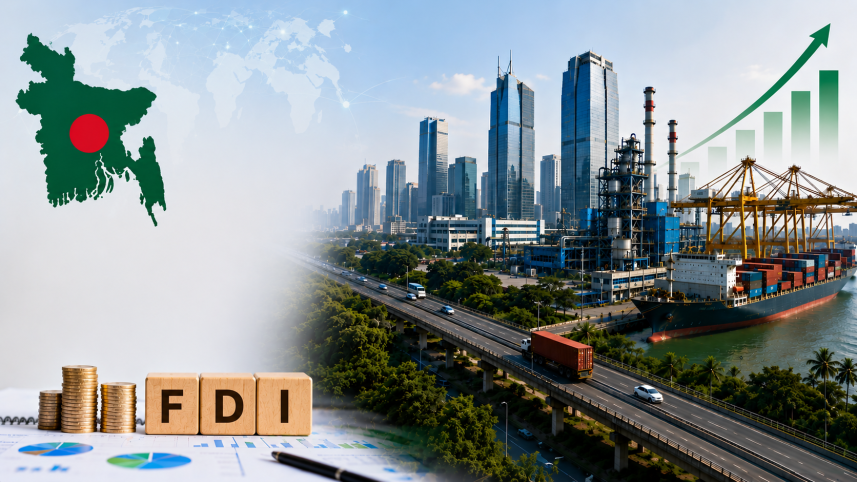
Bangladesh’s economy is currently at a crucial turning point. On one side, the country faces global economic uncertainty, a dollar crisis, stagnant investment, and rising unemployment.
On the other, Bangladesh has a large young population, a rapidly growing urban middle class, and an expanding consumer market. Between these two realities, the international franchise industry has the potential to create new economic opportunities for the country.

Globally, franchising is no longer just a business model; it has become a powerful driver of investment, technology transfer, employment generation, and service-sector development.
Countries such as the United States, Malaysia, Thailand, Vietnam, and the United Arab Emirates have successfully used the franchise sector to attract foreign investment and strengthen their domestic economies. Unfortunately, Bangladesh has not yet been able to fully capitalise on this opportunity.
As Bangladesh transitions from a lower-middle-income country to a developing economy, increasing foreign direct investment (FDI) and attracting international brands remain major challenges. In this context, the international franchise sector can become an effective economic tool.
However, having a large consumer market alone is not enough. Investors also require a modern, transparent, and business-friendly tax system to build confidence.
Global franchise brands such as McDonald’s, Starbucks, KFC, Uniqlo, and 7-Eleven do more than simply operate businesses in foreign countries. They bring investment, technology, modern management practices, employment opportunities, and high-quality service standards.
Bangladesh has significant potential to attract such brands due to its population of nearly 170 million people, a growing middle class, and an urban consumer culture. However, a complicated tax structure, policy uncertainty, and administrative barriers continue to discourage many foreign investors.
Consumer behaviour among the younger generation in cities like Dhaka, Chattogram, and Sylhet has changed significantly in recent years. Demand for international-standard food, retail products, healthcare, education, technology-driven services, and lifestyle brands is increasing rapidly.
As a result, many global brands are now interested in entering the Bangladeshi market. The key question, however, is whether Bangladesh is ready to welcome such investment.
Unfortunately, the existing tax system remains largely unfriendly to investment. In many cases, it is complicated, unpredictable, and costly. International investors evaluate not only market size, but also the ease of doing business, tax stability, and administrative transparency. This is where Bangladesh continues to fall behind.
When an international franchise brand plans to enter Bangladesh, it must navigate multiple taxes and administrative requirements, including VAT, advance tax, withholding tax, import duties, trade licences, and royalty taxes.
Frequent policy changes further weaken investor confidence. As a result, many international brands either lose interest in entering the market or operate on a limited scale.
According to current guidelines from the Bangladesh Investment Development Authority (BIDA), international franchise companies are allowed to remit up to 6 percent of their business turnover to their parent companies through official banking channels, subject to Bangladesh Bank approval and payment of applicable taxes on royalties, licence fees, technical service fees, and related support services.
However, Section 55(e) of the Income Tax Act 2023 has introduced a major restriction. Under this provision, if a company’s expenses on royalties, licence fees, technical services, or similar payments exceed either 6 percent of turnover or 15 percent of net business profit, whichever is lower, the excess amount is not treated as an allowable business expense for tax purposes.
This creates serious financial difficulties for franchise businesses. If a company incurs losses during a financial year but still pays royalties or technical support fees, the tax authority may fully or partially disallow those expenses. The disallowed amount is then treated as taxable income, forcing the company to pay additional taxes. This has a significant negative impact on international franchise operations.
The problem becomes particularly severe during the early stages of business operations. Most international brands initially invest heavily in market expansion, infrastructure development, employee training, technology transfer, and brand establishment. During this period, many companies may operate at a loss.
Yet, without net profit, they are unable to fully claim these legitimate business expenses. Even profitable companies face strict limitations on royalty and technology fee transfers. Consequently, Bangladesh appears to international investors as a restrictive and tightly controlled market, creating negative sentiment that may discourage future investment.
While the purpose of this provision may be to increase tax revenue, it could unintentionally reduce long-term foreign investment. Compared with many South and Southeast Asian countries, Bangladesh still receives relatively low levels of foreign investment despite its enormous potential.
The entry of global franchise brands could create a new wave of investment not only in food and retail but also in healthcare, education, logistics, tourism, technology, and entertainment. This would strengthen the urban economy, increase foreign currency inflows, and support the growth of a modern service-based economy.
 For all latest news, follow The Daily Star's Google News channel.
 At the same time, the franchise sector could generate substantial employment opportunities. Bangladesh’s greatest strength is its young workforce. Every year, thousands of young people enter the job market, but employment generation has not kept pace.
International franchise businesses can help address this challenge by creating jobs for sales personnel, managers, accountants, IT professionals, marketers, and supply chain specialists. Beyond urban areas, local agriculture, food processing, packaging, transportation, and logistics industries would also benefit through stronger business linkages.
More importantly, international franchises can help improve the overall quality of Bangladesh’s economy. The arrival of global brands not only means opening new outlets; it also introduces modern management systems, technology-driven operations, quality-control practices, and higher customer-service standards.
Local businesses are then encouraged to compete internationally, thereby improving market standards and creating a more efficient business environment.
To make this vision a reality, Bangladesh must undertake significant tax reforms. Through coordinated efforts by the Government of Bangladesh, the National Board of Revenue (NBR), and BIDA, several important steps can be taken to support existing franchise businesses and attract new international investors.
First, Bangladesh needs a long-term and stable tax policy for international franchise businesses. Investors want clarity regarding the tax structure over the next five to ten years. Sudden tax increases and policy changes discourage investment. Therefore, a predictable and consistent tax framework must be ensured.
Second, taxes on royalties, licence fees, and technical support fees should be reduced to a reasonable level. Section 55(e) of the Income Tax Act 2023 should also be amended to revise or replace the restriction limiting expenses to 6 percent of turnover or 15 percent of net profit, whichever is lower.
Currently, the additional tax burden and disallowance of expenses make Bangladesh a comparatively expensive market for international brands. In reality, global franchises contribute much more than profits; they bring technology, expertise, management skills, and international business standards. These payments should therefore be viewed as long-term economic investments rather than unnecessary expenses.
Third, Bangladesh may consider introducing temporary tax holidays or incentive schemes for new international investments, particularly in sectors such as education, healthcare, tourism, and technology. Such incentives could deliver long-term economic benefits.
Today, the global economy is actively searching for new investment destinations. Many international companies are exploring South Asia as an alternative market outside China. If Bangladesh can implement bold, modern, and investor-friendly tax reforms now, the international franchise sector could become a major source of investment, employment, technology transfer, and urban economic growth.
Otherwise, Bangladesh risks remaining trapped in the same cycle — full of potential, but unable to convert that potential into real investment due to policy and tax-related complications.
Most importantly, Bangladesh must establish itself as a credible and reliable economy in the eyes of foreign investors. Investors value policy consistency, legal transparency, and administrative stability even more than low tax rates.
The writer is a fellow chartered accountant and a financial sector analyst. He can be reached at faysal.aqc@gmail.com.
Comments