


El Niño and its effects on Bangladesh’s agriculture

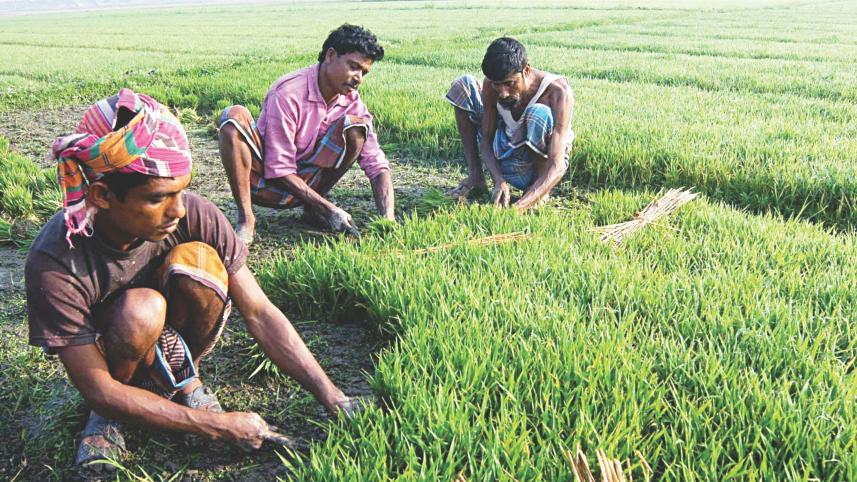
As El Niño reshapes Bangladesh’s weather patterns with unusual heat, erratic rainfall and warmer winters, the country’s farms and the food security of millions face growing challenges. In 2026, this evolving climate phenomenon has emerged as an increasingly important concern for Bangladesh’s agriculture.
Recent warnings from the World Meteorological Organization (WMO) and the Food and Agriculture Organization (FAO) suggest that the challenge may extend beyond drought. An unpredictable combination of heatwaves, rainfall variability, excessive rainfall, flooding and dry spells could disrupt farming.

The WMO reported on July 31, 2026, that a strong El Niño was developing and expected to intensify during August–October. Sea-surface temperature anomalies in key Pacific monitoring areas could exceed 2.9°C. A positive Indian Ocean Dipole (IOD) is also expected, potentially amplifying drought and flooding risks around the Indian Ocean.
The latest assessment from the UK Met Office is even more striking. A BBC Weather report published on August 21, 2026, said the developing El Niño could become the “strongest in living memory”. Pacific sea-surface temperatures are already more than 2°C above normal and could exceed 3°C. The Met Office also considers it very likely that 2027 will become the warmest year on record globally.
However, there is an important scientific qualification. There is no conclusive evidence that climate change is making El Niño events more frequent or inherently stronger. El Niño is developing against a much warmer global climate, making its impacts potentially more severe.
For Bangladesh, the agricultural implications could be serious. If El Niño suppresses South Asian monsoon rainfall, water shortages could affect Aman rice establishment and growth. Higher temperatures could accelerate soil-moisture loss, increasing irrigation requirements and production costs. Boro rice, wheat, maize, potato, mustard, onion and winter vegetables could also suffer.
But insufficient rainfall is only one side of the risk. WMO forecasts indicate that some regions may become wetter while others face drought. Bangladesh’s recent experience illustrates this. In July 2026, intense rainfall reportedly inundated more than 100,000 hectares of farmland. For farmers, the timing, amount and crop-growth stage of rainfall may matter more than the seasonal total.
Such instability can also alter pest and disease patterns. Prolonged moisture may favour fungal diseases, while persistent heat and dryness can encourage certain insect pests. Farmers may consequently face both yield losses and higher costs for irrigation, pesticides and labour.
The FAO and the World Food Programme (WFP) have called for anticipatory action in countries vulnerable to El Niño. Their approach emphasises protecting vulnerable populations before climate shocks become crises. Hence, early action is more effective than post-disaster response.
Bangladesh should therefore institutionalise anticipatory action in agriculture. The Bangladesh Meteorological Department, DAE, BARI and BRRI need stronger coordination to provide location-specific agrometeorological advisories. Farmers need practical guidance on expected rainfall, vulnerable crops and adjustments to irrigation, planting and harvesting.
This requires linking seasonal forecasts with crop calendars, extension services and rapid communication with farmers. Special attention should be given to coastal, drought-prone and flood-prone areas, where climate shocks can quickly translate into income and food-security losses.
Bangladesh should accelerate the dissemination of heat-, drought- and waterlogging-tolerant varieties, promote water-efficient irrigation, conserve rainwater, and rehabilitate canals and ponds. Affordable credit, crop-recovery incentives and wider crop insurance are also needed.
El Niño should therefore be viewed as a test of Bangladesh’s agricultural resilience. Climate variability cannot be controlled, but its consequences can be reduced through timely information, technology and early action. For a country where millions depend on agriculture, preparing before the shock arrives is no longer optional; it is essential for protecting food security and farmers’ livelihoods.
The writer is principal scientific officer at BARI. He can be reached at jamaluddin1971@yahoo.com
 For all latest news, follow The Daily Star's Google News channel.
Comments