


Oil prices extend losses as fears of Middle East supply disruptions ease
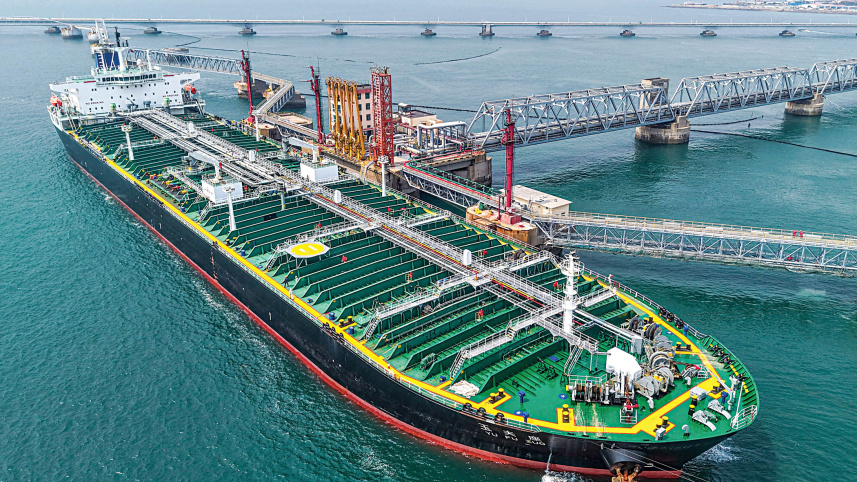
Oil prices eased in Asian trade on Thursday, extending losses on reports of Saudi Arabia offering extra crude cargoes through Oman, which reduced fears of supply disruptions, but stayed above $100 on concerns about the Middle East conflict expanding.
Brent crude futures dropped 19 cents, or 0.2 percent, to $105.64 a barrel by 0347 GMT, while US West Texas Intermediate futures were down 33 cents, or 0.3 percent, at $102.10. Both contracts fell about $3 on Wednesday.

"Concerns over supply tightness eased slightly following news that Saudi Arabia would ship cargo via Oman," said Hiroyuki Kikukawa, chief strategist of Nissan Securities Investment, a unit of Nissan Securities.
"Expectations of progress toward easing tensions in the Middle East ahead of US-China summit next week are also capping price gains," he added.
Saudi Arabia is offering more loadings of crude oil to Asian refiners via ship-to-ship transfers off Oman's Sohar port, people familiar with the matter said, blunting some of the hit to global supply from attacks on the Saudi Arabia's East-West pipeline to the Red Sea.
However, some analysts were expecting these flows to only ease a portion of the supply loss from the kingdom's Red Sea port, capping the declines in oil prices.
The pick-up in flows through the Strait of Hormuz "is only partly offsetting lost export barrels following drone attacks that shut Saudi Arabia's East-West pipeline," Saxo Bank analysts said in a note.
Oil prices rose to about four-month highs earlier this week after shipping industry sources said crude loadings at Saudi Arabia's Red Sea export hub of Yanbu had been suspended and Riyadh had cancelled some cargo deliveries to European customers.
The suspension followed attacks on the East-West pipeline, which feeds the Saudi port of Yanbu.
Yanbu became Saudi Arabia's main outlet for oil exports after Iran began blockading the Strait of Hormuz after the US and Israel attacked the country at the end of February.
Prior to the war, Hormuz was the conduit for one-fifth of the world's oil supply.
Two pumping stations serving the East-West pipeline were damaged in an attack last week, with a repair timeline unclear, according to assessments from three oil and security sources.
Despite the oil price decline on Thursday, worries about the intensifying Middle East war remain.
Saudi warplanes pounded Yemen and Houthi fighters launched drones and missiles at Saudi cities, the Iran-backed movement said on Wednesday, after a lightning advance that has extended Tehran's reach in the Middle East war.
Singapore's DBS Bank assumes in its base case scenario for the fourth quarter that the US war with Iran will dial down and Brent will stabilise in the $85 to $95 range.
"However, under the bear case scenario currently prevailing, with attacks and incidents in Hormuz and Red Sea continuing, prices could spike towards $120/bbl levels before potentially normalising back towards $100/bbl," DBS Bank's head of energy research, Suvro Sarkar, said.
 For all latest news, follow The Daily Star's Google News channel.
Comments