


Taxes, fuel costs, single runway driving up airline fares: US-Bangla MD
High government taxes, expensive fuel, steep ground-handling charges and congestion caused by Dhaka airport's single runway are pushing up airlines' operating costs, expenses that ultimately land on passengers' ticket prices, an airline managing director said yesterday.
Mohammed Abdullah Al Mamun, managing director of US-Bangla Group and US-Bangla Airlines, made the observations at the policy conclave "World-Class Aviation for Bangladesh's Economic Advancement", organised by Bonik Barta at a conference centre in Dhaka.

A passenger travelling from Dhaka to Kuala Lumpur pays around Tk 9,890 in government tax and excise duty, Mamun said, against around Tk 2,000 on the Kuala Lumpur-Dhaka leg, a difference of around Tk 7,000.
He cited similar disparities on other routes. A passenger departing Dhaka for Singapore pays around Tk 9,890 against around Tk 5,800 on the return leg. For Muscat, the figures are around Tk 10,000 from Dhaka against Tk 3,000 on return, while Dubai-Dhaka costs around Tk 4,000 against around Tk 10,000 from Dhaka.
"Fare will be high," Mamun said, arguing that airlines have to factor such charges into ticket prices.
The burden is significant on domestic routes too, he said. A Dhaka-Jashore journey draws Tk 500 in VAT and Tk 200 in tax, with overall airport-related charges reaching around Tk 1,200.
Fuel is another factor. Mamun said aviation fuel in Bangladesh is currently more expensive than in Kolkata.
He also pointed to a large disparity in ground-handling charges. US-Bangla pays around Tk 97,000 for ground handling in Kuala Lumpur, he said, while a Malaysian airline coming to Dhaka can be charged around Tk 3 lakh for the same service.
Aeronautical, overflying and parking charges for a Boeing aircraft in Kuala Lumpur amount to around Tk 15,000, he said, against ground-handling charges of up to Tk 2.25 lakh in Bangladesh.
"An airline, at the end of the day, prices its ticket based on how much it costs to land and operate in a country," he said.
Mamun said a level playing field was necessary for the aviation sector to grow. He pointed out that Kolkata and Kuala Lumpur each have four ground-handling companies, while Bangladesh remains wary of allowing more than one operator over concerns it could hurt Biman Bangladesh Airlines.
US-Bangla received a ground-handling certificate in 2023 and was capable of providing the service under the relevant rules and global certification, but had not received a licence, he said.
Bangladeshi airlines also have to pay ticket-sale commissions that some major foreign carriers do not, Mamun added.
The single runway at Hazrat Shahjalal International Airport is another major source of expense, Mamun said. Aircraft can spend around 20 minutes taxiing because of congestion, he said, adding that a Boeing can burn an additional 300-400kg of fuel as a result, an Airbus around 900kg and an ATR around 75kg.
Mamun said US-Bangla alone suffers losses of around Tk 20 lakh a day because of the single-runway constraint. The congestion also affects punctuality, with aircraft left waiting in queues for both landing and departure, he said.
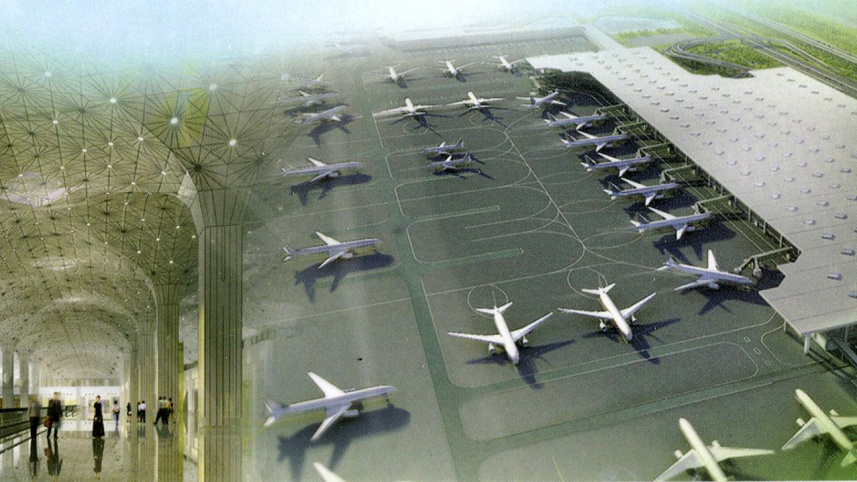
Mamun also criticised the planning process for the Third Terminal, saying domestic airline operators were not properly consulted on the facilities they needed.
"The Third Terminal is for whom? First of all, it is for the operators, because operators facilitate the passengers," he said.
He argued that Bangladesh's ambition to become an aviation hub would ultimately depend on domestic airlines rather than foreign carriers.
Air Commodore Md Nur-E-Alam, member (air traffic management) of the Civil Aviation Authority of Bangladesh (CAAB), told the programme that Hazrat Shahjalal International Airport can currently handle around 20-22 flights an hour.
With high-speed taxiways reducing runway occupancy time, CAAB expects the figure could eventually rise to 26-28 flights an hour, he said.
 For all latest news, follow The Daily Star's Google News channel.
 He acknowledged the limitations of a single runway and said a dependent runway was being considered, though development around the airport and shortage of space complicate plans for another runway and its associated facilities.
Civil Aviation and Tourism Minister M Rashiduzzaman Millat said the government was changing civil aviation rules after 42 years and wanted industry stakeholders to have a role in the process.
Addressing airline representatives, he said the government wanted to "give space to the stakeholders" and would invite them to a meeting before the rules were finalised.
"We will give you letters to join the meeting, and we will discuss and finalise the matter," the minister said.
Comments