


From toxic waste to industrial resource

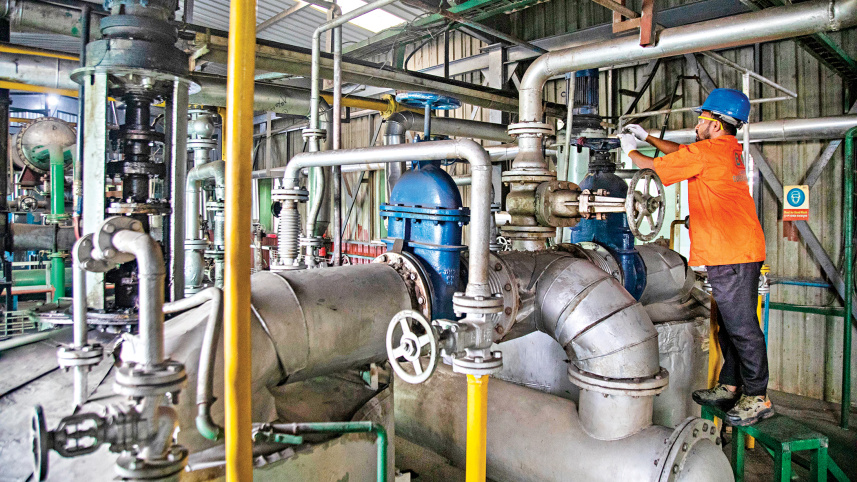
For decades, waste engine oil from vehicles, factories, and shipbreaking yards in Bangladesh was treated as little more than toxic waste.
In Chattogram’s industrial belt and the shipbreaking yards of Sitakunda, this discarded lubricant -- widely known as “pora mobil” (burnt engine oil) -- routinely flowed into rivers, canals and open land with little oversight and almost no organised recovery system.

Today, that waste is feeding a growing recycling industry.
What began in the late 1970s and 1980s as small-scale efforts by a handful of local entrepreneurs to recover and reuse discarded oil has gradually evolved into Bangladesh’s lubricant re-refining industry -- a business now tied to industrial demand, import savings and resource recovery.
POTENTIAL TO REDUCE IMPORTS
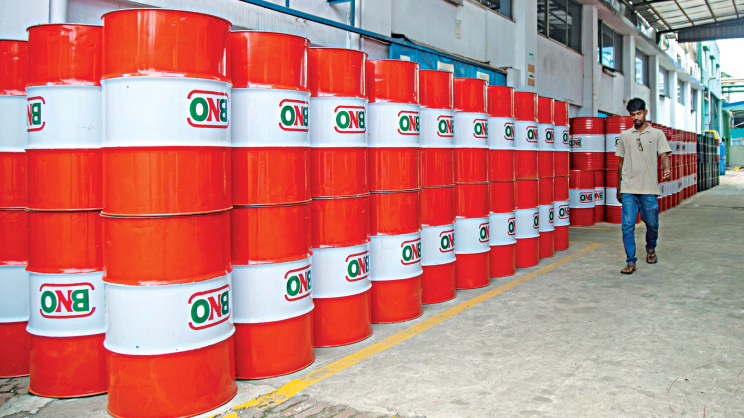
Bangladesh’s lubricant market has grown into a Tk 6,000 crore industry, insiders estimate, as rising numbers of vehicles, factories, farms and transport businesses drive demand for oil and lubricants.
Against this backdrop, recyclers say waste lubricant has become an increasingly valuable resource, as every tonne of recycled base oil helps reduce dependence on imports and eases pressure on foreign currency reserves.
Bangladesh imports around 80,000 to 100,000 tonnes of lubricant and base oil annually to meet domestic demand, estimated at roughly 160,000 tonnes a year.
Meanwhile, local re-refiners have a combined production capacity exceeding 100,000 tonnes.
Industry insiders say re-refiners currently meet around 30 percent to 35 percent of domestic demand, although the share could rise significantly with stronger policy support, improved waste oil collection systems and stricter action against illegal operators.
Sector leaders estimate Bangladesh could save at least Tk 2,000 crore annually in import costs if approved recyclers were allowed to operate at full capacity and more waste oil flowed through formal channels.
Most recycled lubricant produced locally is used in industrial machinery, re-rolling mills, factories and agricultural equipment. However, premium lubricants for modern private vehicles still rely heavily on imported or virgin base oil.
Zakir Hossain, who drives a rented car, said he changes the lubricant in his microbus every 5,000 kilometres at a cost of around Tk 6,000. For his 1.5-litre sedan, lubricant replacement is needed every 3,000 kilometres and costs about Tk 4,200.
“I use branded lubricant for better vehicle performance,” he said, adding that there is no scope for using recycled lubricant in cars.
PIONEERS OF WASTE OIL RECYCLING
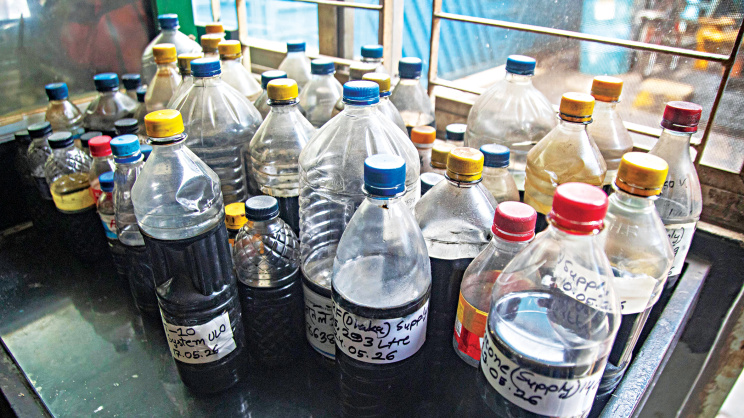
Among the early pioneers of Bangladesh’s waste oil recycling industry was Mohammed Yousuf, founder of Lub-rref (Bangladesh) Ltd and managing director of BNO Lubricants. He entered the sector at a time when the country had no organised system for collecting or recycling used oil.
In the years following independence, the petroleum sector remained largely state-controlled, leaving little room for private businesses, he said. Lubricant shortages were common, while knowledge about recycling used oil was minimal.
Unable to secure sufficient imported lubricant, Yousuf began collecting discarded oil from factories and vehicles manually and experimenting with ways to convert it into reusable industrial lubricant.
As industries expanded and lubricant shortages persisted -- particularly in steel mills and re-rolling factories -- demand for recycled products gradually increased.
“With industrial expansion, the volume of waste oil also increased,” Yousuf said.
 For all latest news, follow The Daily Star's Google News channel.
 At the same time, concerns over environmental pollution from untreated waste oil began gaining attention. Used lubricant contains hazardous contaminants and heavy metals that can pollute soil and water if dumped untreated, he said.
A large share of Bangladesh’s waste oil still remains outside formal collection and recycling systems. According to Yousuf, much of the market is controlled by informal collectors and small processors operating without modern refining technology or environmental safeguards.
He said future growth will depend on stronger enforcement, improved collection systems and fairer market conditions for compliant businesses. Without tighter regulation, much of the country’s waste oil -- particularly from the shipbreaking sector -- will continue flowing through informal channels.
RECYCLING SEEN AS ECONOMIC, ENVIRONMENTAL SOLUTION
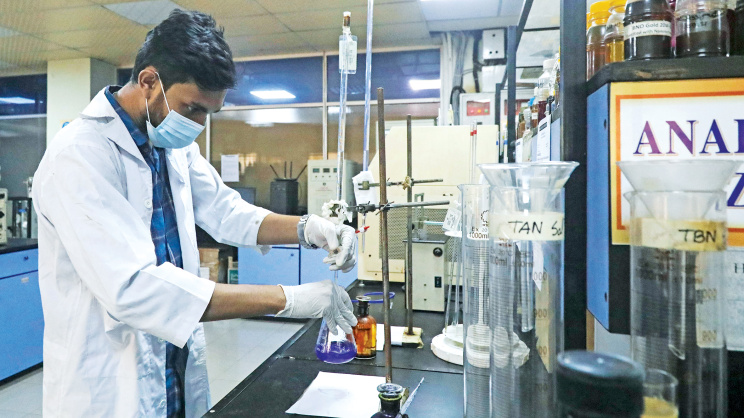
Ijaz Hossain, former professor of Chemical Engineering at Bangladesh University of Engineering and Technology, said the industry reflects both rising industrial demand and significant economic potential.
“These companies claim they can bring product quality close to international standards,” he said. “With proper investment and technology, that is definitely achievable.”
Drawing comparisons with Bangladesh’s plastic recycling industry, Hossain said lubricant recycling could generate substantial economic value.
“Waste lubricant recycling can deliver million-dollar economic benefits,” he said.
“This is fundamentally a recycling industry with strong economic value. If managed properly, it can reduce waste, lower import dependence, and make a meaningful contribution to the economy.”
According to him, very little waste oil in Bangladesh is ultimately discarded.
“In one way or another, most of it re-enters economic activity,” he said, adding that modernising recycling facilities would improve both product quality and environmental protection.
He noted that larger operators are increasingly investing in advanced refining technologies capable of producing higher-quality recycled lubricants, while many smaller businesses still rely on basic filtration and resale methods.
Bangladesh Poribesh Andolon Joint Secretary Sharif Zamil said compliant refiners are helping protect the environment by recycling waste engine oil while also contributing to the economy.
However, he warned that some unlicensed refiners continue to cause environmental pollution by operating without proper safeguards.
“The government should provide incentives to compliant refiners for their role in protecting the environment from the hazards of waste engine oil,” he said.
INDUSTRY STRUGGLES DESPITE GROWING DEMAND
Bangladesh formally recognised the sector through the Lubricant Re-refine Policy introduced in 2009, although petroleum-related regulations existed earlier.
Selim Hossain, president of the Bangladesh Re-refinery Association, said the industry began in a rudimentary form, with entrepreneurs heating waste oil in crude containers to separate reusable components.
“Over time, the sector gradually became more organised,” he said.
Bangladesh currently has 11 government-approved re-refining companies, nine of which are operational, alongside 13 blending companies, according to the association.
However, Hossain claimed that another 25 to 30 illegal operators remain active without proper regulatory oversight.
He said many approved factories are operating below capacity because they cannot secure enough waste oil as raw material.
According to him, the industry maintains a relatively high recovery rate, with recyclers recovering around 205 litres of reusable base oil from every 240 to 250 litres of used lubricant.
Despite its environmental and economic benefits, operators say the sector remains burdened by high taxes and compliance costs.
Hossain said re-refiners currently pay 15 percent VAT and 10 percent tax when purchasing waste oil from government sources, followed by another 15 percent VAT on final product sales. Corporate taxes further raise operating costs.
He argued that the tax structure discourages investment and weakens compliant businesses against informal operators.
Monoj Roy, director of Oleum Lubricants (BD) Ltd, said legal operators are increasingly struggling as informal businesses evade taxes, licence fees and environmental compliance requirements.
“Those of us who operate legally have to pay VAT, taxes and licence fees regularly, while many informal businesses do not bear any of these costs,” he said.
Roy alleged that some illegal operators sell low-quality lubricants mixed with diesel and other inferior materials at much lower prices.
Oleum Lubricants established its Savar factory more than a decade ago with an investment of around Tk 4 crore. Although the plant has a production capacity of 20,000 to 25,000 litres per day, current output has fallen to around 4,000 to 6,000 litres because of weak market conditions and rising competition from informal operators.
EXPANSION AMID CHALLENGES
Despite challenges, investment in the sector continues.
Arefin Mahmud, managing director of Min Oil Limited, said his family’s involvement in the industry dates back nearly five decades. His father, Mohammad Masudul Haque, entered the business in the late 1970s, initially launching re-refining operations with a partner before establishing Min Oil independently in 1985 on a pilot scale.
The company later secured registration with the Bangladesh Small and Cottage Industries Corporation and obtained a commercial licence from the energy ministry.
Mahmud said Min Oil’s factory in Hemayetpur, Savar, now has a daily production capacity of 100 to 120 barrels and uses internationally recognised re-refining technology.
The recycled base oil is used to produce industrial and automotive lubricants sold under brands such as Mol-X and Velocity.
Weak enforcement remains one of the industry’s biggest challenges, he said.
“Policies exist on paper, but implementation is still weak.”
New companies are also entering the market, driven by both environmental concerns and the sector’s long-term business potential.
Md Mainur Rahman, managing director of Lube Care BD Limited, said the company invested around Tk 17 crore in a recycling plant in Boliarpur, Savar in 2016. The facility has a refining capacity of nearly 10 tonnes per day.
Rahman said the business offers both environmental and economic benefits, as recycled base oil helps reduce pollution and dependence on imports.
“Every tonne of recycled base oil helps reduce import demand and foreign currency outflows,” he said.
He added that the industry still has significant growth potential.
Rahman also said recyclers initially struggled to source waste oil from industries and government institutions. Industry players later worked through their association to encourage government agencies to allocate waste oil directly to approved recyclers through closed tenders instead of open auctions.
According to him, some government institutions, including the army and navy, have already started giving approved recyclers priority access to waste oil supplies.
Comments