


Rangpur passes internet speed test but falters on voice quality
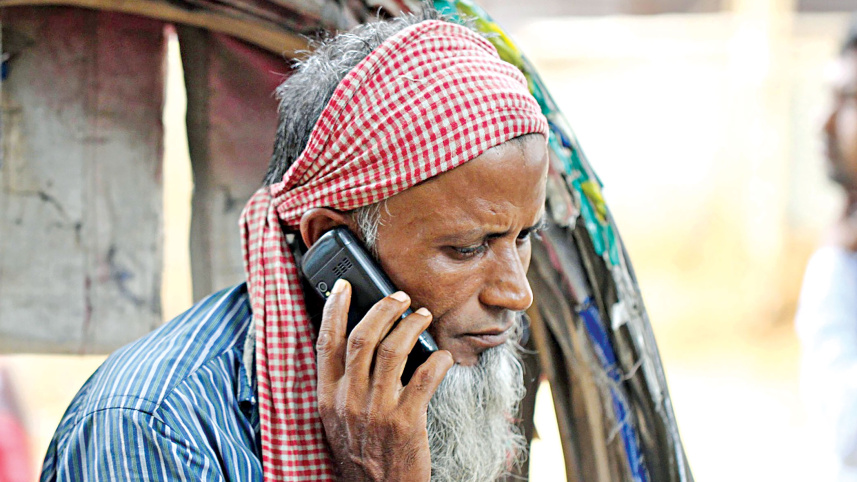
Voice call quality on 4G and VoLTE networks in Rangpur has fallen below the minimum benchmark set by the Bangladesh Telecommunication Regulatory Commission (BTRC), while mobile internet speeds and electromagnetic field (EMF) radiation levels remained within acceptable limits, according to a recent survey by the regulator.
A BTRC technical team conducted the four-day survey from August 8 to 11 across Rangpur city and surrounding areas to assess mobile service quality and EMF radiation from mobile network equipment.

The survey found that conventional 2G voice calls performed well, recording a Voice Mean Opinion Score (Voice-MOS) of 3.87, above the BTRC benchmark of 3.5.
However, 4G voice calls scored 3.42, slightly below the required standard, while VoLTE calls performed worse, recording a score of 3.07.
Voice-MOS is a standardised measure of how clearly and naturally a phone conversation can be heard. The score generally ranges from 1 to 5, with a higher score indicating better call quality.
A score below the BTRC’s 3.5 benchmark means users may experience unclear or distorted audio, interruptions or choppy conversations.
VoLTE, or Voice over LTE, allows voice calls to be carried over 4G networks and generally provides better voice quality and faster call connections than older technologies when properly implemented. The Rangpur survey, however, found that VoLTE quality was below the BTRC standard.
The findings come as mobile operators increasingly rely on 4G networks and VoLTE for voice services, while the use of older network technologies declines.
Mobile internet performance, meanwhile, was considerably better. The average download speed recorded during the survey was 23.39 Mbps, more than twice the BTRC’s minimum benchmark of 10 Mbps. Average upload speed stood at 12.94 Mbps, well above the minimum requirement of 2 Mbps.
The BTRC team tested 2G, 3G and 4G voice and data services of mobile operators, along with commonly used services such as Facebook, YouTube and Ookla speed tests.
The tests were conducted using equipment mounted on vehicles and carried by the technical team while travelling through different parts of the city, allowing the regulator to assess network performance under real-world conditions.
Alongside network quality, the team measured EMF radiation at 11 locations across Rangpur, including schools, hospitals, residential areas, markets and sites close to mobile towers where people may have concerns about exposure.
EMF radiation in this context refers to the radio-frequency energy emitted by mobile phone towers and other wireless equipment. The BTRC measures these levels against established permissible limits to determine whether exposure remains within safety standards.
Tanveer Mohammad, chief corporate affairs officer of Grameenphone, said, “We have not received any communication from BTRC regarding this matter as yet. Therefore, we are unable to comment at this time.”
Robi Axiata and Banglalink did not respond to The Daily Star’s request for comment.
Brig Gen (retd) Iqbal Ahmed, BTRC commissioner for spectrum, said, “When operators fail to meet the benchmark for quality of service, we notify them and ask for an explanation. If they fail to provide a satisfactory explanation, we take necessary measures against them.
“At the same time, we also provide them with clear guidelines on how they can improve the quality of their services and meet the required standards.”
Similar surveys are being conducted in other divisional cities in the country.
 For all latest news, follow The Daily Star's Google News channel.
Comments