


Jahangirnagar University and its endless ‘Game of Thrones’

Only four vice-chancellors who have led Jahangirnagar University (JU) since 1988 have managed to complete their four-year terms. Student protests, teachers’ strikes and government directives have repeatedly forced VCs to step down. Party politics played a role, but so has factionalism within the parties themselves. The recent removal of Prof Mohammad Kamrul Ahsan, two years after his appointment, is the latest episode in this long-running saga.
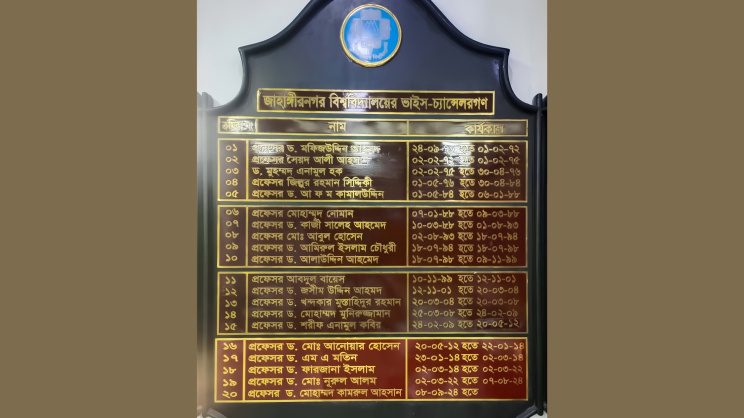
Beyond BNP and Awami League
Prof Kamrul was relieved of his duties on September 26, 2026, halfway through his tenure. A former president of the JU’s pro-BNP Jatiyatabadi Shikkhak Forum, he was appointed in September 2024 by the interim government led by Prof Muhammad Yunus.

Tension emerged early between Prof Kamrul, some BNP-leaning teachers and members of Chhatra Dal over the Jahangirnagar University Central Students’ Union (Jucsu) election, according to a pro-BNP professor.
“When you are the vice-chancellor and make a mistake, your opponents will seize the opportunity,” he said, adding that there are at least two factions among the pro-BNP teachers at the university.
Prof Kamrul had approached the then chief adviser in 2025 with a proposal to hold the Jucsu election, he said. However, pro-BNP teachers and Chhatra Dal opposed the move, arguing that they had only recently regained the opportunity to engage in campus politics.
The election was held in September 2025. Chhatra Dal failed to win a single post.
Several BNP-leaning teachers said tension escalated further over the then proctorial body’s “reactionary approach” and an attempt to establish an institute with six departments without the consent of most teachers. The proposal was presented to the Senate in June and sparked a heated exchange.
Teachers also pointed to Jucsu’s decision to accept a donation from Jamaat leader SM Khaliduzzaman to renovate the university’s medical centre as another reason for Prof Kamrul’s removal. Khaliduzzaman contested Dhaka-17 against Tarique Rahman in February’s national election.
A plaque at the renovated centre bore the names of Prof Kamrul and Jucsu General Secretary Mazharul Islam. Although the vice-chancellor later ordered its removal, critics said the damage had already been done.
Prof Md Nurul Islam was appointed as Prof Kamrul’s successor.
The Awami League years
The factional pattern was just as visible during the Awami League (AL) years.
“Although politics here is carried out under the banners of the BNP and AL, smaller power groups within these camps pursue their own interests. They play a role in vice-chancellors’ departures,” said Prof Manosh Chowdhury of the Department of Anthropology.
In 2022, following a Senate election, Prof Nurul Alam was appointed vice-chancellor by the AL government in September.
Several AL-leaning teachers said their group soon split into two factions, with one backing and the other opposing the vice-chancellor.
The 2024 quota reform movement deepened the rifts. Criticism intensified after JU Bangladesh Chhatra League (BCL) [now banned] members attacked protesting students at the vice-chancellor’s residence on the night of July 15.
“From the beginning, a section of AL-leaning teachers supported the protesters. Their sole aim was to bring down the vice-chancellor,” one teacher said.
On August 3, the Nipironbirodhi Shikkhak Samaj declared Nurul Alam unwanted on campus. He resigned two days after the AL government fell.
Farzana’s two terms
Nurul Alam’s predecessor, Prof Farzana Islam, had a longer tenure, serving two consecutive terms.
Appointed by the AL government in 2014, Prof Farzana initially faced relatively little resistance. But during her second term, protests by teachers and students over alleged corruption in the university’s Further Development Project intensified.
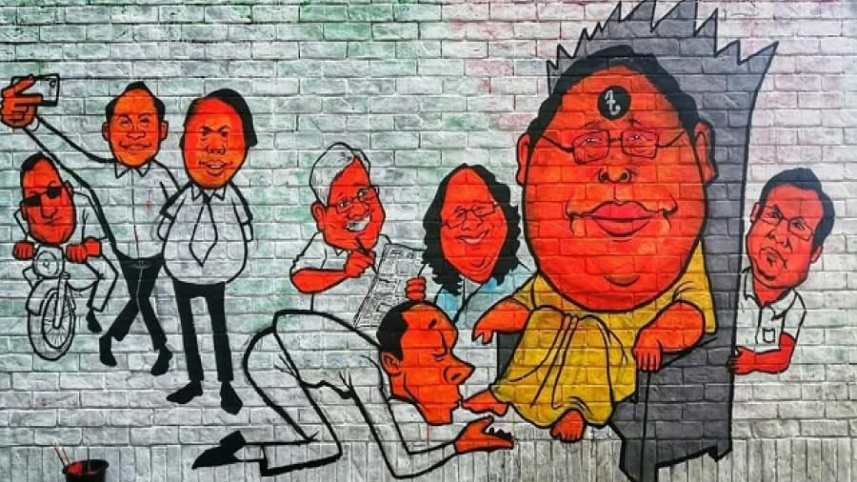
“VC Farzana had the then prime minister’s backing. Those who could have removed her were also loyal to the prime minister. Nobody wanted to upset her,” Prof Manosh said.
 For all latest news, follow The Daily Star's Google News channel.
 Her successor, however, did not enjoy the same political protection.
A turbulent start
The AL government appointed Dhaka University professor Anwar Hossain as JU vice-chancellor in May 2012, and protests began almost immediately. Teachers started demanding his resignation in April 2013. One issue was his failure to act against then-secretary of JU BCL Razib Ahmed Rasel over the alleged assault of Nurul Haque, an Economics lecturer.
“The turmoil continued throughout his tenure,” said Prof Sayed Mohammad Kamrul Ahsan, former dean of the Faculty of Arts and Humanities.
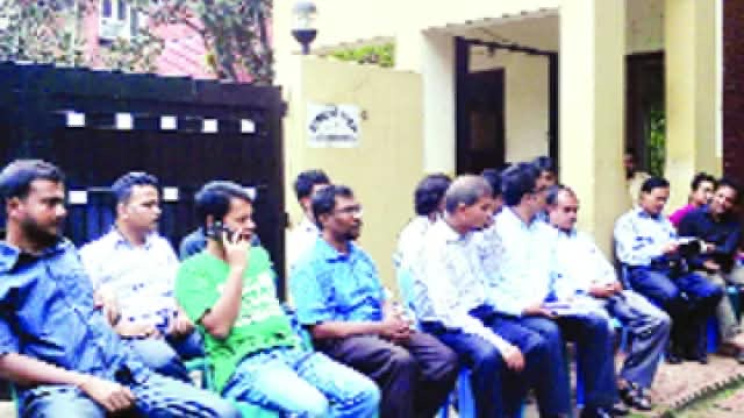
Prof Anwar resigned on January 13, 2014, amid a nearly year-long teachers’ movement demanding his removal.
Before Farzana, the Awami League government appointed then Pro-VC Prof MA Matin as acting vice-chancellor for a month. He oversaw the election of a VC panel before leaving office.
The VC before him, Prof Shariff Enamul Kabir, had faced a similar fate.
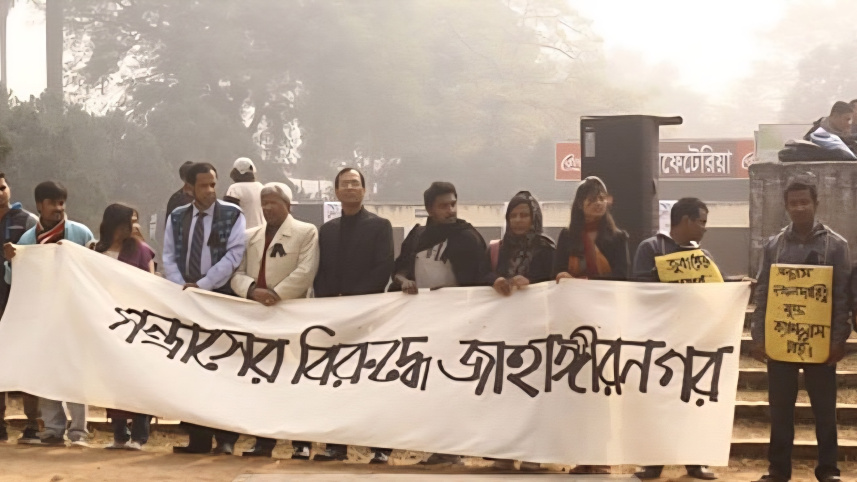
Appointed in February 2009, Prof Kabir resigned in May 2012. Several senior JU professors accused him of irregularities in teacher recruitment, criticised his decision to cut down trees on campus and alleged that he openly backed BCL activists to pressure his critics.
The conflict intensified after the death of Zubair, a fourth-year English student, in 2012. Zubair died a day after BCL activists reportedly severely beat him. Teachers and students launched a joint movement, while demands for Prof Kabir’s resignation intensified in April after BCL activists attacked students.
A pattern that predates the AL era
The pattern, however, did not begin with the AL government.
Two people served as JU vice-chancellor during the military-backed caretaker government. Prof Mohammad Muniruzzaman, JU’s 14th vice-chancellor, was appointed in March 2008, but his tenure ended less than a year later, in February 2009.
The VC before him, Prof Mustahidur Rahman, was one of the few to complete a full four-year term. Recalling his tenure, Prof Mafruhi Sattar, dean of the Faculty of Biological Sciences, said there were no major movements during that period.
Prof Jasim Uddin Ahmed was appointed vice-chancellor in November 2001. Within two years, the JU Teachers' Association (JUTA) went on an indefinite strike demanding a vice-chancellor panel election, bringing university activities to a standstill, Prof Mafruhi said.
Students also protested over session backlogs. Under pressure, Prof Jasim held a panel election in 2004, which he contested but did not win.
Prof Jasim, however, said the conflict had deeper roots. According to him, a section of BNP-leaning teachers demanded “unjust benefits” from his administration, which he refused to provide.
“A few of them also secretly wanted to become vice-chancellor and organised a movement against me,” he said.
Prof Jasim himself had come to office after his predecessor, Prof Abdul Bayes, was ousted when the BNP-Jamaat alliance came to power in 2001, according to a senior JU professor.
Prof Bayes, an Awami League-leaning teacher, had served as elected vice-chancellor since November 1999.
He recalled that a group of 10-12 teachers came to his office after the change in government and told him that the new government meant a change in the vice-chancellor.
“They told me I could not do anything beyond routine work,” he said.
Prof Bayes said elected VCs should be allowed to complete their full terms regardless of a change in government, as this would help establish democratic practice at the university.
“The culture will change only when political parties stop using university teachers and students as tools to serve their own interests,” he said.
Prof Bayes had replaced Prof Alauddin Ahmed, who served as vice-chancellor for about a year before leaving office after protests that began in 1998 over rape incidents on campus, several JU professors said. The anti-rape protests were sparked by allegations that BCL leader Manik had celebrated what he described as his “centenary rape”.
The pattern of partisan teachers’ politics, however, may have taken root even earlier.
Prof Alauddin’s predecessor, Prof Amirul Islam Chowdhury, served as vice-chancellor from 1993. Senior teachers say factionalism among partisan teachers became increasingly entrenched during this period.
Prof Abul Hossain, then the university’s honorary treasurer, served as acting vice-chancellor for a year. Following demands from some teachers, he held a VC panel election, in which Amirul Islam Chowdhury topped the panel.
And the roots may go back further still.
Prof Kazi Saleh Ahmed, who took office in 1988 and completed his first term, had to resign in 1993 after a faction of Jatiyatabadi Chhatra Dal vandalised university property and attacked teachers to disrupt an election for teacher representatives, according to senior teachers.