


‘Symphony of Life’: Exhibition reflects life through diverse artistic lenses

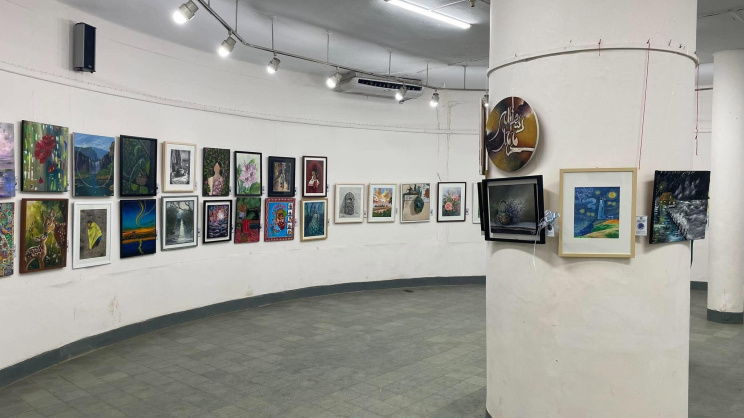
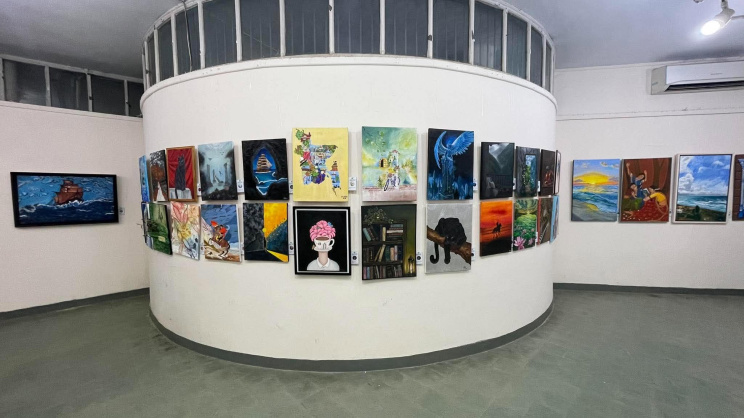
172 artists came together last week with 172 different ways of looking at life. Their works span landscapes, Islamic calligraphy, folk traditions, still life, abstract imagery and experimental compositions, creating a diverse visual experience under one roof.
Titled “Symphony of Life”, the group art exhibition organised by Shilpo Bangla opened at the Zainul Gallery of the Faculty of Fine Arts, University of Dhaka, on September 10. The exhibition brings together artists working across different styles and mediums.

The exhibition was inaugurated on September 10 at 5pm at the Osman Jamal Auditorium of the Faculty of Fine Arts. Eminent artist and Ekushey Padak-winning Professor Dr Abdus Sattar, honorary teacher of the Department of Oriental Art at the Faculty of Fine Arts, University of Dhaka, attended the event as the chief guest. Professor Kaoser Hassan Togor of the Department of Sculpture at the Faculty of Fine Arts, Shanto Mahmud, Channel i Chief Executive Producer of News, and Associate Professor Habiba Akther Papia of the Department of Fashion Design at Shanto-Mariam University of Creative Technology attended as special guests. Professor Dr Azharul Islam Sheikh, Dean of the Faculty of Fine Arts and Chairman of its Department of Ceramics, presided over the ceremony. Minne Art Gallery and Mahfuz Canvas are supporting partners of the exhibition.
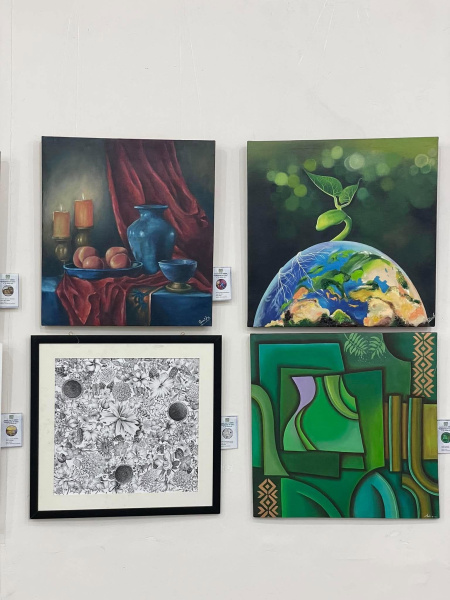
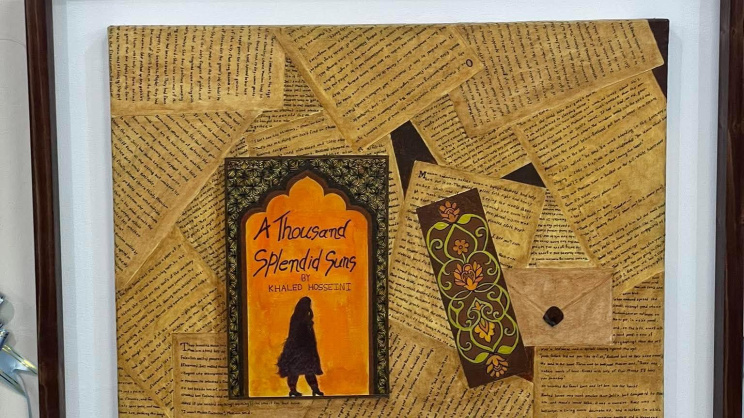
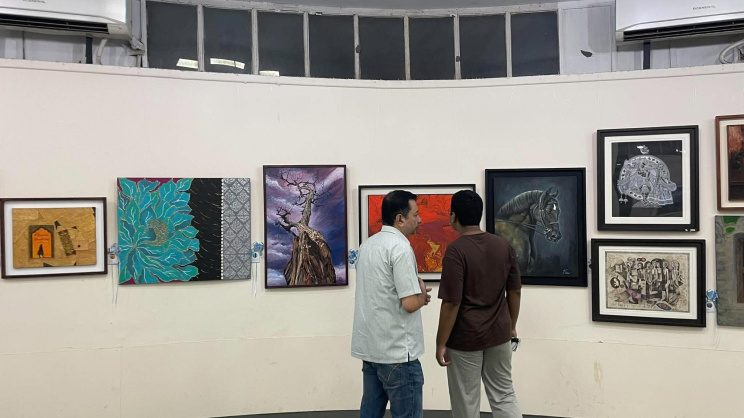
The broad theme of the exhibition allows the artists to approach life and society from their own perspectives. The result is a collection where a quiet watercolour of a village homestead can hang beside an elaborate gold calligraphy piece, while a traditional still life may sit next to a painting of a seedling emerging from the earth.
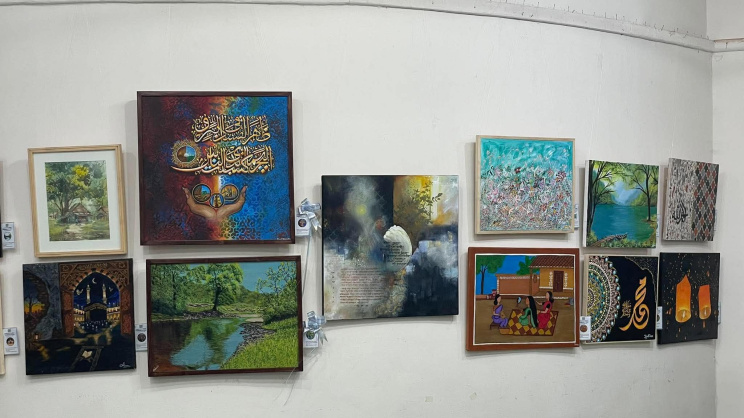
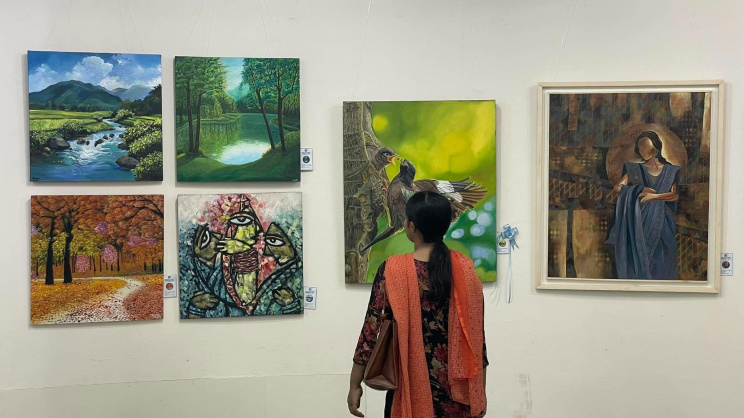
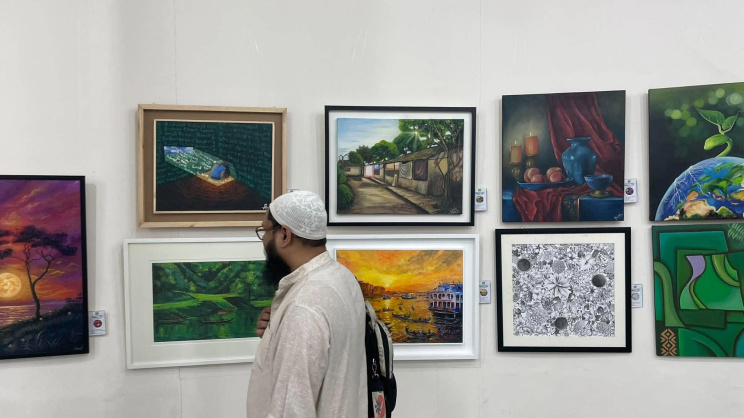
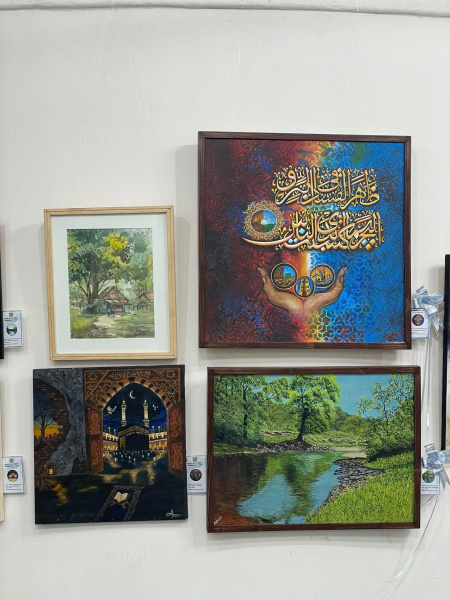
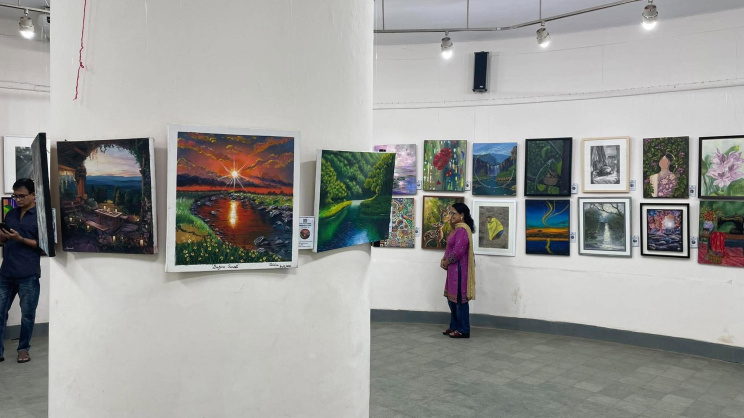
Landscape painting occupies much of the gallery space. Rivers lined with mangroves, boats moored at wooden jetties, moonlit canals and vivid sunsets appear across the walls. Rural Bangladesh returns repeatedly in images of flame trees beside ponds, narrow lanes between tin-roofed houses and quiet village settings. Many of these works are acrylic on canvas, with soft, blended strokes giving the landscapes a gentle, atmospheric quality.
Islamic calligraphy forms another strong visual thread. One large framed work features a Quranic verse written in gold against a background that shifts from deep red to blue. Beneath the lettering, two cupped hands hold small circular images of a damaged landscape. Another work combines golden lettering with a black background and a jewelled mandala-like form. A night view of the Masjid al-Haram, glowing beneath a crescent moon and framed by an ornate arch, adds another striking piece to the collection.
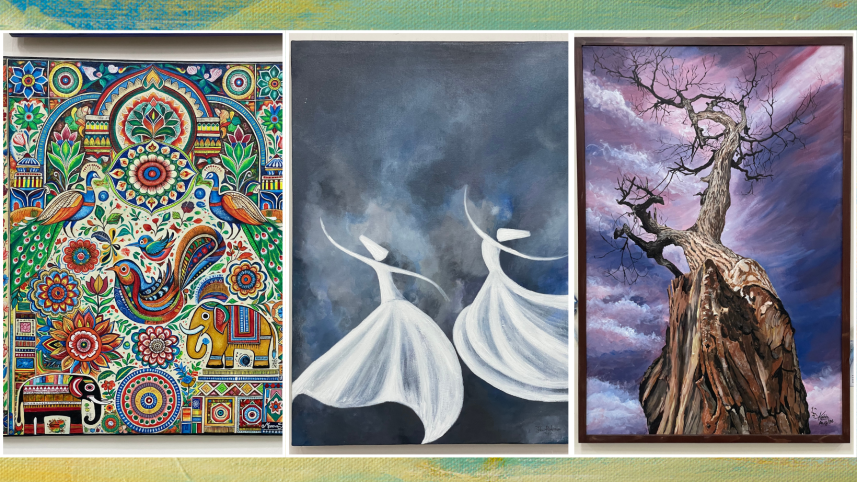
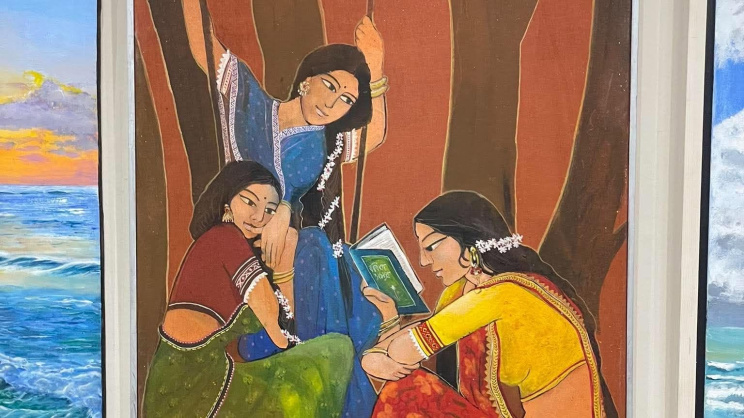
Folk traditions also have a strong presence. One canvas draws on the visual language of nakshi kantha, depicting two peacocks facing each other across a lotus medallion, with decorated elephants and an intricate floral border. Another borrows the bold outlines and flat colours of rickshaw art to portray a mother holding her child. Elsewhere, women sit on a chequered mat in a village courtyard.
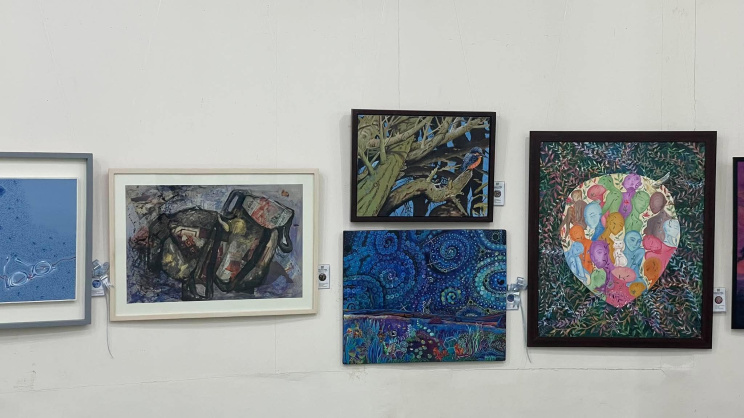
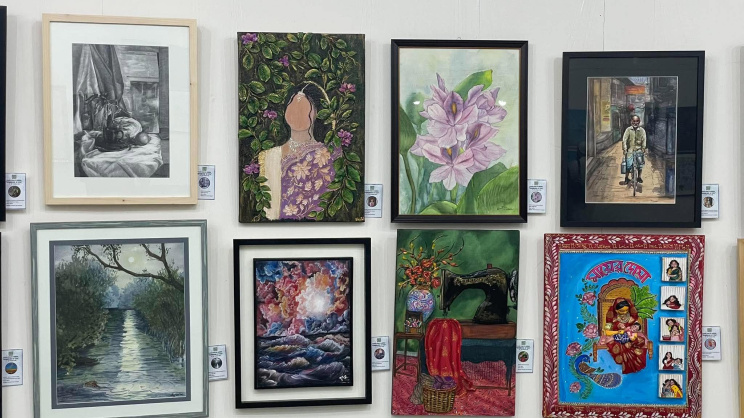
Some artists move further away from realism. In one unusual composition, a figure carries a teacup where the head would normally be. Another brings together dozens of small faces to form a single heart. Two whirling dervishes appear against a smoky blue background, their faces left undefined while the movement of their white garments becomes the focus of the work.
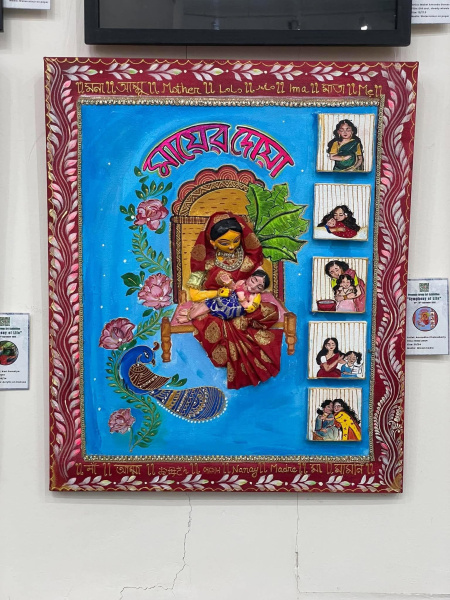
The variety extends to the mediums. Acrylic is widely used, appearing both in the flat colours of folk-inspired works and the heavier textures of landscape paintings. Oil, watercolour, charcoal, graphite and pen are also represented, while some artists have used modelling paste, gold leaf, beads and collage to add texture to their works.
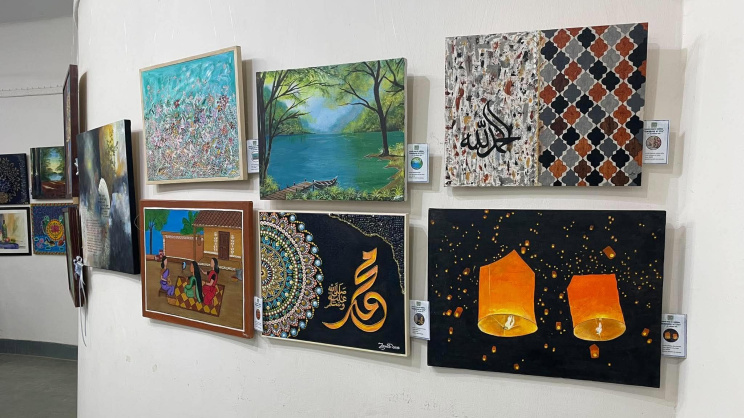
More than anything, “Symphony of Life” reflects the different ways artists interpret the world around them. By bringing 172 artists into one space, the exhibition creates a collective experience without asking them to give up their individual voices. “Symphony of Life” will remain open to visitors at the Zainul Gallery until September 16, daily from 12pm to 7pm.
 For all latest news, follow The Daily Star's Google News channel.
Comments