


Coke Studio Bangla’s ‘Mulluk’ remembers a homeland lost to time


Coke Studio Bangla Season 4’s latest song, "Mulluk," isn’t simply about displacement. It carries the sorrow and little rays of happiness of tea workers who work hard to survive. Sung by Meghdol alongside tea garden singers Ranjit Tanti and Ronju Tanti, the folk portion traces back to filmmaker Tareque Masud’s "Ontorjatra," during which researcher-musician Moushumi Bhowmick recorded and archived a portion of the song.

At its heart is the image of a migratory bird—a creature flying away from its cage, carrying the ache of leaving home. “Pinjarake Pushal Moyna uri uri jai re” becomes more than a folk refrain in "Mulluk"; it speaks of a community separated from its ancestral homeland and left to build a life far from where their ancestors came from.

It took almost three years for Meghdol to complete the song. While working on it, vocalist Shibu Kumar Shill came across the recording on Moushumi Bhowmick’s The Travelling Archive.
“When I first heard this song on The Travelling Archive, there was something about it that really drew me in. I felt that there was a possibility of doing something with this song,” Shill said.

When Coke Studio Bangla later approached Meghdol to create a song around the lives of tea garden workers, they began researching its history, travelled to Rajghat Tea Estate in Sreemangal, spent time with workers, and listened to their stories.

During this process, Mohan Rabidas, Advocacy Officer at Nagorik Uddyog and a descendant of tea garden workers, helped them trace the original singer, Ranjit Tanti.
“When Shibu da first shared two lines from the song with me—‘Pinjarake Pushal Moyna uri uri jai re’—unfortunately, I had never heard the song myself,” Rabidas recalled.
Rabidas then took a day off and went around Rajghat looking for Ranjit. With the help of a friend, he managed to collect his photograph and details and passed them on to the team. The search eventually led Meghdol to Ranjit, who had carried the song with him for years.
For Ranjit, being reunited with the song was also a return to a part of his own musical journey.

“I am extremely happy and feel truly blessed. I first came to Dhaka in 2020 to audition for a song. However, we had little luck back then. Now, some of the people who were with me then are no longer alive,” he said.
In 2023, Rabidas helped the team find Ranjit again.
“When they were looking for this song again, Mohan Rabidas sent them my photograph. They found me and contacted me. After confirming my identity and information, they brought me to Dhaka again to record the song,” he said.
Ranjit also brought his wife, Ronju Tanti, into the project. “She can sing, so I brought her with me to Dhaka,” he said.
For Shill, meeting Ronju became another unexpected part of the process. After hearing her sing, he felt her voice had to be part of the song.

“When we met her and heard her voice, I felt that we needed her even more than we needed Ranjit Tanti,” Shill said. “She has such a beautiful voice, and her vocal control is remarkable.”
Ronju also brought her songbook and sang several songs for the team, some of which they recorded. For Shill, the experience revealed how much music continues to live within tea garden communities, often without reaching audiences beyond them.
“If we had simply sung the folk section ourselves, I don't think it would have felt authentic,” Shill said. “That, to me, is the core beauty of the song.”
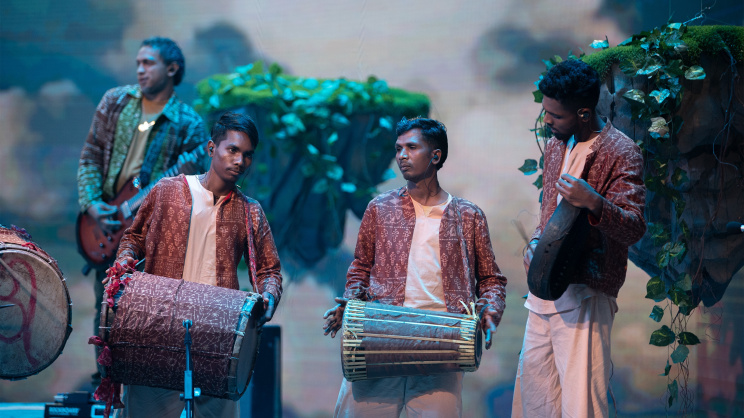
That authenticity becomes clearer in the contrast between the two sections of "Mulluk."
Ranjit and Ronju’s part is happier, carrying the simple joy of everyday life through “Pinjarake Pushal Moyna uri uri jai re,” while Meghdol’s sections take a darker turn, bringing in images of hell, suffering, blood, and the Meghna River running muddy red.
The contrast brings together two sides of the same story—the happiness that exists within the tea gardens and its cruel history.
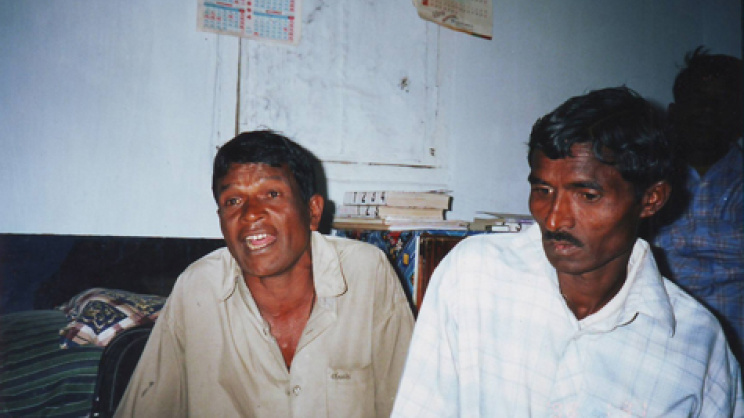
That history can also be traced through Bhowmick’s field recordings. On The Travelling Archive, she wrote about meeting singers including Ranjit and Tamseng, who were themselves unsure of the exact location of their ancestral home. Locally identified as Uriya, their forefathers may have been brought from present-day Odisha as indentured labourers.
Over generations, the memory of their original homeland faded, but the songs remained. They became a link to a place that many descendants could no longer name.
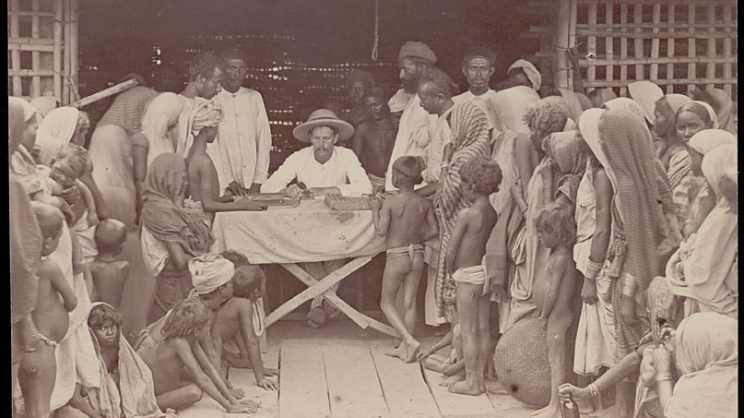
That idea of returning home is central to the 1921 ‘Muluk Cholo’ movement, when tea workers sought to leave the estates and return to their ‘mulluk,’ or homeland.
 For all latest news, follow The Daily Star's Google News channel.
 According to Rabidas, workers brought to the region under exploitative colonial labour arrangements decided they would return home. With train services stopped to prevent them from leaving, thousands walked from Sylhet towards Chandpur. When they reached Chandpur, British and Gurkha forces opened fire. Many were killed, while those who could not cross the Meghna River remained behind.
Rabidas is a descendant of those who stayed.
“I am a tea worker’s son,” he said, pointing to the struggles that continue today. Tea workers still face discrimination over wages, while many have no secure land rights despite generations of living and working on the estates.
More than a century after the ‘Muluk Cholo’ movement, the question of belonging remains. The workers and their descendants have built their lives around the tea gardens, yet many still do not have ownership of the land they have called home for generations.
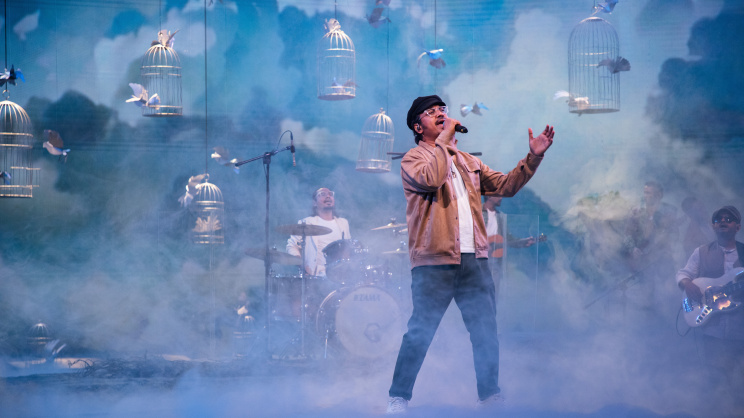
The struggle over wages continues alongside that fight for land. Tea workers are currently demanding a daily wage of Tk 500, saying the existing Tk 187 is not enough to meet their basic needs. In July, workers in Sylhet and Moulvibazar held work stoppages, rallies, and road blockades to press the demand, along with land ownership rights and other demands.
According to Mohan, tea gardens are home to around 94 ethnic communities and languages, each with their own traditions, songs, and forms of expression.

The research of Philip Gain, which has documented the lives and struggles of tea workers, has helped bring attention towards their history. Cultural activists and researchers, including singer and song collector Kali Das Gupta, have also documented songs from the tea gardens.

Much of this music, however, has remained within the communities that kept it alive.
Now, through "Mulluk," that song has travelled far beyond the tea gardens. The mulluk may have become distant, but the song never let it disappear.
Comments