Why a film from 1976 still feels like a South Asian middle-class story in 2026

Rejection, perhaps, is easier to accept than to absorb.
For a while now, I have had multiple of my write-ups rejected and discarded, with my boss stating they have either not matched the mark or not been relatable enough for public consumption.

As sound a reasoning as it is, and one that I abide by myself and respect, there is still a pall and pang to rejection. The weight of it made me lean on a favourite song of mine as I worked through the Eid-ul-Azha vacation -- “Main pal do pal ka shayer hoon”, penned by Sahir Ludhianvi, composed by Khayyam, and voiced by Mukesh, with Amitabh Bachchan inhabiting its visual soul in "Kabhi Kabhie" (1976).
There is a line in the song that always dug deep:
“Mashroof zamaana mere liye, kyoon waqt apna barbaad kare?" [For my sake, why should this busy world waste its precious time?]
It is not merely a lyrical admission of transience; it is a philosophical shrinking of the self before a world too preoccupied to notice permanence.
The line is disarmingly simple, almost deferential.
Films, at their rarest, do not remain objects of viewing so much as they become emotional inheritance. They are passed down less as possessions and more as atmospheres -- through mothers humming fragments of melody while moving through kitchens, fathers replaying old cassettes with an unspoken softness, the late-night music programmes where longing arrives already half-remembered.
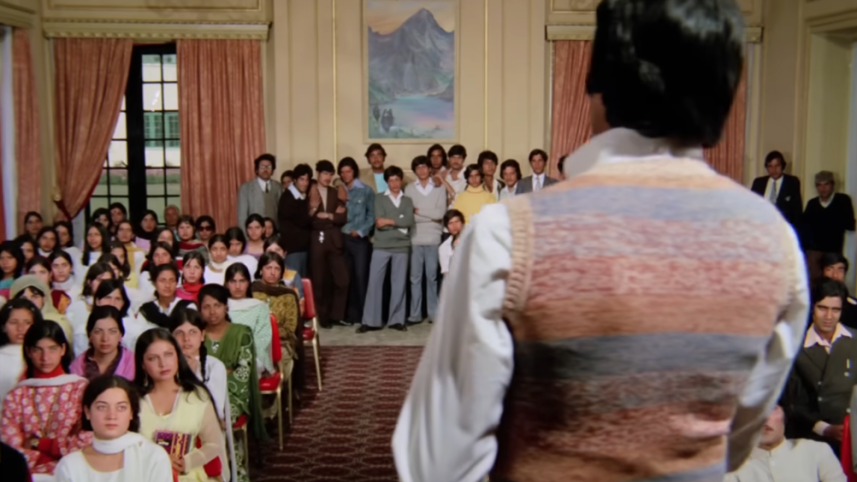
"Kabhi Kabhie" belongs to that lineage. It endures not merely as a love story, but as a sustained meditation on memory, class, compromise, and the quiet catastrophes that accumulate over a lifetime.
Rewatching it still feels less like cinema and more like an intimate confession overheard through the keyhole of time.
Directed by Yash Chopra, the film possesses the silken elegance of old Urdu poetry.
Yet, its true pulse lies in the words of Sahir Ludhianvi, perhaps the last great public romantic who distrusted romance itself.
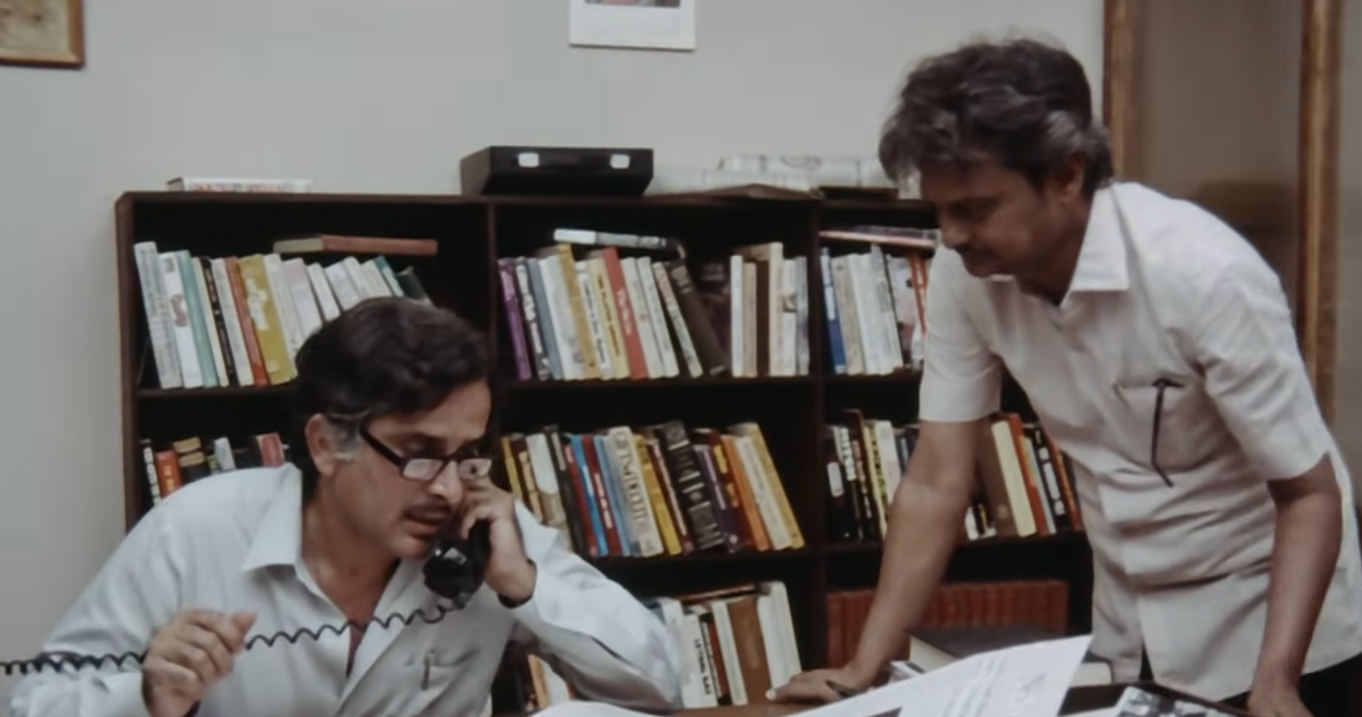
Sahir did not write love songs the way ordinary lyricists did. Even in tenderness, there was scepticism. Even in beauty, an awareness of expiry.
Desire in "Kabhi Kabhie" is dignified by incompletion. And perhaps that is why generations continue returning to it. Most people do not experience epic love stories. They experience interrupted conversations, missed timings, family obligations, economic anxieties, marriages negotiated by circumstance and lives that drift quietly away from their imagined selves. "Kabhi Kabhie" delineates that tragedy does not always arrive with clamour.
The mid-1970s were politically anxious years. Wars had suspended freedoms, inflation was reshaping aspirations, and the middle class in the Indian subcontinent was beginning to discover both its ambitions and its hypocrisies.
Against this backdrop, "Kabhi Kabhie" arrived draped in chiffon and poetry. Its central characters do not simply part because love fails. They part because society succeeds.
Amit and Pooja -- played by Amitabh Bachchan and Rakhee Gulzar -- are casualties not of incompatibility but of social architecture. Wealth, family prestige and respectability become invisible legislators in matters of the heart. Love is not defeated by hatred; it is defeated by logistics, by timing, by the subtle tyranny of “what will people say?”
Even today, across drawing rooms from Dhaka to Delhi, Lahore to Lucknow, countless lives continue to be negotiated between affection and acceptability. Marriages remain economic arrangements disguised as emotional destinies. Families speak the language of sacrifice while often practising the arithmetic of status. "Kabhi Kabhie" saw this with clarity.
 For all latest news, follow The Daily Star's Google News channel.
Harkening to “Main pal do pal ka shayar hoon” -- on the surface, it appears self-effacing, almost modest. But beneath it lies an existential philosophy of startling maturity. The poet recognises his disposability. He understands that society consumes artists sentimentally while discarding them structurally. Fame is fleeting; emotion is marketable; memory itself is temporary.
It is very much a commentary on modern culture itself.
We inhabit an era of algorithmic affection, where feelings are performed publicly and forgotten privately. Poetry has been reduced to Instagram captions. Heartbreak is monetised into playlists. Vulnerability has become aesthetic content.
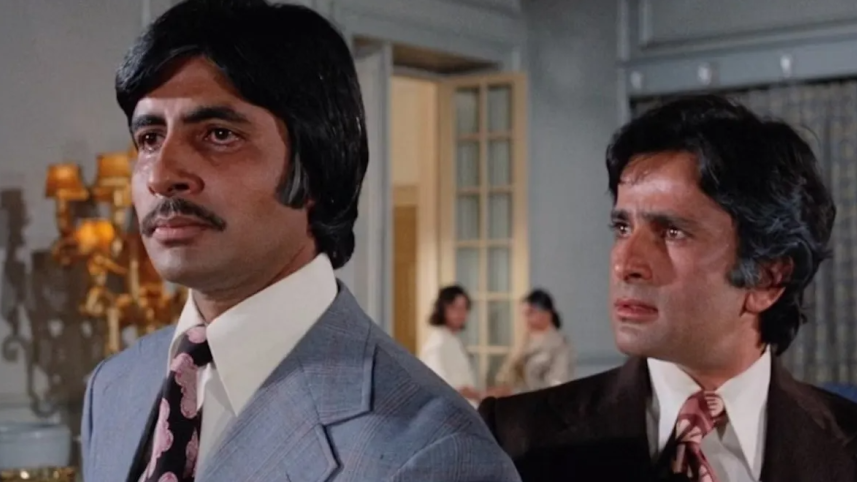
Amit’s character as a writer is not heroic in the conventional sense. His poetry becomes both refuge and restraint. In many ways, he represents the postcolonial South Asian intellectual class -- educated enough to articulate desire, but socially constrained from pursuing it freely.
That tension still animates urban middle-class existence today.
The young are told to dream extravagantly but obey conservatively. One may study literature, discuss liberation and admire rebellion, but eventually the machinery of respectability arrives with spreadsheets, horoscopes, salaries and surnames. "Kabhi Kabhie" captures the moment where youthful idealism collides with adult domestication.
Yet the film is not cynical.
Its great wisdom lies in recognising that compromised lives are not necessarily loveless ones. The later relationships in the film possess tenderness, decency and grace. There is a difficult truth many modern narratives refuse to admit -- first love is not always the final truth of a life. Human beings adapt. They survive emotionally. They carry old aches into new mornings.
There is melancholy in that idea, certainly. But there is also maturity.
Perhaps that is why "Kabhi Kabhie" ages so magnificently. It does not fetishise youth. It understands time. It acknowledges that people evolve into strangers even to themselves.

‘Abar Hothat Brishti’ to hit cinemas in October

‘Come on, troll me now’: Salman Khan hits back at ‘dadajaan’ memes

Melissa Barrera reflects on Macklemore’s removal from Ed Sheeran’s tour

‘La Bola Negra’ wins TIFF People’s Choice Award
Jaya and Churni’s silence speak volumes in ‘Aajo Ardhangini’

Retrospective / Before Sophia Loren became a global icon, she was a girl shaped by post-war Italy

Rajshahi University-based film ‘Chirkut’ set for Durga Puja release

Rifat Chowdhury hospitalised over health issues

Deepika Padukone, Ranveer Singh welcome second daughter