


EU expects strong EC
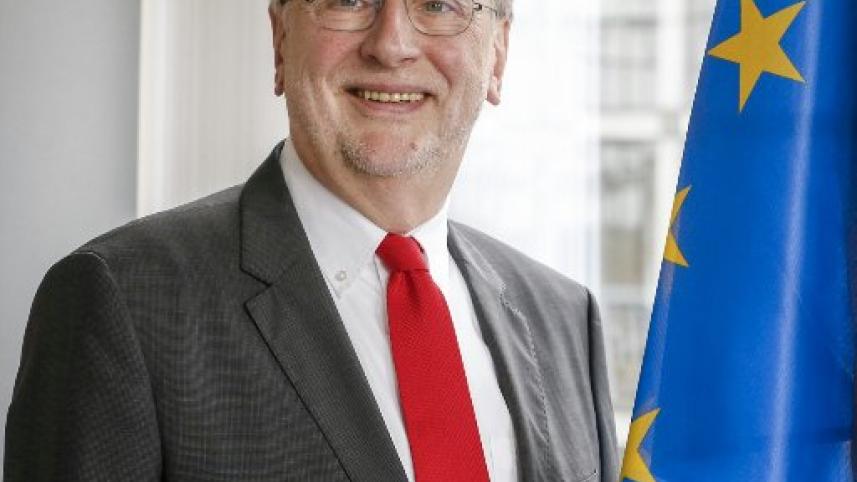
The visiting European Parliament delegation expects that proper democratic process will be followed in forming a strong Election Commission in Bangladesh to hold the next general elections in a fully participatory way.
At a press briefing at the EU office in Gulshan, they also urged the government not to narrow down the fundamental citizen rights while ensuring security. They urged ensuring proper balance between security and the guarantee of freedom of expression.

The six-member trade delegation of the European Parliament led by Bernd Lange, chair of the committee on international trade, has been in Bangladesh since November 14.
They also discussed political issues during their meetings with Speaker Shirin Sharmin Chaudhury, Political Adviser to the PM HT Imam and Commerce Minister Tofail Ahmed.
"Of course, the political situation is quite stable [now]. But of course, as you are going on to hold next general elections … you have to establish the EC. We hope it'll be done in a proper democratic way,” Lange said, replying to a question.
He, however, did not give any specific suggestions on how Bangladesh would form the EC, saying that it was clear in the constitution.
But he gave the European example where the 28-country bloc ensure “multiparty experts commission” that, Lange said, “guarantees independence and guarantees strong mechanism for fair elections.”
“And this could also be the mode for establishing election commission here,” he said, adding that during their visit, they heard there might be a sub-committee to find “best independent experts” to hold free and fair polls.
The tenure of the current EC, which held the last parliamentary election without opposition BNP, will expire in February next year. President forms the EC, but there is no set of rules how the members will be picked. The current EC was formed by setting up a search committee.
Replying to a question, Jean Lambert, chair of the delegation for relations with the countries of South Asia, said the EC must be “strong and capable so that people can trust them even if they take decisions the political parties do not like”.
Ensuing integrity of the elections is the EC's job, she said, expecting that the next elections should be inclusive and fully participatory.
“And that depend on the decision of the various political parties and also their ability to participate in elections campaign,” she said.
She said during the meetings with the government interlocutors, they also touched upon the “rights of digital expression”.
The visit of the delegation was aimed at assessing the progress achieved in improving health and safety as well as labour rights in the export-driven sectors such as ready-made garments.
They also discussed opportunities and challenges in EU-Bangladesh trade and investment relations, according to the EU delegation office in Dhaka.
The chair of the delegation praised the progress made by Bangladesh in attaining economic development and improvement in standards of benefits for its workers.
Bangladesh as an LDC enjoys duty-free market access to European countries.
But once it graduates from the LDC status, then the market access will change. The value-added trade relations, known as GSP-plus, would be in place and it would require Bangladesh to sign at least 27 core EU conventions.
The chair of the delegation said Bangladesh had signed many of those conventions.
The other members of the visiting delegation and EU Head of the Delegation in Dhaka Ambassador Pierre Mayaudon were present at the press briefing.
 For all latest news, follow The Daily Star's Google News channel.
 During the visit, the delegation had called on BNP Chairperson Khaleda Zia. They also held meetings with BGMEA leaders and members of the civil society.
They also visited a number of factories in Tongi and Joydevpur in Gazipur.
The delegation leaves Dhaka today.
Comments