


Beyond irregular periods: Understanding PCOS in teens

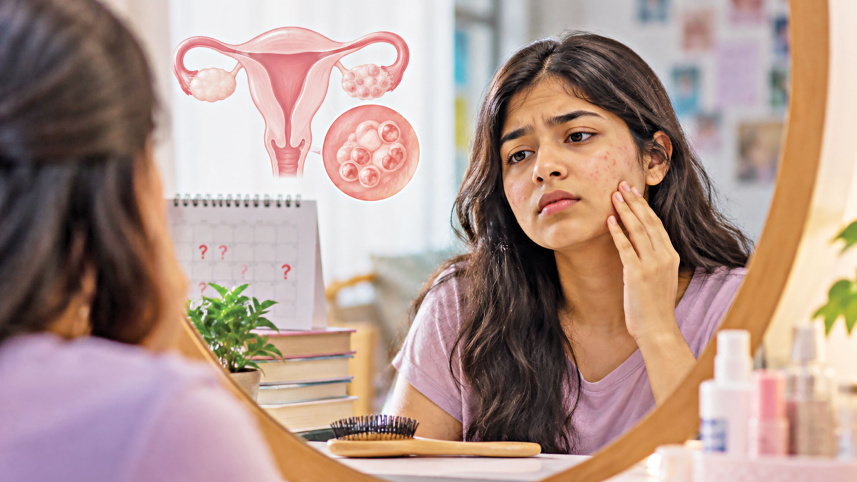
Irregular periods, acne, unwanted facial hair and rapid weight gain are often dismissed as ordinary teenage changes. But for some girls, they may signal polycystic ovary syndrome (PCOS), a hormonal and metabolic condition that can affect health well beyond adolescence.
In Bangladesh, delayed recognition remains a concern because menstrual problems are still difficult for many families to discuss openly. Teenagers may also face teasing or body-shaming over weight gain, acne or excess hair, discouraging them from seeking help.

The condition affects reproductive hormones and can cause irregular or absent periods, excess androgen-related hair growth and acne. It is also associated with metabolic problems and longer-term reproductive risks.

Bangladeshi research highlights the scale of the metabolic burden. In one study involving 175 adolescents with PCOS, 42.3 percent had metabolic syndrome, 90.9 percent had dyslipidaemia and 24 percent showed glucose intolerance. Vitamin D deficiency was also extremely common, affecting 92.6 percent of the participants.
Management should therefore go beyond medicines used to regulate menstruation. Doctors need to consider a teenager’s weight, metabolic risks, symptoms and future reproductive health. Regular physical activity, a balanced diet and appropriate weight management remain central to care. Vitamin D deficiency, if present, should be corrected only under medical guidance.
Most importantly, families should treat persistent menstrual irregularity, rapid weight gain or abnormal hair growth as health issues rather than matters of shame. Earlier medical advice can help protect both physical and emotional wellbeing.
The writer is an Assistant Professor at the Institute of Child and Mother Health (ICMH), Dhaka. E-mail: ishahed86@gmail.com
 For all latest news, follow The Daily Star's Google News channel.
Comments