


How kachchi biriyani became the symbol of wedding prestige
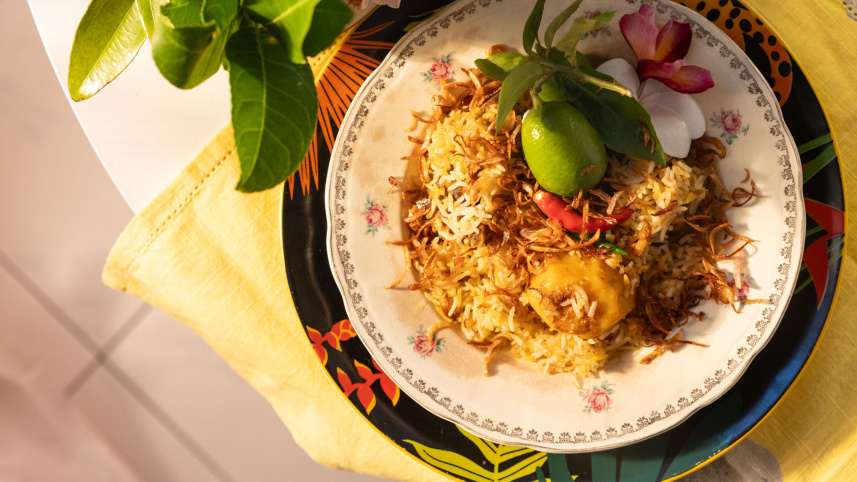
Truth be told, kachchi biriyani is not my favourite dish. However, I do get a yearning for it every time I attend a wedding. After all, it has now emerged as the quintessential wedding dish. Even three decades ago, it was reserved as the ceremonial food for the rich and was famous, and solely associated with elite weddings of Dhaka. Today, it is served at functions across all strata of society.
Back in the day, weddings had a different culinary grammar altogether. A proper wedding feast called for steaming fragrant pulao, chicken roasts with their signature sweet richness, and a generous serving of delectable mutton rezala. At pre-wedding festivities like engagement or gaye holud, occasions which were considered lesser events, tehari was served. Often, the matter concluded with a generous serving of beef and porota.

That older, homely tradition has simply faded away and has been completely replaced with culinary reinterpretations.
Without a doubt, the ultimate wedding staple now reflects more than changing tastes and mirrors social aspirations. Kachchi was primarily favoured over other items, despite its elaborate cooking process, because of its practicality. Unlike wedding menus of the previous generations, where multiple elaborate items were deemed necessary, it came as a self-contained, “one dish wonder!” With a delicious mix of fragrant rice, richly marinated meat, and perfectly done potatoes, it was, and still is, a complete feast in itself.
However, times have changed and practicality alone cannot explain the biriyani’s dominance today. It has somewhat become a marker of prestige, and perhaps that is why modern wedding menus often seem unable to stop at kachchi alone.
For reasons beyond epicurean reasoning, it now comes with additional meat courses, vegetables, various kebabs, and occasionally, even fish. These side dishes are less driven by appetite and more by the constant need to appear lavish, as wedding celebrations have quietly shifted from hospitality to spectacle.
Despite all the “culinary inflation,” kachchi still holds an emotional position at all Dhaka weddings. The aroma of the spices and fragrance of the slow-cooked meat, the richness of the saffron and kewra drifting across a banquet hall still spell celebration in the city.
And perhaps, that is the triumph of good kachchi. It is not only a food served at weddings, but a part and parcel of the weddings themselves. So much so that they have become a part of the way weddings are remembered. That’s why even for people like myself, who are not great fans of the kachchi, there is a yearning for it.
 For all latest news, follow The Daily Star's Google News channel.
Comments