


How Afsana Ferdousi uses fashion to preserve cultural heritage

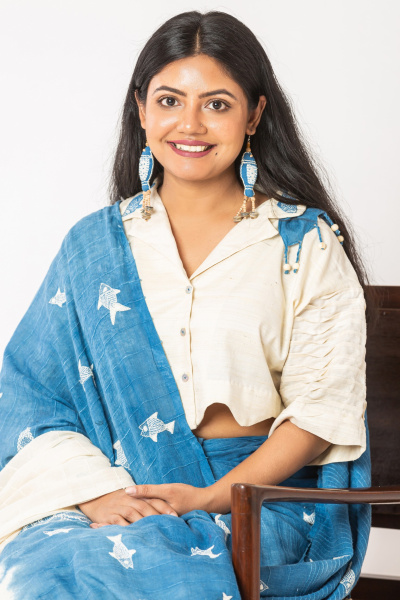
Ask Afsana Ferdousi about fashion, and she is unlikely to begin with colour palettes, seasonal trends, or celebrity wardrobes. Instead, she talks about stories.
For the sustainable fashion designer, visual storyteller, and educator, clothing is not only something people wear but also a medium through which culture, memory, identity, and history continue to travel through everyday life.

"Fashion has a unique ability to become part of everyday life," she shares. "Unlike many other creative disciplines that are observed from a distance, fashion is worn on the body and moves through different social and cultural spaces”.
That perspective has shaped her career for more than a decade, during which she has represented Bangladesh on platforms across Asia and Europe while consistently advocating for sustainability, cultural storytelling, and craftsmanship.
At a time when fashion often feels dominated by trends and rapid consumption, Ferdousi's work raises a different question: What if a garment could carry something more meaningful than style?
Beginning with a story
Many designers begin with a silhouette or fabric swatch. Ferdousi begins elsewhere. She believes that every collection starts with an idea.
"As a visual storyteller and sustainable fashion designer, I usually begin with an idea or a story," she explains. "Every collection starts with a narrative that I want to explore, sometimes rooted in culture, memory, craftsmanship, nature, or a social issue."
For her, textiles are never neutral materials. They carry histories, labour, and emotional weight. Once the concept becomes clear, she starts exploring the materials, visual references, and techniques that can communicate that narrative.
"I see fabrics not simply as materials but as carriers of meaning, history, and human connection," she says.
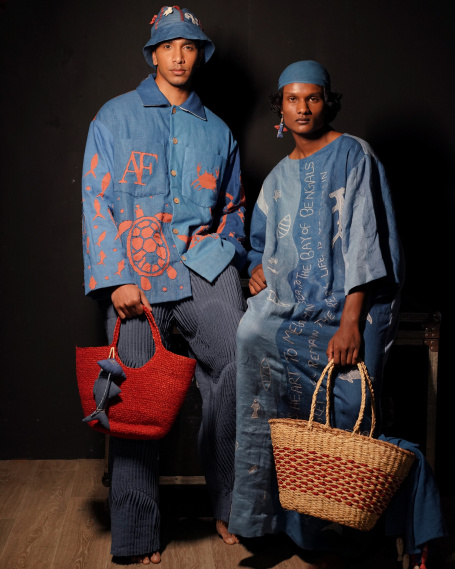
This process allows her collections to function as visual narratives rather than standalone garments. The final pieces become part of a larger conversation about culture, identity, and place.
Heritage beyond nostalgia
In Bangladesh's fashion industry, the word "heritage" appears frequently. Yet, Ferdousi believes it is often misunderstood.
For her, preserving heritage does not mean freezing traditions in time.
"Preservation is not about placing heritage in a museum and keeping it unchanged," she says. "It is about ensuring that traditional knowledge remains relevant and valuable in contemporary life."
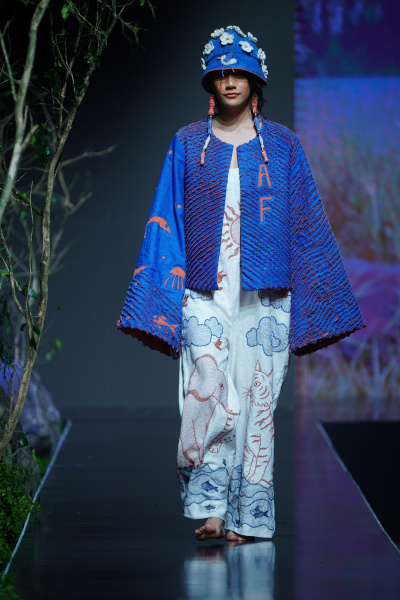
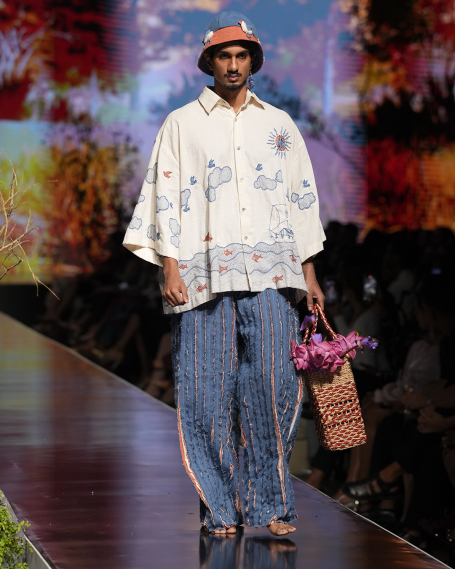
That philosophy has informed much of her work. Rather than treating traditional techniques as decorative elements, she focuses on finding meaningful ways to integrate them into contemporary design. This often involves working directly with artisans, documenting traditional skills, and supporting craft communities whose knowledge has been passed down through generations.
The goal is not simply cultural preservation, but also cultural continuity.
"Heritage survives when it continues to evolve while retaining its cultural essence," she says.
The challenge facing craftsmanship
While discussions around traditional crafts often focus on economics, Ferdousi argues that the challenges run deeper.
 For all latest news, follow The Daily Star's Google News channel.
 "The biggest threat to traditional craftsmanship is not a single factor, but the widening gap between tradition and relevance in today's world," she explains.
Low wages and limited economic opportunities certainly create difficulties for artisans. However, she believes visibility and structural support are equally important concerns.
Many traditional crafts continue to exist in isolated communities with limited access to contemporary design networks, educational opportunities, or global markets. As a result, younger generations frequently view these professions as unstable or outdated.
"Changing tastes are part of the natural evolution of culture," she says. "But when crafts are not reinterpreted or reintroduced in modern contexts, they risk being left behind."
She also points to the absence of stronger institutional support. Greater investment in training, innovation, artisan development, and cultural preservation could help traditional skills remain relevant in a rapidly industrialising world.
For Ferdousi, the solution lies in integration.
"I believe the real issue is the lack of integration between designers and artisans, between heritage and innovation, and between local skills and global platforms."
Fashion as cultural diplomacy
Since 2011, Ferdousi has represented Bangladesh internationally through sustainable fashion initiatives, exhibitions, and design platforms.
Her objective has always extended beyond showcasing clothing.
"I hope my work contributes to a stronger recognition of Bangladesh as a source of creativity, culture, storytelling, and design excellence, not only as a manufacturing hub," she says.
That distinction matters.
Bangladesh is globally recognised as one of the world's largest garment-producing nations. Yet, much of the international conversation focuses on manufacturing capacity rather than creative innovation.
Through her collections, Ferdousi attempts to shift that narrative.
"Representation is not only about visibility," she says. "It is about storytelling and reshaping perceptions of what Bangladeshi fashion stands for; how its stories are told on global platforms."
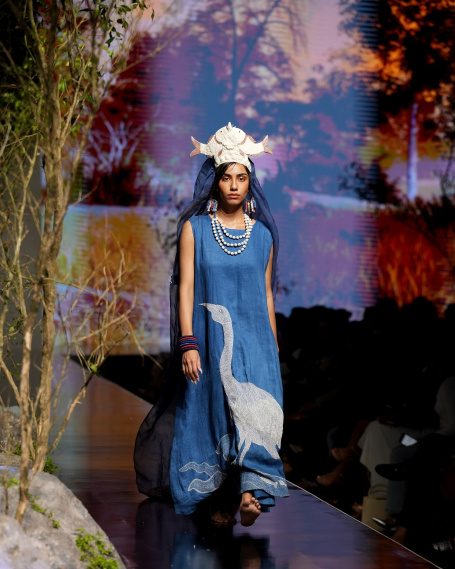
Her work highlights a Bangladesh that is rich in craft traditions, creative experimentation, and cultural knowledge.
A message for the next generation
As an educator, Ferdousi is equally invested in the future of design. Her advice to young designers is remarkably simple.
"I would encourage them to spend time understanding who they are before deciding what they want to sell."
In an industry where visibility often appears more valuable than originality, she urges emerging designers to focus on self-awareness, cultural understanding, and purpose.
"Authenticity comes from clarity of purpose, not from marketing," she says. She is particularly critical of imitation — a habit she believes limits long-term growth.
"People connect with brands that have a genuine point of view, not replicas of existing ones."
That belief ultimately reflects her own career.
While many designers create garments, Afsana Ferdousi creates narratives. Her collections may take the form of clothing, but their purpose extends far beyond the wardrobe. Through them, she documents culture, supports craftsmanship, challenges assumptions, and expands conversations about what Bangladeshi fashion can become.
In that sense, the garments are only the beginning of the story.
Photo: Mercedes-Benz Fashion Week Sri Lanka 2025
Comments