


The harmful truth about shaming new mothers
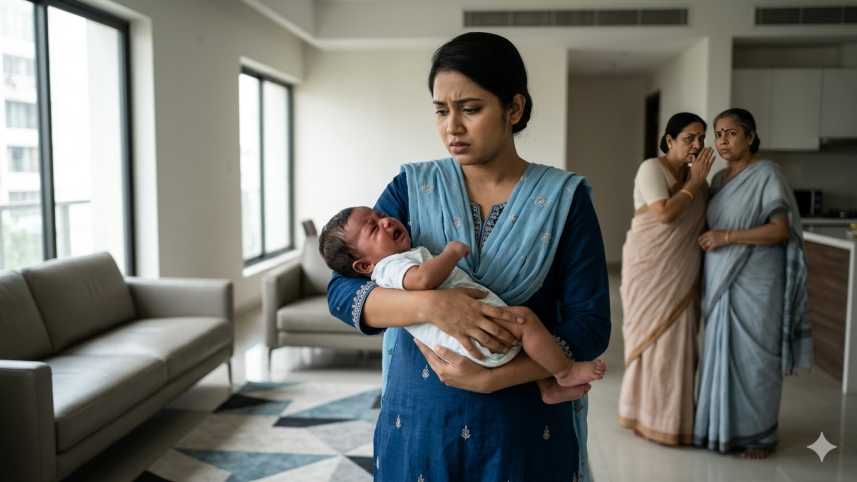
Imagine the doctor cutting into seven layers of your skin to take out your precious baby, only to come out and hear from cousin Karen that a C-section was not even a “real birth”. Alternatively, dealing with a colicky baby and killing yourself with power pumping sessions, for someone to shame you that formula feeding will poison your baby.
Parenting choices — vaginal birth vs caesarean, breastfeeding vs formula feeding — are often framed as moral tests of motherhood and most women, especially in this part of the world, have either faced it themselves or know someone who has. These comparisons come up in conversations, social media, well-meaning parenting communities, and even in doctors’ chambers, but they have the potential to seriously harm a mother’s mental health post-partum or further.

“My two-month-old wouldn’t latch,” said Fida Jahaan, mother and teacher. “I remember my mother and my doctor having a whole courtroom discussion on how I was a bad mother because I was not able to get my son to latch!”
Fida remembers the acute sense of betrayal she felt from her mother, who had used this moment to bond with the doctor at the expense of her own daughter’s mental health. “I had already been deemed a culprit by them. Things did not change much even after it was diagnosed that my son had a congenital heart disease, and simply could not suck. It was never me, but my own mother and doctor made it all about me anyway.”
The origin of these judgements lies in a few prevalent, albeit baseless, cultural forces. Idealised notions about a “natural” motherhood valorise pain and demand physical proof of commitment. At the same time, the mystery around why C-sections and formula can sometimes become crucial for a baby’s (and mommy’s) health lets ‘moral’ (read: toxic) language fill factual gaps.
“I was in active labour for 24 hours, and I had not felt my baby move for the last couple of hours,” shares Neha Fawad, a businesswoman. “It was peak COVID season, there was a cyclone alert out, and I knew that if I did not opt for a C-section right then, I may be looking at the worst.” She remembers her doctor’s words — I expected better from you. “But there was no way I was waiting another six hours to appease her — baby first!”
The real costs of shaming
Unfortunately, shaming mothers for their birth or feeding choices can be both physically and mentally harmful for them. Hoping to get some validation from the self-proclaimed gurus of motherhood, new mothers often kill their physical health, trying to breastfeed babies who will not take to it. Others will damage their fragile states of mind, convincing people that their stitches hurt just like perennial tears, and that a C-section is actually a major surgery.
“My doctor told me I would be poisoning my child if I gave him formula milk,” gasped Rumana Shah, a first-time mum. “My milk flow was not enough, and for a month and a half, I almost starved my son before I changed doctors.”
Rumana contrasts how skeletal he had become in those months and how her son thrived after she was allowed to supplement her natural feed with formula. “Imagine the mom guilt afterwards!”
Already facing recovery, sleep deprivation, and postpartum mood disorders, mothers find themselves anxious and isolated, especially as they see that asking for external support for traditionally “naturally occurring” conditions like insufficient milk flow, improper latching, or medical care leads to more criticism. It also pushes back real conversations that should be initiated around topics like prior health conditions, emergency complications, infant needs, medication use, lack of lactation supply, workplace constraints, etcetera, doing future mothers no favours.
“I was a first-time mom, and my baby had come after years of trying,” mentions Uzma Malik. “Unfortunately, milk flow was slow, and until my body fully complied, I had to use formula for my son,” Uzma remembers a neighbour’s two cents on the matter. “A real mother’s chest would burst open at her child’s first cry,’ they said. Maybe I was not a real enough mother.”
Complex evidence, simple choices
There is no denying the benefits of breastfeeding for many infants, including reduced infections, higher immunity, and more. Vaginal births come with a shorter recovery time, in most cases. “But benefits and evidence should not give someone else the right to adopt a holier-than-thou approach to motherhood,” maintains Rumana. “Especially doctors, whose job is to reassure and heal.”
C-sections can be lifesaving; many babies take to formula right away and thrive. In short, a baby’s birth and overall health depend on more than simply a mother’s choice of the birthing process and how they choose to feed their offspring — especially if other factors such as prenatal care, nutrition, social support, and parental mental health are constantly pushed into the shadows.
How to be the change
Often, compassion goes further than suggestions and opinions: ask what a mother might need for her recovery period — a simple, home-cooked meal, a break, a sympathetic ear — and bring them just that. Sometimes, new mothers are too tired to raise their voices against the injustices they face from home and society. Sharing accurate information with “well-meaning elders,” correcting their myths gently and pointing new parents to evidence-based resources can help break the vicious cycle of toxicity around the issue.
It is also important to actively choose the mother and respect her choices, whether instigated by medical or economic realities, or simply her own freedom of choice. Admitting that what’s best for one family isn’t automatically best for another is a powerful change-maker.
 For all latest news, follow The Daily Star's Google News channel.
Comments