


Visiting Falklands Islands: Where Penguins Roam Free
For a Bangladeshi traveller, reaching the Falklands is not easy. The islands lie in the South Atlantic, roughly 480 kilometres from mainland South America, more specifically Argentina. The archipelago consists of two principal islands, East Falkland and West Falkland, along with hundreds of smaller islands. Stanley, on East Falkland, is the capital and main population centre.
The distance is only part of the challenge.

Regular access is limited, flights are expensive, and the islands are far removed from the world's major travel routes. Scheduled air links include services connecting the Falklands with South America, while flights from the United Kingdom operate from RAF Brize Norton. Cruise and expedition ships provide another important way of reaching the islands.
For ordinary visitors, the Falklands has their own immigration requirements.
My own arrival was different because I was travelling as part of an expedition cruise. I was initially concerned because I did not have a UK visa and had very little time to arrange one specifically for the Falklands.
Oceanwide Expeditions, the Dutch expedition company operating our voyage, assured us that the necessary landing arrangements would be handled through the ship's authorities. We submitted our passports to the ship's authorities and received them back after leaving the British territory. We also received Falkland Islands immigration stamps in our passports — an unexpected and memorable souvenir of the journey.
Heading into the South Atlantic
The moment we boarded MV Hondius in Ushuaia, we knew the Falklands were our first major destination. As the ship began sailing south, our excitement grew. We passed through the Beagle Channel, the spectacular waterway at the southern tip of South America that connects the Pacific and Atlantic oceans through the waterways around Tierra del Fuego.
Soon we were sailing into the majestic South Atlantic. The deep blue water of the southern ocean was overwhelming. For a while, the vast horizon and the ship moving through endless water reminded me of the great movie Titanic. But there was no drama—only an immense ocean, a sense of freedom and the feeling that we were moving farther away from the familiar world.
The islands are home to only a few thousand people. Life is shaped by remoteness, fishing, farming and tourism. Sheep farming has traditionally been important, while commercial fishing is a major pillar of the modern economy.
Tourism, particularly expedition and cruise tourism, has also become increasingly important. For me, one of the most fascinating questions was why people choose to live in such a remote place. Yet after seeing the island communities, I began to understand that remoteness does not necessarily mean isolation from a meaningful life. For the people who live there, the Falklands is simply home.
The political story remains impossible to ignore.
Argentina claims sovereignty over the islands and calls them Islas Malvinas, while Britain administers them as a British Overseas Territory. The 1982 war remains central to the history of both countries. In a 2013 referendum, Falkland Islanders overwhelmingly voted to retain their existing status as a British Overseas Territory. The dispute continues, but during my journey I found myself much more interested in the human and natural story of the islands.
Our first landing
Our Zodiac took us from Hondius towards Carcass Island. As soon as we reached the shore, I stepped onto Falkland soil. The sandy beach gave way to tussock grass and marshy ground, and the air smelled of sea, grass and peat.
And then I saw my first wild penguins.
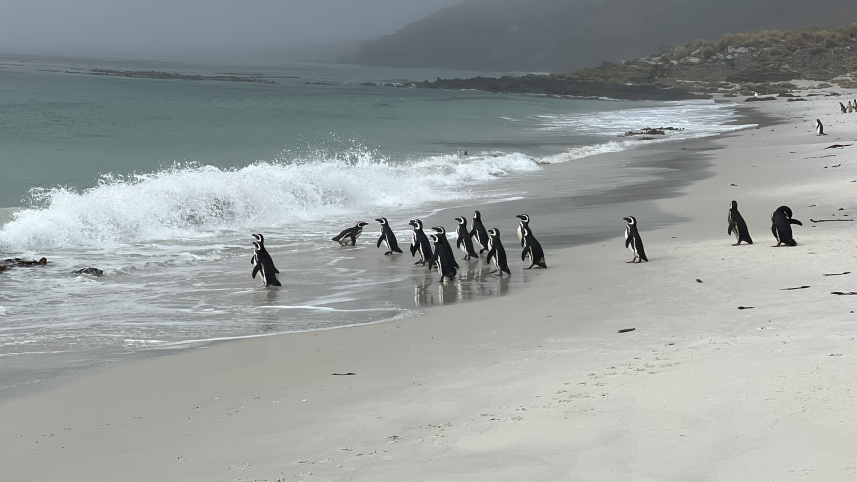
Magellanic penguins waddled along the beach and around their burrows. Seeing them in their natural environment was completely different from seeing penguins in a zoo or on a screen. They were curious, energetic and entirely unbothered by our presence.
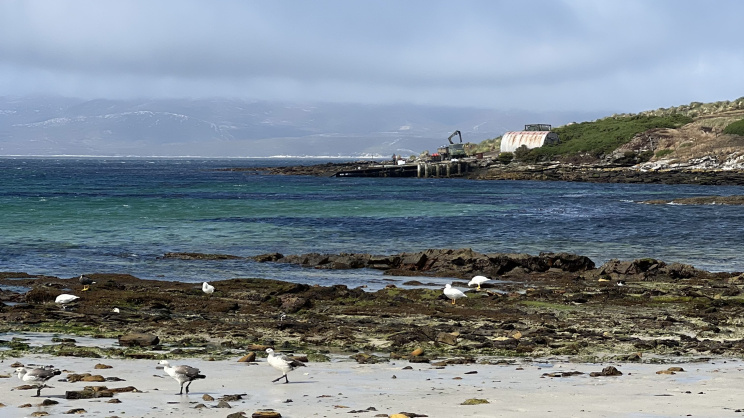
Carcass Island offered much more. We saw Steamer ducks, geese and other birds, while sheep grazed across the landscape. We walked several kilometres towards a small settlement, where residents welcomed visitors with tea and homemade pastries. Sitting there, surrounded by the quiet landscape of a remote South Atlantic island, felt almost unreal.
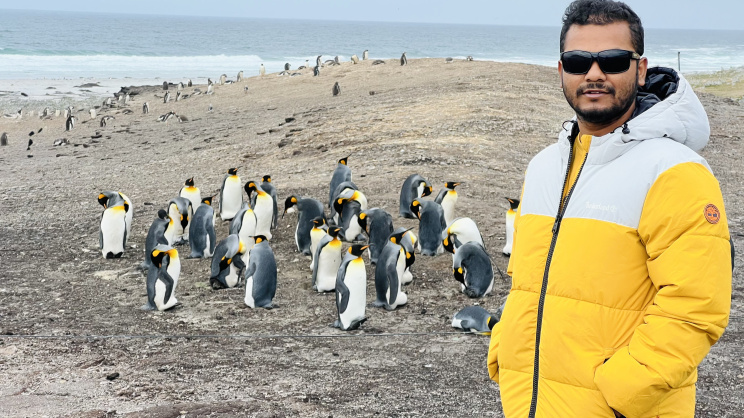
And there was another first for me. On Carcass Island, we also encountered King penguins for the first time. They were fewer in number than the Magellanic penguins, but their striking appearance immediately caught our attention. Seeing a King penguin in the wild was one of the most memorable moments of the expedition.
 For all latest news, follow The Daily Star's Google News channel.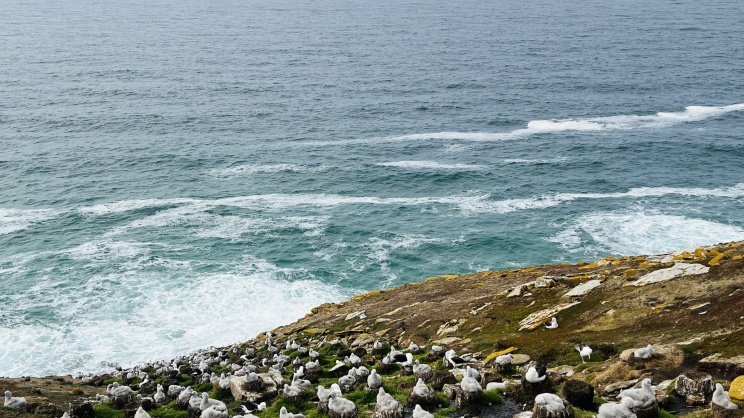
After returning to Hondius for lunch, we headed towards Saunders Island. If Carcass Island introduced me to the Falklands, Saunders showed me just how extraordinary its wildlife could be.
We walked along the coast among Gentoo penguins sitting on nests and guarding their chicks. Magellanic penguins appeared around their burrows, while Rockhopper penguins hopped energetically between rocks. Then we reached a colony of black-browed albatrosses.
The albatrosses were magnificent, too. Their enormous wings, elegant appearance and perfectly formed nests made them one of the most impressive sights of the expedition. We watched them carefully from a safe distance, following the instructions of the expedition guides so that we did not disturb the birds.
The beaches and hills around Saunders were filled with life: penguins, gulls, oyster catchers, skuas, caracaras, Steamer ducks and sheep. It was a powerful reminder that the Falklands is not simply a place defined by a war or a sovereignty dispute. It is also a remarkable wildlife destination.
Stanley amazed me
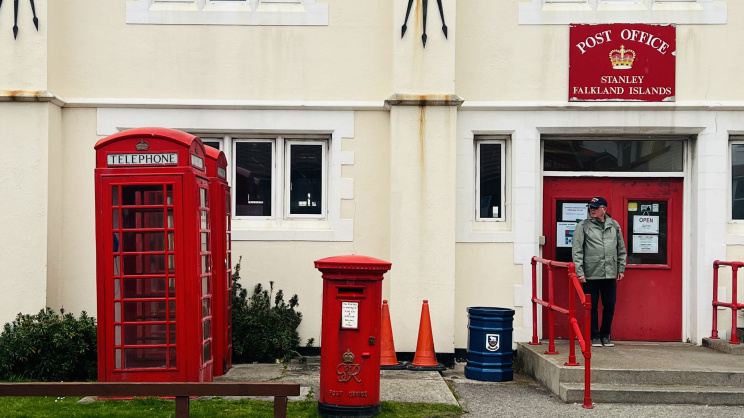
Eventually, we sailed towards Stanley, the capital. In many ways, it felt like a tiny piece of Britain transplanted into the South Atlantic. The familiar red telephone box, post boxes, British-style streets, pubs, cafés and shops created an atmosphere that felt strangely familiar despite being thousands of kilometres from London.
We explored Stanley by hop-on hop-off bus, seeing the town and its surroundings. We visited the Falkland Islands Museum, explored shops and cafés, and took in the atmosphere of a small capital at the edge of the world. We also bought dry food and snacks from a local supermarket for the next stages of our expedition.
That simple supermarket visit became part of the adventure. We were preparing to continue across the South Atlantic, into the Southern Ocean and eventually towards the Antarctic Peninsula before returning to Ushuaia. With every mile south, the world around us would become more remote.
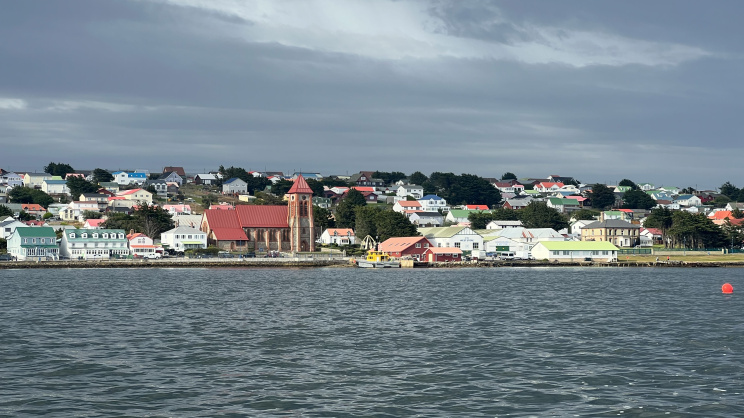
When we finally left Stanley, I looked back at the islands and thought about how my relationship with the Falklands had changed. I had first known it as a name in history books, then as the site of a devastating war, a continuing political dispute and a famous football rivalry. Now I had seen another Falklands—the Falklands of people, farms, fishing boats, supermarkets, penguins, albatrosses and endless blue ocean.
For years, I wondered why anyone would choose to live so far from the regular world. After visiting, I realised that perhaps the better question is not why they stay, but what makes a place feel like home.
For the rest of us, the Falklands may be one of the most remote destinations on Earth. For the people who live there, it is simply home. And for me, it was a dream finally fulfilled.
The writer is a Mass Communication and Journalism graduate from the University of Dhaka, a travel enthusiast, filmmaker, and tourism entrepreneur.
Photo: Courtesy
Comments