


Fiscal year to run from April to March

Bangladesh is set to start its fiscal year from April, instead of July, from 2028 to ensure quality of its development spending
At present, the fiscal year runs from July to June, and the implementation of the annual development programme (ADP) tends to be slow at the start of the fiscal year, pick up pace progressively, and then hit full speed towards the end, which coincides with the monsoon season that runs up to August.

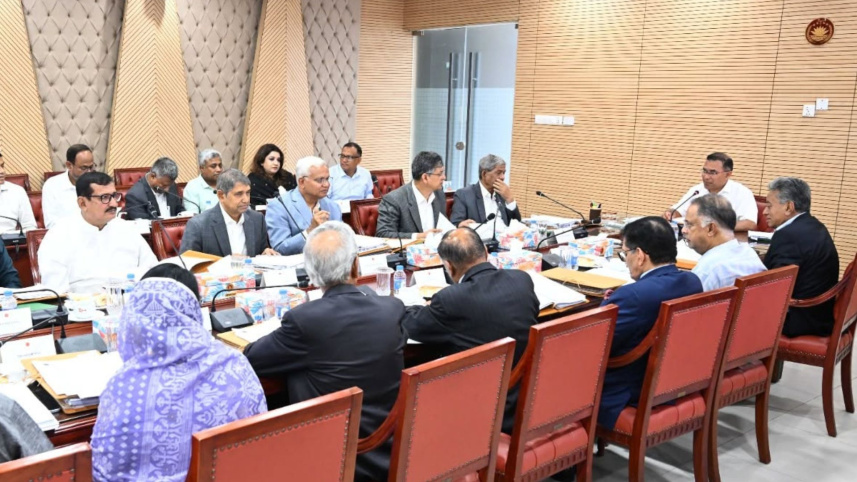
The quality of work is not up to the mark, and there is widespread public suffering if development works are carried out during the monsoon, according to a press release from the cabinet division issued after the cabinet meeting yesterday.
The monsoon causes delays and drives up costs, Muslim Chowdhury, a former finance secretary, told The Daily Star.
“If the April-March period is used as the fiscal year, infrastructure development activities can be completed before the monsoon,” said the cabinet division press release.
To implement the new timeline, the upcoming fiscal year will be treated as a transitional fiscal year and will run from July to March so that fiscal 2028-29 can start in April 2028.
A committee comprising the cabinet division, the Bangladesh Bank, the National Board of Revenue, the legislative division, the finance division and other relevant stakeholders will determine the subsequent course of action to implement the new fiscal year, the release said.
Alongside changing the fiscal year, the government will also introduce technological modifications to various systems involved in public financial management.
However, implementing the decision will require amending the constitution as well as making necessary amendments to the General Clauses Act, 1897.
From the British period, the fiscal year in the subcontinent was from April to March, which continued after the Partition, said Muslim Chowdhury, a former Comptroller and Auditor General of Bangladesh.
“However, military ruler Ayub Khan changed the timeframe of Pakistan’s fiscal year to July-June starting from 1960-61.”
Bangladesh has maintained a July–June fiscal year since gaining independence in 1971. In contrast, neighbouring India has continued with the British-era April–March timeline.
Among other South Asian countries, Sri Lanka and the Maldives follow a January–December fiscal year, Nepal mid-July to mid-July, Bhutan July–June, and Afghanistan December–December.
Meanwhile, at yesterday’s cabinet session, chaired by Prime Minister Tarique Rahman, the draft “Special Response Battalion (SRB) Act, 2026” got the final approval.
Once the proposed draft is enacted into law, the much-maligned Rapid Action Battalion will run as a specialised unit of the police force named “Special Response Battalion (SRB)”.
The force would continue to be headed by a serving additional inspector general of police under the command of the inspector general of police.
The proposed law allows the formation of a multi-party grievance redressal committee to handle citizen complaints and internal grievances of unit members, said the home ministry in a press release.
The draft law also includes provisions for transferring Rab’s manpower, orders, powers, authority, facilities, funds, assets, accounts, records and other related property to the SRB.
Rab’s existing regulations will remain in effect with necessary adaptations until rules for the new organisation are framed.
The cabinet also approved the draft of the “National Strategy and Multi-Year Action Plan for a Lead-Free Bangladesh (2026-2035)” to raise public awareness on the perils of lead poisoning, protect vulnerable groups (children, pregnant women and workers) and control lead pollution.
 For all latest news, follow The Daily Star's Google News channel.
 Duty and tax exemptions have been granted for a specific period on the import of green chillies and tomatoes to ensure the country’s food security, stabilise the prices of essential commodities and protect the purchasing power of general consumers.
Comments