


Let’s repair the nation together
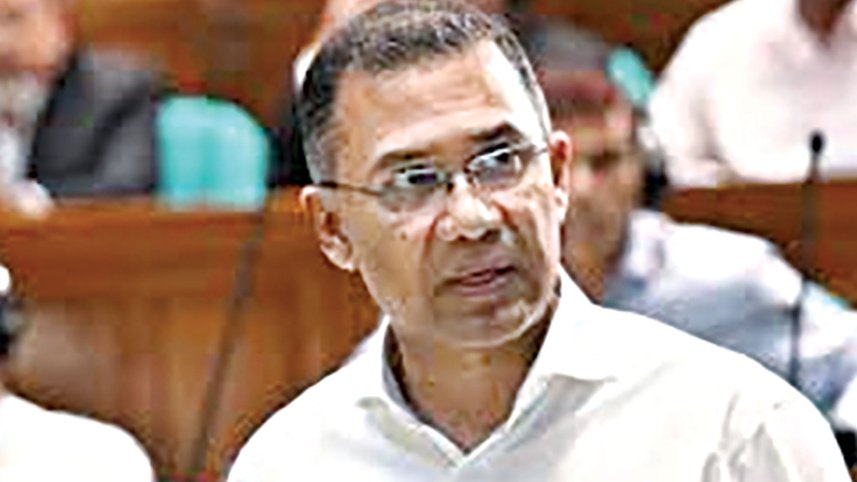
“If the gas or electricity crisis could be solved by holding a long march with vehicles, then we would have done it first.”
Differences of opinion and political competition are natural in a democratic system, but they should not turn into hostility, Leader of the House Tarique Rahman has said.

He urged unity among pro‑democratic fronts, warning that divisions and conflicts may ultimately revive defeated fascist forces.
“We must continue repairing the state together, in unison,” Prime Minister Tarique said in his closing speech at the third session of parliament yesterday.
In his 30‑minute speech, he also touched on the role of the opposition, the gas and power crisis, default loans, and freedom of speech, among other issues.
Tarique said while the government expected cooperation, the opposition responded with a long march involving a large convoy of vehicles.
“If the gas or electricity crisis could be solved by holding a long march with vehicles, then we would have done it first.”
He said the government has already taken several measures to tackle the gas and electricity crisis and expressed confidence that the situation would gradually improve.
Tarique also said there had not been any meaningful effort to boost domestic gas production or explore gas in the Bay of Bengal in over a decade.
The prime minister said Bangladesh’s heavy dependence on Middle Eastern energy left it vulnerable to oil and gas supply disruptions shortly after the government took office.
He said the situation worsened after an accident shut down one of the country’s two Floating Storage and Regasification Units.
Tarique also criticised the use of quick rental power plants by the ousted Awami League government, saying the system benefited a section of people while increasing the state’s financial burden.
Referring to the defaulted loans left behind by the AL regime, Tarique said, “In 2024, defaulted loans were reported at just 11 percent. But in 2025, under the interim government, a forensic audit revealed the actual figure was 35.5 percent.”
He said measures taken by his government reduced defaulted loans to 32.6 percent.
Addressing political discourse, Tarique said, “Today there is a democratic environment in the country, with freedom of speech. But we must remember that this freedom must not cross the bounds of decency.”
He urged political parties and public representatives to act responsibly and ensure disagreements do not descend into personal attacks or abusive exchanges.
“Why should we use in public the words we would not feel comfortable using in a family setting?” he said as he called for a united stand against abusive political language.
Earlier, in his 45-minute speech, Opposition Leader and Jamaat-e-Islami Ameer Shafiqur Rahman said opposition lawmakers were not receiving the same rights and respect as members of the ruling party.
He said all political forces had joined the 2024 movement and succeeded in ousting the then government.
He expressed disappointment over the failure to implement the referendum verdict. The Jamaat ameer said 68 percent of voters had voted ‘yes’, but implementation became a problem since the day lawmakers took oath.
 For all latest news, follow The Daily Star's Google News channel.
 “We did not want a rule of one party,” he said.
“There is still time,” he said, urging the government to respect the people’s verdict and implement the reforms through a constituent or reform assembly.
Making an oblique reference to Sheikh Hasina, he said, “Even after fleeing, she is repeatedly disturbing this nation, inciting people and trying to destabilise society and the country.”
On India, Shafiqur said Bangladesh does not deny India’s contributions as a neighbour, but both sides must demonstrate goodwill.
“We no longer want to see the body of Felani hanging on the barbed wire at the border,” he said, urging the government to engage with India on the basis of an independent foreign policy to resolve pending issues, including the Teesta water-sharing dispute, the Padma-Ganges water-sharing issue and border killings.
Shafiqur said there had been no visible progress in the past six months on the trials of those responsible for the killings during the July uprising.
Referring to the energy and power crisis, he said production at factories had fallen to 50 percent in some cases. Failure to take priority measures to protect industries would harm banks and the overall economy, he warned.
The Jamaat chief also urged the government to keep commodity prices under control, ensure fair prices for farmers, end extortion and syndicates, eliminate use of drugs and illegal firearms, and appoint people to state positions based on merit, competence and integrity.
Concluding his speech, he also called for a culture of civility in parliament.
“We will not hit anyone personally or hurt anyone. We want to end this culture,” he said.
Comments