


Sheds that no longer serve passengers

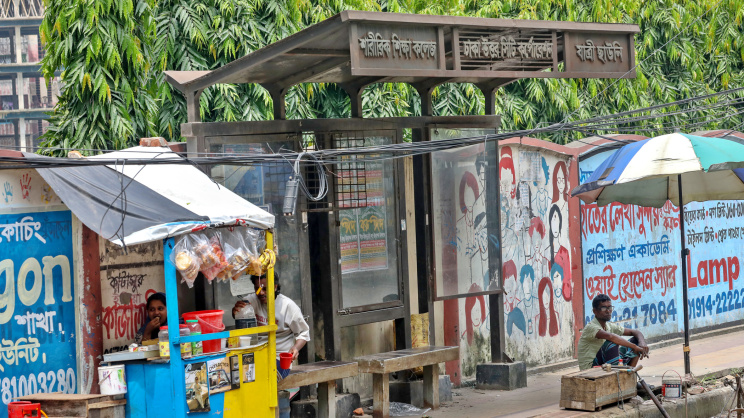
Near Baitul Mukarram Mosque, there is a passenger shed on the road from Paltan to Motijheel.
At first glance, however, it is difficult to recognise it as one, as the structure meant for waiting passengers has been completely taken over by hawkers and makeshift shops.

Mamunur Rashid, an office-goer who regularly commutes from the area, said, “We have to wait for buses on the roadside because there is no space for us under the shelter.”
While amenities such as modern sidewalks, drinking water, Wi-Fi, tea stalls and mobile phone charging facilities were supposed to be available at Dhaka’s passenger sheds, the reality is broken benches, damaged roofs, poor maintenance, littering and illegal occupation by roadside shops and vendors.
This is despite crores of taka being spent on the infrastructure along major roads to provide comfort and safety for public transport users.
To make matters worse, buses often do not stop at the designated sheds.
The capital has more than 130 old and new passenger sheds, including over 61 under Dhaka South City Corporation (DSCC) and around 70 under Dhaka North City Corporation (DNCC).
More than 100 of these sheds were built in 2021 under the Bus Route Rationalisation programme through a joint initiative of the Dhaka Transport Coordination Authority (DTCA), Dhaka Metropolitan Police (DMP), DSCC and DNCC. The objective was to establish designated bus stops, improve passenger safety and reduce traffic disorder.
Five years later, however, most of these sheds have largely failed to achieve those goals.
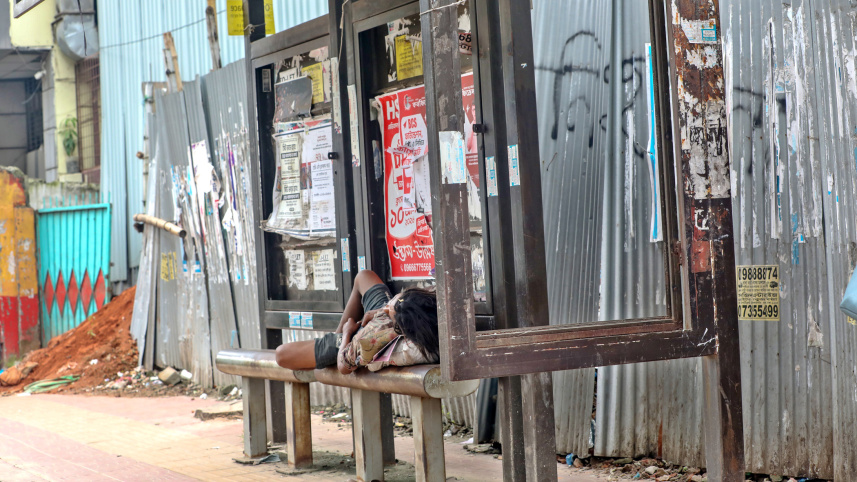
During a visit to a DSCC passenger shed opposite Aziz Super Market near Shahbagh, a homeless man was seen sleeping there, while almost no passengers were waiting as buses rarely stop at the location.
Dhaka University student Ali Ahsan said, “While waiting for a bus for quite some time, I noticed that no bus stopped at the shed and all picked up passengers from the Shahbagh intersection instead. Passengers and bus drivers alike ignore designated bus stops, creating disorder across the transport system.”
Passengers also complained that the sheds offer little protection from rain. At Chankharpul, beside the new building of Dhaka Medical College Hospital, rainwater blows into the shelter because of its open design.
Sushmita Roy, who was waiting there for a bus to Savar, said, “I got soaked because rain was coming in from all sides.”
A similar scene was seen at a shelter with a damaged roof in Banani’s Kakoli area.
Many busy areas, including Mirpur Ansar Camp, Motijheel, Badda and Rampura, still lack adequate passenger sheds. Meanwhile, some have been built where buses rarely stop, making them largely redundant.
At Gulshan-1 Lake Road, a DNCC passenger shed has effectively become a marketplace occupied by fruit vendors.
Sajjad Ibne Kamal, who was waiting for a bus to Azimpur, said, “The shelter is occupied by hawkers, and buses don’t stop there. Everyone therefore waits at the intersection.”
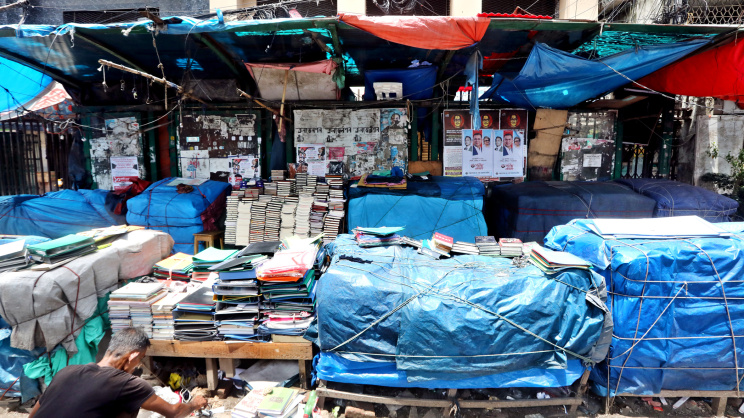
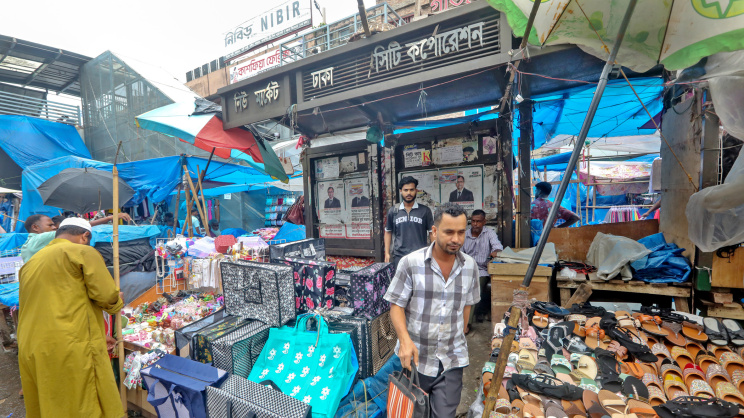
Similar scenes were observed at a passenger shed in the New Market area, which has been rendered unusable by broken benches, hanging clothes and roadside stalls.
At DMCH, traders use the shelter to store goods, while at Shishu Academy, benches have been turned into plant display racks.
In Kalabagan, homeless people were found sleeping on the benches.
 For all latest news, follow The Daily Star's Google News channel.
 Passenger sheds in Shyamoli, Gabtoli, Mirpur, Jatrabari, Mohakhali, Malibagh, Kuril and Sayedabad face similar problems.
Citing passenger sheds as a basic civic facility, Mozammel Hoque Chowdhury, secretary general of Bangladesh Jatri Kalyan Samity, urged authorities to free them from occupation and maintain them properly.
Urban planners say the infrastructure must be built with users’ needs, local climate, transport patterns and long-term maintenance in mind.
Prof Adil Mohammed Khan, executive director of the Institute for Planning and Development (IPD), said the passenger sheds were not properly integrated into the 2021 Bus Route Rationalisation Project, as buses often do not stop in front of them, undermining both their usefulness and the city’s transport initiative.
“Passenger sheds should be planned as part of an integrated urban transport strategy, coordinated with bus bays, footpaths, and the overall public transport network, rather than being implemented through isolated projects,” he added.
Rajib Khadem, superintendent engineer (Civil) at DSCC’s Traffic Engineering Circle, said many of the sheds have deteriorated over time and that the city corporation plans to renovate damaged shelters and build new ones where necessary.
Nayeem Rayhan Khan, executive engineer (Civil) at DNCC’s Traffic Engineering Circle, said, “Regular monitoring and maintenance of the sheds become difficult as there is no dedicated budget. Even so, we repair damaged shelters whenever possible.”
Comments