


Sundarbans comes alive again after three-month closure

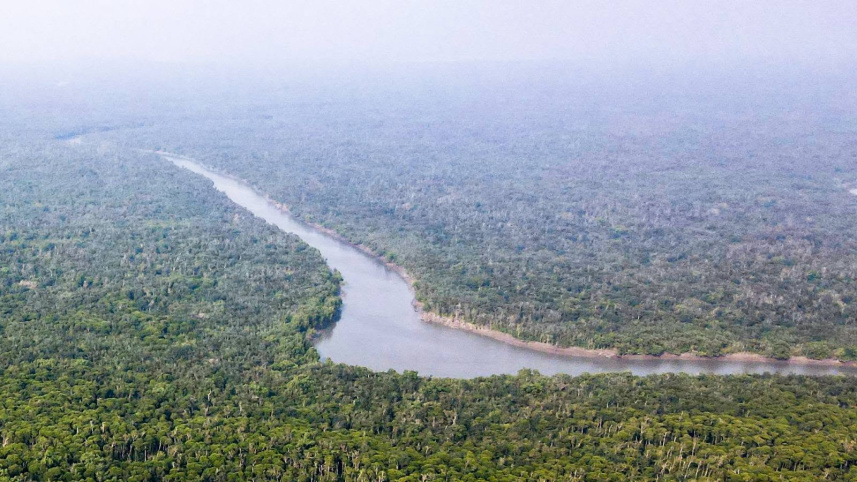
After three months of silence, the Sundarbans came alive again this morning as tourists, fishermen and other forest-dependent people entered the world's largest mangrove forest following the end of its annual conservation closure.
Tourist vessels set off from different entry points carrying visitors, while fishermen prepared their boats, nets and other equipment to resume fishing and crab collection.

“Four large vessels left for the Sundarbans this morning. As the weather is somewhat adverse, they have been advised to follow certain safety precautions,” Khulna Divisional Forest Officer (DFO) Hasanur Rahman told The Daily Star.
Many fishermen holding Boat Licence Certificates (BLCs) had already entered the forest, while others were preparing to leave, he said.
Day-trippers were mainly travelling to Karamjal via Mongla in the eastern part of the forest. In the west, visitors were heading to Kalabogi under the Khulna Range and Kolagachia under the Satkhira Range.
The forest department is issuing BLCs to 6,000 boats operating in the Khulna and Satkhira ranges this year.
Tourist entry and fishing in the Sundarbans' rivers and canals had remained suspended from June 1 to August 31 under the annual closure, intended to protect fish and wildlife during their breeding season and conserve the forest's biodiversity. The restriction also kept the forest's interior relatively free of human activity.
Al Amin Liton, executive president of the Tour Operators of Sundarbans, said four vessels entered the forest this morning, including two large tourist vessels capable of carrying 75 passengers each. More than 300 tourists travelled to the forest in total.
“We are dividing the vessels among three designated spots to manage tourist pressure. If four to six vessels stay at the same spot at the same time, it creates overcrowding, which can adversely affect the forest environment and wildlife,” he said.
“We want tourism to be conducted in a way that keeps the Sundarbans' natural environment and biodiversity intact.”
For many communities around the forest, the reopening also brought relief after three months without their regular source of income. During the closure, fishermen and crab collectors were unable to work in the forest's rivers and canals. Some repaired their boats and nets, while others borrowed money to meet household expenses.
Musa Sardar, a resident of Fakirabad village in Khulna's Paikgacha upazila, has been fishing in the Sundarbans for more than 25 years.
“I have a BLC and go to the Sundarbans every year to fish. We usually get more fish immediately after the ban is lifted because fishing remains suspended in the canals during the closure, allowing fish to accumulate,” he said.
Musa and two others planned to leave for the forest in the evening. They had spent Tk 4,500 preparing their boat and repairing old nets and other equipment, he said, adding that he would be keeping a close watch on the weather before setting out.
But it is not the weather that worries Musa most.
"The biggest fear is the robbers. Almost every fisherman has to enter the forest after taking a token from them. We are not getting much assurance from the forest department or the Coast Guard that they will ensure our security," he said.
"Still, we have to go because of our livelihood. We have no other option."
Responding to such concerns, the DFO said the department worked with the coast guard whenever incidents were reported.
"When incidents of robbery occur and we receive such information, we seek the coast guard's help and inform them immediately. The coast guard then carries out the rescue operation," he said.
Forest camps and stations have been instructed to remain alert to ensure the safety of fishermen and tourists, while guards have been told to prevent the entry of illegal nets and prohibited equipment.
 For all latest news, follow The Daily Star's Google News channel.
 Tourist spots have also been cleaned and pontoons repaired. Visitors have been asked not to carry single-use plastics into the forest and to dispose of waste in designated bins.
Shukla Saha, superintendent of police of the Khulna zone of Tourist Police, said visitors had already begun arriving in Khulna and Bagerhat from across the country.
“We have made preparations to ensure their safety and have already held meetings with tour operators, including those operating small boats to the forest's peripheral areas from Mongla,” she said.
“They have been asked to ensure necessary safety measures, including the availability of life jackets.”
Forest department data shows tourist numbers rose from 128,175 in 2015-16 to 216,143 in 2022-23 before falling slightly to 211,057 in 2023-24, the most recent year for which figures are available. The department collected around Tk 3.6 crore in revenue in 2023-24.
Forest officials said the three-month restriction gave fish and wildlife an opportunity to breed and move with less disturbance.
Professor Anwarul Kadir, director of the Sundarbans Academy, said the timing of the closure was justified and had been determined in consultation with experts.
“The timing is quite logical, as it coincides with the breeding season of many species. Restricting human activity during this period gives them an opportunity to breed and grow without additional pressure from fishing, tourism and other activities,” he said.
However, he said further scientific research was needed to determine whether the closure period should be extended.
“There should be more research examining breeding patterns, resource availability and the forest's overall ecological condition. A balance needs to be maintained between protecting biodiversity and the livelihoods of people who depend on this forest. A science-based approach can help determine the most appropriate period,” he said.
Comments