


Indian man faces Official Secrets Act case in Dhaka over espionage allegations
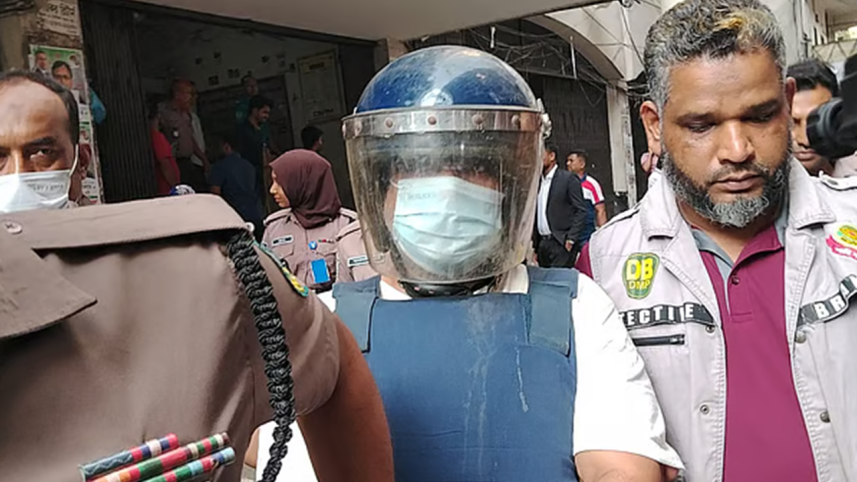
A 44-year-old Indian man, arrested in Dhaka last week over suspicious movements, has been named in a case under the Official Secrets Act on allegations of espionage, maintaining contact with a foreign intelligence agency and passing sensitive information.
Detective Branch (DB) Inspector Mezba Uddin of Dhaka Metropolitan Police filed the case with Uttara West Police Station today against Rabiul Islam, a resident of West Bengal, India.

Later, Dhaka Additional Chief Metropolitan Magistrate Md Sefatullah placed him on a seven-day remand after police produced him before the court seeking a 10-day remand, said Additional Public Prosecutor Muhammad Shamsud Doha Sumon.
Rabiul was arrested on September 22 under Section 54 of the Code of Criminal Procedure and was subsequently remanded between September 23 and 27.
According to the case statement, although Rabiul is an Indian citizen, his passport lists Riyadh, Saudi Arabia, as his place of birth.
“During questioning, Rabiul admitted that he had travelled to Bangladesh several times over the past 10 to 12 years. He entered Bangladesh using either tourist or business visas, mostly tourist visas,” the complainant said.
The case alleges that, under the guise of business activities, he was engaged in espionage and maintained contact with a foreign intelligence agency, passing important information to it.
According to investigators, Rabiul entered Bangladesh through the Bhomra land port in Satkhira on September 14 and stayed in the country until his arrest on September 22.
Detectives alleged that he attempted to send photographs of important government installations, restricted areas and sensitive government documents or information to a foreign intelligence agency.
Investigators also claimed that the dates of birth on his identity card and driving licence did not match the date on his passport and that he provided inconsistent answers during questioning. They further said he failed to provide specific reasons for his repeated visits to Bangladesh.
 For all latest news, follow The Daily Star's Google News channel.
Comments