


Sonarchar Wildlife Sanctuary offers little safety for buffaloes

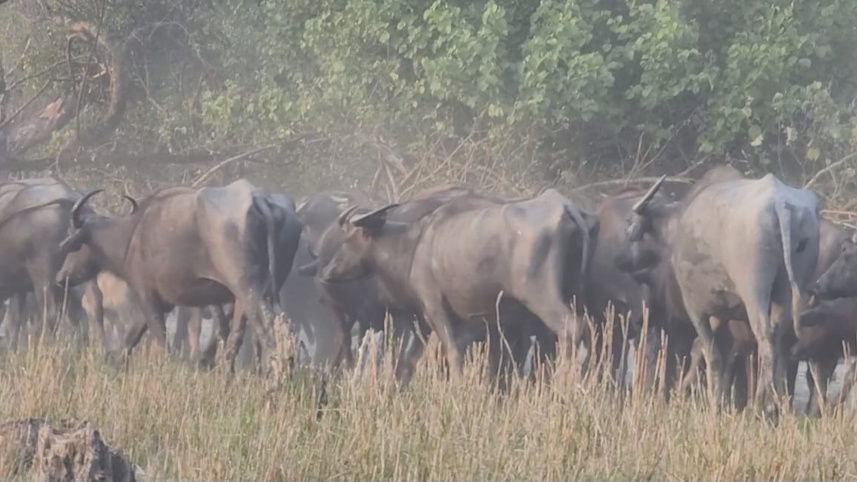
Deep inside Sonarchar Wildlife Sanctuary, wild buffaloes move through coastal forest and swamp land on an island in the Bay of Bengal. But their numbers are shrinking fast, as poachers continue to target the animals despite repeated drives, arrests and criminal cases.
Forest officials estimate that only 200-250 wild buffaloes now remain in the sanctuary under Patuakhali’s Rangabali upazila. However, a case filed by the department last year stated that the area was home to 400-500 buffaloes, indicating a sharp decline within a short period.

According to the Patuakhali Coastal Forest Division, Sonarchar is a 2,026-hectare island. First afforested in 1965-66 and restored after the 1970 cyclone, the forest was declared a wildlife sanctuary in 2011.
It is now considered one of Bangladesh’s most important habitats for wild buffaloes, alongside spotted deer and other wildlife.
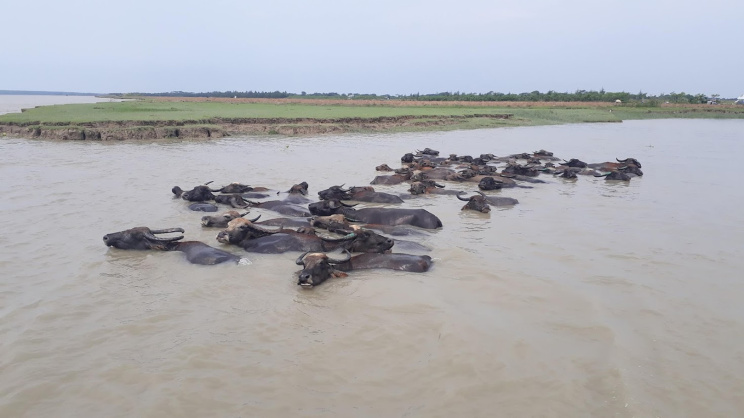
Photo: Star
Despite its protected status, poaching and meat trafficking remain unabated.
The Forest Department has filed three cases over the past 16 months against 19 individuals in connection with buffalo poaching and meat trafficking.
The first case, filed on March 3, 2025, accused 11 people of capturing and slaughtering a wild buffalo in the reserved forest before selling its meat. One suspect was arrested, while buffalo meat and parts of the animal’s hide were recovered from his house.
The second case was filed on March 22 this year against five people for allegedly trapping wild buffaloes and smuggling their meat from the Sonarchar Beat area.
On June 4, the Forest Department, with police assistance, detained a man in possession of buffalo meat and filed another case against three people.
According to case documents and local sources, some of the accused are affiliated with the BNP and its associate bodies.
They include Idris, president of Ward-9 BNP unit in Char Anda; Kamal Sikder, expelled president of Ward-9 Jubo Dal unit; Md Amzad Mallik, vice-president of the ward unit of Swechchhasebak Dal; and Md Kaiyum Sikder, an expelled member of the upazila Swechchhasebak Dal.
Following the cases, Kamal Sikder and Kaiyum Sikder were expelled from their respective party positions.
Repeated attempts by this correspondent to contact the four accused were unsuccessful. Idris and Kamal did not answer phone calls, while Amzad and Kaiyum disconnected the calls after being asked about the allegations.
Harunur Rashid Hawlader, general secretary of Rangabali upazila BNP, said any crimes committed by party leaders or activists were their personal responsibility, not the party’s.
“If anyone is involved in criminal activities, legal action against them is necessary in accordance with the law,” he said.
Md Nasir Uddin, beat officer at Sonarchar, said wild buffalo poaching and meat trafficking had become more frequent since the August 5 changeover in 2024.
“Over the last few months, three cases have been filed in this connection. We have strengthened our vigilance and night patrols,” he said.
Locals alleged that occasional arrests and seizures represented only the tip of the iceberg, as most incidents went undetected by the authorities concerned.
They claimed that those arrested were released on bail soon afterwards because of their political backing and later resumed their criminal activities.
Abul Kalam Azad, range officer at Char Mantaz, said a vested group was involved in poaching and meat trafficking using political links.
 For all latest news, follow The Daily Star's Google News channel.
 “If verdicts in the cases could be delivered promptly with exemplary punishments for the culprits, such criminal activities would likely decline,” he added.
Rangabali UNO Nirupam Mazumder said the Forest Department had been directed to maintain strict monitoring to curb the crimes, while legal action would be taken against anyone found involved.
Dr Md Shahriar Zaman, associate professor of agriculture, forestry and environment at Sher-e-Bangla Agricultural University, said wild buffaloes were already an endangered species in South Asia and unabated poaching was gradually pushing the animals towards extinction.
“Wild buffaloes help coastal and swamp ecosystems thrive and sustain themselves. Scientific surveys, GPS-based monitoring and stringent anti-poaching measures are urgently needed to save the remaining wild buffaloes in Sonarchar,” he said.
Comments