


Nearly 40 lakh fewer children got measles jab

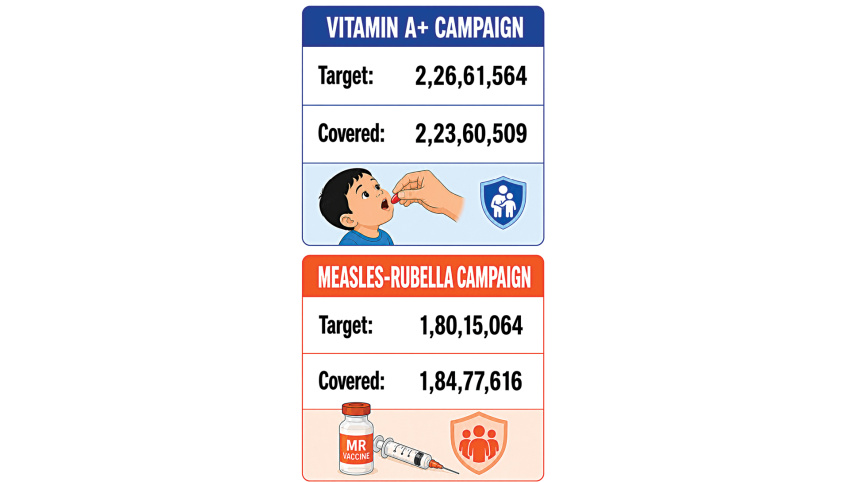
Nearly 40 lakh fewer children received the measles-rubella vaccine than those covered under the government’s recent Vitamin A Plus campaign -- a shortfall that may be fuelling the country’s continuing measles outbreak.
Official data show that 2.23 crore children aged between six months and 59 months received Vitamin A capsules during the nationwide campaign on June 28, while 1.84 crore children under the same age group have so far been vaccinated under the measles-rubella campaign.

“There have been differences between vaccination coverage and Vitamin A coverage in the past as well, but they were never this wide -- so, we are now analysing why this happened,” said an official of the Directorate General of Health Services (DGHS) asking not to be named.
In June, the country recorded an average of 1,103 measles and suspected measles cases per day, only slightly lower than the previous month’s average of 1,220, suggesting the outbreak has yet to slow.
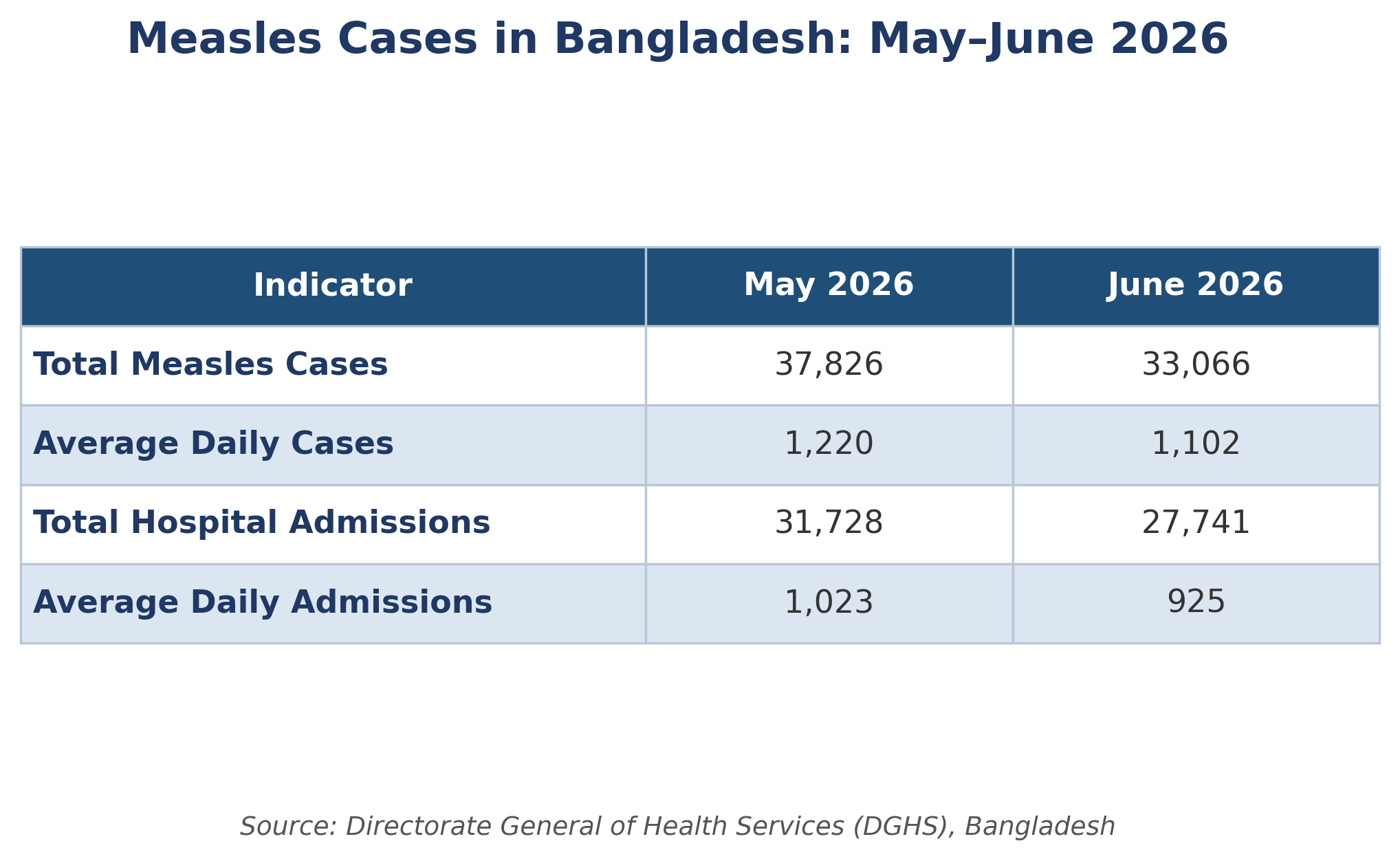
Hospital admissions also remained high during the period, with an average of 925 measles-related admissions a day in June, compared with 1,023 in May, indicating that transmission remains widespread and the outbreak is far from over.
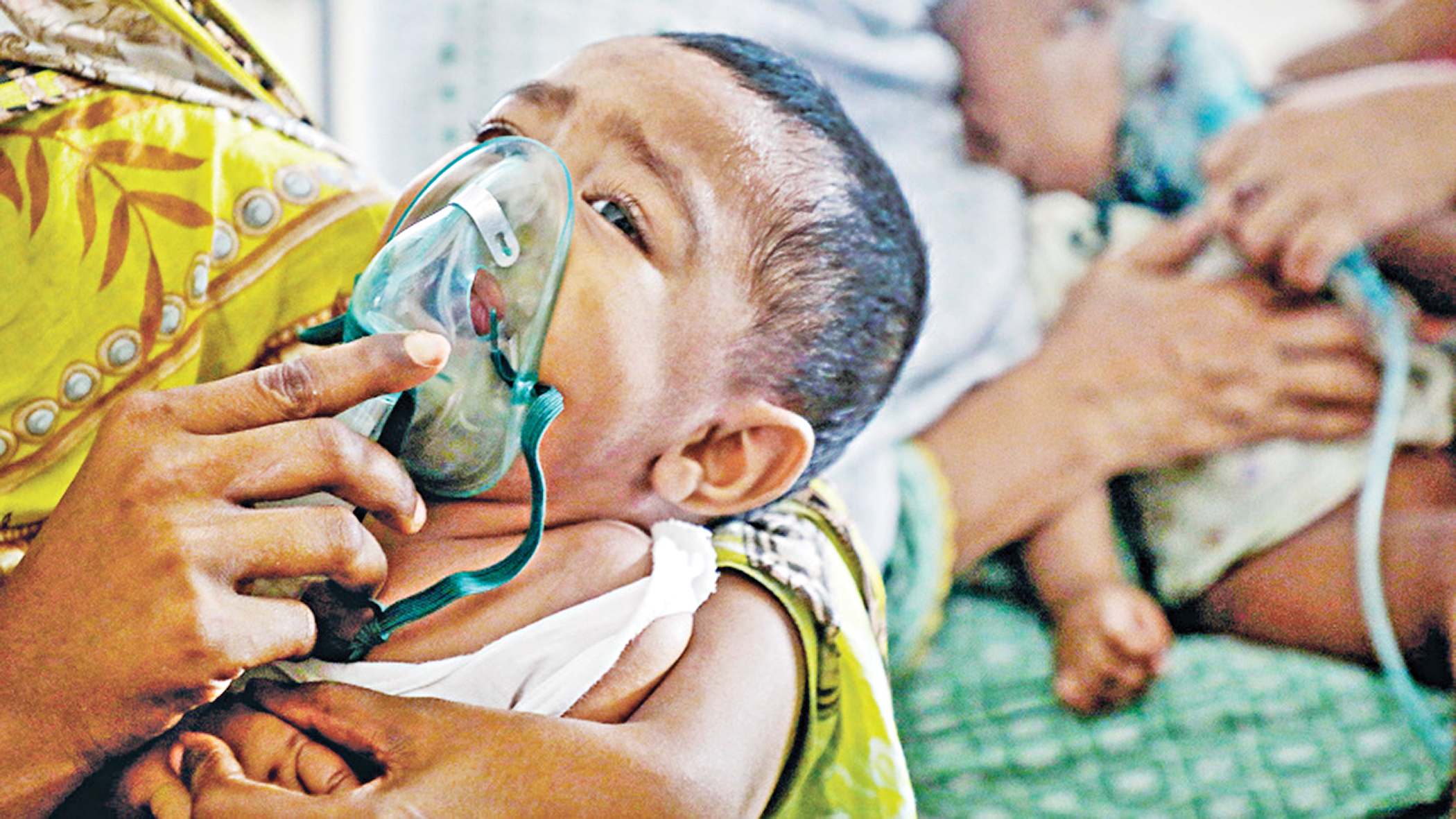
Between March 15 and June 30, 718 people died from measles or measles-like symptoms, while more than 113,000 patients, mostly children, were hospitalised, according to the DGHS.
Prof Be-Nazir Ahmed, a health expert and former director of disease control at the DGHS, blames the coverage gap for this.
“We had already suspected that something was wrong somewhere, because after vaccination, cases should start declining within two to three weeks. But instead, we are seeing around 1,000 cases consistently every day.”
Scientific evidence shows that if 95 percent vaccination coverage can be achieved in every area of the country, transmission should be interrupted within two to three weeks, he added.
“So, it is fair to say that almost no communities across the country have achieved 95 percent coverage, which is why measles transmission has continued for so long,” he added.
Replying to a question, he said transmission would continue, and could persist further, until every child at risk is infected with measles and has developed immunity.
The government launched the emergency measles-rubella vaccination campaign in April and continued in May with the aim of bringing 1.80 crore children under its coverage.
By May 20, the initial deadline for the drive, a total of 1.84 crore children had been vaccinated.
The health ministry later continued the drive, saying some children had been left out.
But even after the extension, the total number of children vaccinated stood at 1,84,77,616 as of Wednesday -- 38,82,893 fewer than those who received Vitamin A Plus capsules.
After a gap of more than a year due to a fund crisis and several other reasons, the government revived the Vitamin A Plus campaign on June 28, aiming to prevent blindness and boost immunity among children.
The campaign initially aimed to bring 2.40 crore children aged between six months and 59 months under its coverage, but the target was later revised down to 2.26 crore.
The day-long campaign covered 2.23 crore children, achieving 98.67 percent of the revised target, said Mohammed Eunus Ali, director of the Institute of Public Health Nutrition (IPHN), the implementing agency of the campaign, which works under DGHS.
The measles vaccination drive was implemented by the Expanded Programme on Immunization -- another agency under the DGHS.
 For all latest news, follow The Daily Star's Google News channel.
 “There was clearly a lack of preparation for the measles campaign,” said Prof Be-Nazir, adding that there was inadequate publicity and families were not properly informed.
The first dose of measles vaccine is typically given at nine months, but now it has been brought forward to six months.
“This is a major change,” he said.
Similarly, the second dose was given at 15 months, but during the campaign, it was being administered to children aged up to 59 months.
“Families needed to know these changes. If they did not know that a child needed vaccination at six months, they would naturally wait until nine months. The nearly 40 lakh difference between the two coverages is astonishing,” he added.
However, the DGHS official maintains that their surveillance indicates both hospital admissions and reported cases have declined considerably last month.
“In fact, we are seeing some discrepancies between our surveillance data and the data DGHS made public daily. We are also analysing that,” he added.
Asked about the gap, Health Minister Sardar Md Sakhawat Husain said the measles-rubella campaign was not stopped because of that.
“Many people are still reluctant to take the injection or are afraid of it -- this happens. We are now tracing those children and vaccinating them one by one,” he told The Daily Star yesterday.
Asked about the slow decline of cases and admission, he said measles does not decline suddenly because it is a highly contagious disease.
“But it has at least been contained. It is no longer rising the way it was before. The number of patients has stabilised and it will come down further,” he added.
Comments