


Adopt AI for future growth of apparel trade: Industry leaders
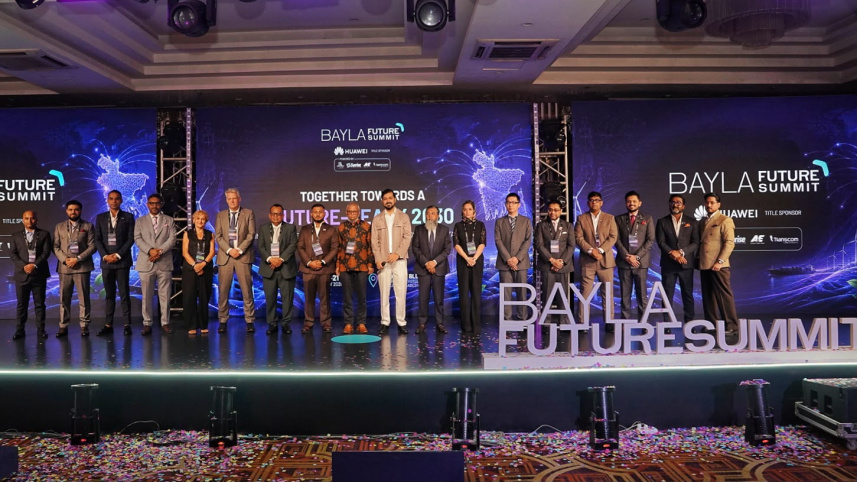
Industry leaders, policymakers and business executives today called on Bangladesh’s apparel and textile sector to rapidly embrace artificial intelligence (AI), automation, Industry 4.0 and value‑added manufacturing to sustain global competitiveness and successfully navigate the challenges of post‑LDC graduation.
The call came at the inaugural session of the two‑day BAYLA Future Summit 2026, organised by the Bangladesh Apparel Youth Leaders Alliance (BAYLA) at Radisson Blu Dhaka Water Garden under the theme “Think Beyond Today”.

The summit brought together government representatives, industry leaders, entrepreneurs, global buyers and development partners to discuss the future of Bangladesh’s apparel industry, according to a BAYLA statement.
Labour and Employment Minister Ariful Haque Chowdhury said the apparel industry remains a cornerstone of Bangladesh’s economy and one of the country’s largest sources of employment. He stressed the importance of developing skilled, innovative and responsible young leaders capable of guiding the industry through technological transformation.
He added that the government is committed to creating a balanced industrial environment that safeguards the interests of both employers and workers, while prioritising workforce reskilling and upskilling to meet the demands of a technology‑driven economy.
Mohammad Hatem, president of the Bangladesh Knitwear Manufacturers and Exporters Association (BKMEA), said the future competitiveness of Bangladesh’s apparel industry would depend not only on cost advantages but also on productivity, innovation and technological capability. He warned that factories failing to adopt AI and digital technologies would struggle to remain competitive in the coming years, urging the next generation of entrepreneurs to lead the industry’s digital transformation.
Vidiya Amrit Khan, vice‑president of the Bangladesh Garment Manufacturers and Exporters Association (BGMEA), highlighted the need to move beyond contract manufacturing towards innovation, branding and higher value addition. She said Bangladesh must prepare for post‑LDC trade realities by improving productivity through AI, automation and Industry 4.0, while investing in design capabilities, product development and women’s leadership.
Delivering the keynote session on “Scaling Business Beyond Manufacturing: The Power of Distribution and Consumer Experience”, Transcom Group CEO Simeen Rahman said Bangladesh is no longer selling garments alone.
“Global customers are buying compliance, sustainability, confidence, innovation and reliability from Bangladesh. Every product carrying the ‘Made in Bangladesh’ label should represent excellence,” she said.
Simeen added that the future of the apparel industry would be shaped not only by technology and manufacturing but also by visionary leadership capable of strengthening Bangladesh’s global reputation.
Speaking at the summit, Urmi Group Managing Director Asif Ashraf said automation is no longer optional, as rising labour costs and increasing global competition demand higher efficiency and productivity. He encouraged manufacturers to integrate AI into production planning, factory management and decision‑making, while exploring AI‑enabled manufacturing technologies and diversifying into technical and medical textiles.
In his welcome remarks, BAYLA President Abrar Hossain Sayem said the traditional business model would no longer be sufficient in tomorrow’s global marketplace.
“Think Beyond Today is not merely a slogan; it is a mindset for future competitiveness. The next generation must embrace AI, Industry 4.0 and innovation to lead Bangladesh’s apparel industry into its next phase of growth,” he said.
Sayem added that the summit seeks to strengthen collaboration among policymakers, entrepreneurs, global buyers and development partners, while promoting green financing, modern supply chains and supportive policies to address post‑LDC challenges.
Sheltech Group Director Tanvir Ahmed said Bangladesh has successfully overcome major challenges, including the post‑quota transition and the Covid‑19 pandemic, and must now focus on automation, skilled human resources, logistics, shorter lead times, market diversification and value‑chain development to remain competitive.
EuroCham Bangladesh Chairperson Nuria Lopez said Bangladesh continues to enjoy strong demand in the European Union market, but future success will increasingly depend on sustainability, environmental compliance and product diversification. She welcomed growing investments by young entrepreneurs in green factories and advanced technologies.
 For all latest news, follow The Daily Star's Google News channel.
Comments