


Govt failed to deliver post-uprising reforms, good governance: Jamaat chief
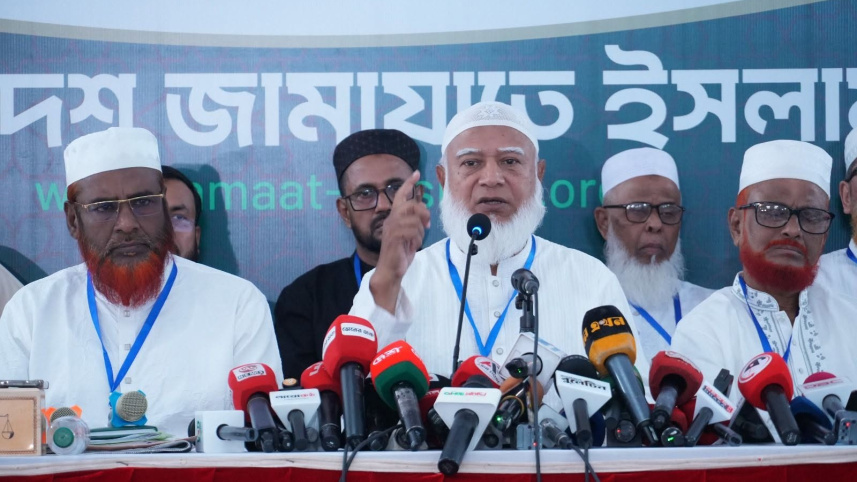
Leader of the Opposition and Bangladesh Jamaat-e-Islami Ameer Shafiqur Rahman today alleged that the government has failed to fulfil people's expectations for state reforms and good governance that emerged in the wake of the July mass uprising.
"The institutional weaknesses that gave rise to fascism in the past have been left unchanged," he said while delivering the inaugural address at the party's Central Majlis-e-Shura session at Al-Falah Auditorium, adjacent to Jamaat's central office in Dhaka’s Moghbazar.

He said people had hoped the sacrifices made during the uprising would bring about meaningful changes in governance.
Although a referendum was held on a reform charter prepared after months of dialogue, its outcome has not been implemented, he claimed.
The Jamaat chief further alleged that both the ruling party and the opposition had pledged before the election to honour the outcome of the referendum, but the government later failed to uphold that commitment.
Commenting on the law and order situation, Shafiqur said incidents of murder, rape, violence and oppression were increasing, while people's lives and dignity remained insecure despite the presence of law enforcement agencies and the home ministry. He urged the government to discharge its responsibilities effectively and restore public confidence.
Shafiqur said Jamaat, as an opposition party, would continue to protest any government move that goes against the people's interests and would resist such measures if necessary. He added that the party's movement would continue both inside and outside parliament.
He also said Jamaat sought to build a humane, just and discrimination-free Bangladesh and wanted the country to stand with dignity without bowing to any form of external dominance. The party's struggle against fascism would continue, he said, adding that national unity was essential to safeguarding Bangladesh's independence and sovereignty.
At the beginning of his speech, Shafiqur highlighted the significance of Ashura, saying the deliverance of Prophet Musa (AS) and the martyrdom of Imam Hussain (RA) at Karbala symbolised the struggle against oppression and the establishment of truth.
He also stressed the need to transform Bangladesh's large population into human resources through good governance, accountability, efficiency and patriotism.
 For all latest news, follow The Daily Star's Google News channel.
Comments