


Bandarban jail needs urgent expansion
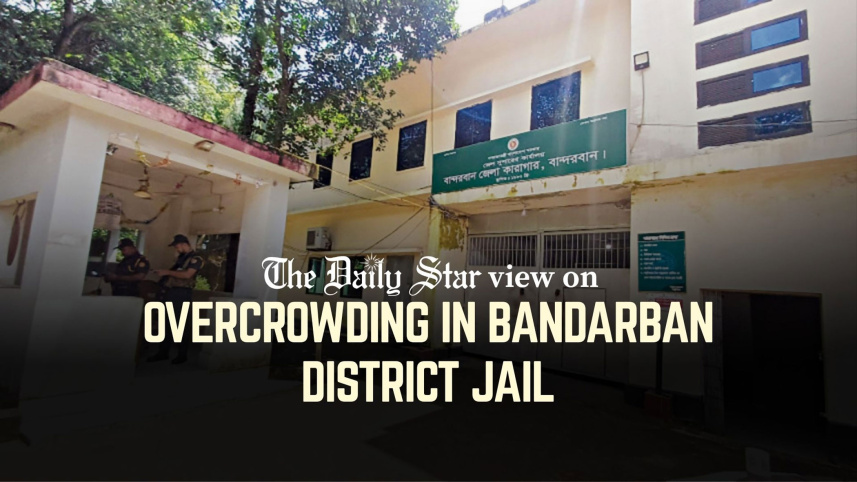
It is quite concerning that the Bandarban District Jail is holding nearly five times the number of inmates it was designed to accommodate. The facility, established as a sub-jail in 1986 with a capacity of 114, now houses 557 inmates–475 awaiting trial and 82 convicted prisoners. Such extreme overcrowding is placing enormous pressure on its infrastructure and basic services, while putting the health, safety, and dignity of inmates at serious risk.
According to the acting jail superintendent, a room designed for 25 people is currently being used by around 110. Limited bathroom facilities, poor ventilation, and excessive heat are further worsening the situation. Understandably, overcrowding and unhygienic conditions can facilitate the spread of infectious diseases such as measles, tuberculosis, and scabies, as a medical officer at Bandarban Sadar Hospital has also warned. Some inmates are already suffering from skin diseases and other health problems. Moreover, the lack of personal space is reportedly contributing to tensions, with minor disagreements escalating into arguments, scuffles, and physical fights. Incidents of sexual abuse involving younger inmates have also been reported, including an alleged recent assault.

Worryingly, the overall prison population in the country has risen sharply in recent years, partly because of delayed trials and increased arrests and short-term sentences during law enforcement drives. Reportedly, the 75 prisons in the country are currently holding 98,233 inmates against a combined capacity of 45,186–more than double the limit. This raises questions about whether our justice system is relying too much on imprisonment without considering its wider consequences. The situation demands urgent attention from the government.
In the case of Bandarban jail, we urge the authorities to recognise that the facility has exceeded its functional limits and take steps for its expansion. The government should also urgently determine whether some inmates, particularly those awaiting trial, can lawfully be transferred to less crowded facilities. At the same time, the authorities must immediately improve sanitation, ventilation, healthcare, and security. The National Human Rights Commission should visit the jail and independently assess the conditions. Any allegation of sexual abuse in custody must also be properly investigated, with victims protected and perpetrators held accountable. In the longer term, prison capacity must be planned according to actual and projected inmate numbers, while measures to reduce unnecessary pre-trial detention and delays in the justice system should be strengthened.
 For all latest news, follow The Daily Star's Google News channel.
Comments