


Clear the cataract surgery backlog
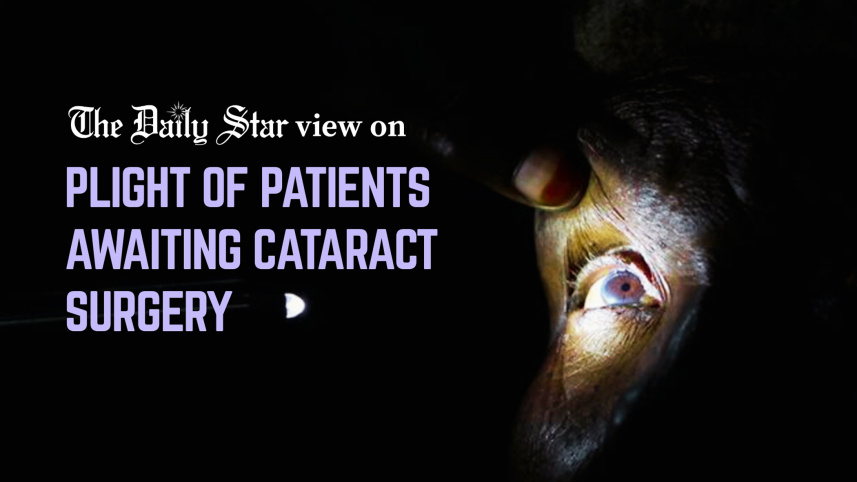
We are deeply concerned that around 10 lakh people in Bangladesh are currently waiting for cataract surgery because many, particularly a large population of rural women, cannot access this treatment, which can prevent vision loss. An estimate from 26 years ago put the number of cataract cases in the country at around 7.5 lakh, with more than 1.3 lakh new patients entering the surgical queue every year. However, without updated and reliable data, the actual need for cataract surgeries cannot be determined.
A national assessment conducted by the National Institute of Ophthalmology and Hospital (NIOH) between January 2010 and December 2012 across eight districts found cataract surgical coverage to be 76.6 percent among men, compared with only 64.3 percent among women. A 2025 study also found women were nearly twice as likely as men to have no one to accompany them for surgery. Rural women face additional social barriers, as families often prioritise men’s healthcare while expecting women to continue their household responsibilities despite deteriorating vision. Poverty, lack of information and fear of surgery further compound the problem. The experience of 65-year-old Salema Beowa of Rajshahi, who has struggled with worsening vision because her family cannot afford the cost and time of travelling to a hospital, is a stark reminder of the reality on the ground.


Moreover, we have a serious shortage and uneven distribution of experienced cataract surgeons. Although more than 2,200 ophthalmologists are registered, only around 1,200 actively perform cataract surgery, and just 400–500 are estimated to have extensive experience with high-volume procedures. This means each active cataract surgeon has around 833 patients waiting for surgery. Also, most specialists are based in Dhaka and other major cities, while many rural hospitals lack the equipment needed to perform cataract operations.

It is, however, heartening to learn about the government’s five-year plan, which includes carrying out more than two lakh surgeries annually to clear the backlog. It must now ensure that the plan is adequately funded, properly monitored, and focused on access as much as surgical numbers. It must also conduct a nationwide assessment to update the number of patients needing cataract surgery. Community screening and referral systems should be restored and strengthened, with particular attention to rural women, elderly people, persons with disabilities and other vulnerable groups. Door-to-door transport, surgery and follow-up care can overcome many of the barriers faced by poor patients. Last but not least, women’s declining vision should be treated as a healthcare priority, rather than an inconvenience they are expected to endure for the rest of their lives.
 For all latest news, follow The Daily Star's Google News channel.
Comments