


Greed of a few, misery of thousands
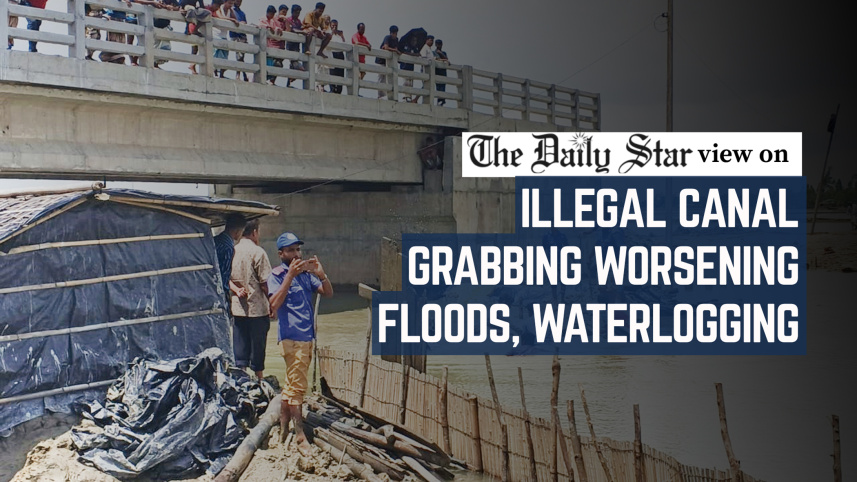
Bangladesh is globally known as a flood-prone country held hostage by its own geography. But as the recent flooding and waterlogging in the Chattogram region shows, we sometimes have only ourselves to blame. In the deluge that devastated southern Chattogram and Cox’s Bazar last month, the greed of a few local influentials left thousands of citizens waterlogged and suffering. Following nearly a week of continuous monsoon rain that began on July 5, vast areas including Banshkhali, Satkania, Pekua, Chakaria and Matamuhuri were inundated. The floodwaters took weeks to subside; some pockets remain waterlogged even now. A report by this daily finds that illegal occupation of secondary canals, essential for draining rainwater, significantly worsened what should have been a manageable seasonal event.

According to officials, nearly 90 percent of the canals listed in government records have been encroached upon. Key secondary canals have been converted into private fish and shrimp enclosures, while others have been filled in for housing. Illegally built private sluice gates used for aquaculture are routinely kept closed during heavy rains to protect fish stocks, trapping the floodwater. In Banshkhali’s Chhanua Union, for instance, embankments built for fish farming blocked a roughly 100-foot stretch of the Asiuddin-Tamizuddin canal, inundating more than 100 houses. Meanwhile, in Matamuhuri’s Badarkhali Union, at least seven canals have been blocked, with the Badarkhali Cooperative Agriculture and Colonial Society reportedly earning nearly Tk 10 crore a year by leasing them out. The human cost of this profiteering is captured by the story of Habibullah, a resident of Pekua upazila, whose home was underwater for about 15 days, during which his family could neither cook nor use their toilets.

Experts assert that the natural flow of these canals must be restored to solve the waterlogging problem in the region. The authorities must systematically reclaim every encroached canal by dismantling the illegal embankments and sluice gates, and hold the perpetrators, however influential they may be, to account. Meanwhile, the upazila administrations must be directed to complete a full inventory of canals, including those that remain outside official records. Where legitimate aquaculture exists, it must be relocated away from drainage channels, and canals under long-running ownership disputes should be provisionally kept clear pending resolution. Local communities, too, have a role: residents who witness encroachment must be given safe, anonymous channels to report it. The lives of thousands cannot remain hostage to the commercial greed of a well-connected few.
 For all latest news, follow The Daily Star's Google News channel.
Comments