


Nepal's grief is ours too
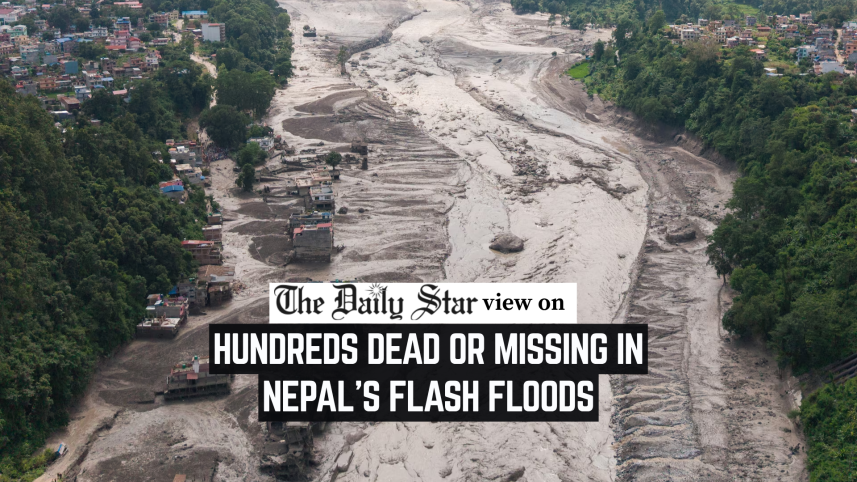
Nature has a way of reminding South Asia how fragile its geography really is. On Wednesday, it did so with brutal force. A collapse of glacial rock and ice in the Himalayas triggered a catastrophic debris flow that tore through the Nepal-Tibet borderlands, obliterating a mountain path that has for generations carried traders, trekkers and pilgrims between Kathmandu and Lhasa. By Thursday afternoon, over 900 people—including more than 400 tourists and pilgrims from over two dozen countries—were listed as missing across Nepal and China's Tibet Autonomous Region. Nepali police expect the death toll, already above 350, to climb further as rescuers reach villages that satellite imagery shows have simply ceased to exist.
According to preliminary findings reported by The New York Times, geologists and glaciologists believe a massive slab of ice, an estimated 2,000 feet across, sheared off a glacier roughly 17,000 feet up and plunged thousands of feet down into the valley, grinding itself into an onrushing wall of ice and rock that obliterated everything below. The ground shaking that accompanied the disaster was first logged as a 4.4-magnitude earthquake, but the US Geological Survey has since determined that the tremor was generated by the landslide itself, and that it ultimately registered at magnitude 5.2.

This is the second such glacial-lake outburst to devastate this stretch of border in little more than a year; a similar event in July last year sent floodwaters surging into Nepal from a lake atop the Purepa glacier. Two such disasters in successive summers make it imperative for governments across the region to invest in glacial monitoring, early warning systems, and evacuation infrastructure. These tragedies show the human cost of a warming Himalayan region, where glacial lakes and unstable slopes are becoming sources of disasters.
For now, the priority is rescue. The United Nations has begun moving supplies and personnel to support Nepali communities cut off by the floods. Bangladesh has rightly added its voice to this effort. The foreign ministry in Dhaka said the people of Bangladesh were shocked and saddened by the flash floods and mudslides, and that the government stood ready to assist Kathmandu with relief and rescue. Australia's prime minister candidly acknowledged that Nepal, as a developing country, lacks the resources such a disaster would command elsewhere, which is precisely why outside help matters.
Solidarity between neighbours who share both a mountain-fed river system and a fundamental vulnerability to climate extremes is not sentiment. It is self-interest properly understood. Nepal's new prime minister, Balendra Shah, has travelled to the worst-hit district of Nuwakot to assess the damage in person, a sensible signal that the state intends to be present in its citizens' worst hour. But no government, however well-led, can absorb a disaster of this magnitude alone. What Nepal needs now is what its neighbours and partners have begun, haltingly, to provide: helicopters, medical teams, shelter, and the money to rebuild roads and villages that took decades to construct and a single afternoon to erase.
The mountains will not become safer on their own. But grief shared and help delivered promptly are the least the region owes a country whose disaster is also, in the fullest sense, everyone's.
 For all latest news, follow The Daily Star's Google News channel.
Comments