


New pay scale comes with fiscal strain

The arithmetic of the new pay scale is, on the face of it, straightforward. The Ninth Pay Commission has recommended lifting minimum government salaries from Tk 8,250 to Tk 20,000 while raising the ceiling from Tk 78,000 to Tk 160,000. Finance Minister Amir Khosru Mahmud Chowdhury has confirmed that implementation will begin on July 1. The rationale is difficult to dispute: years of elevated inflation have quietly eroded the real wages of 14 lakh civil servants. What is less straightforward, however, is how the government intends to finance such a large expansion in recurrent expenditure.
Reportedly, the full implementation of the commission’s recommendations would cost an additional Tk 106,000 crore annually, which comes on top of the current salary bill of Tk 131,000 crore. The new government has, sensibly, opted for a phased rollout rather than a single-year shock. Even so, the first-year cost alone is expected to reach Tk 35,000 crore. Bangladesh’s fiscal position leaves little room for comfort. Revenue mobilisation remains persistently weak. The country’s tax-to-GDP ratio hovers around seven percent, among the lowest in Asia. The National Board of Revenue has repeatedly fallen short of its collection targets, while long-promised structural reforms—broadening the tax base, reducing exemptions, formalising greater parts of the economy, and improving compliance—remain incomplete.

The pressure is being compounded by external developments. Rising global fuel prices have inflated the import bill and squeezed fiscal space further. These twin pressures—weak revenue collection and higher energy costs—were among the reasons the new pay scale implementation was postponed from the current fiscal year in the first place. These underlying vulnerabilities still remain. Allocating such large sums to the pay structure will inevitably place pressure on capital expenditure at a time when Bangladesh’s growth outlook depends heavily on infrastructure and productivity-enhancing investment. Annual Development Programme allocations, already hampered by chronic underspending and delays, will now have to compete more intensely with this recurrent expenditure.
The government may face a growing temptation to finance the gap through domestic borrowing. External borrowing, meanwhile, comes with its own constraints, as Bangladesh is expected by its development partners to demonstrate credible tax reforms, subsidy cuts, and greater efficiency in state-owned enterprises. It is also worth recognising who stands to benefit from the upcoming pay revision. The recipients are not the poorest citizens, but largely members of the formal-sector middle class, whose economic position remains considerably more stable than that of the rest of the population. Garment workers, day labourers, and rural smallholders are more likely to absorb the indirect costs of inflationary and fiscal pressure created by the adjustment.
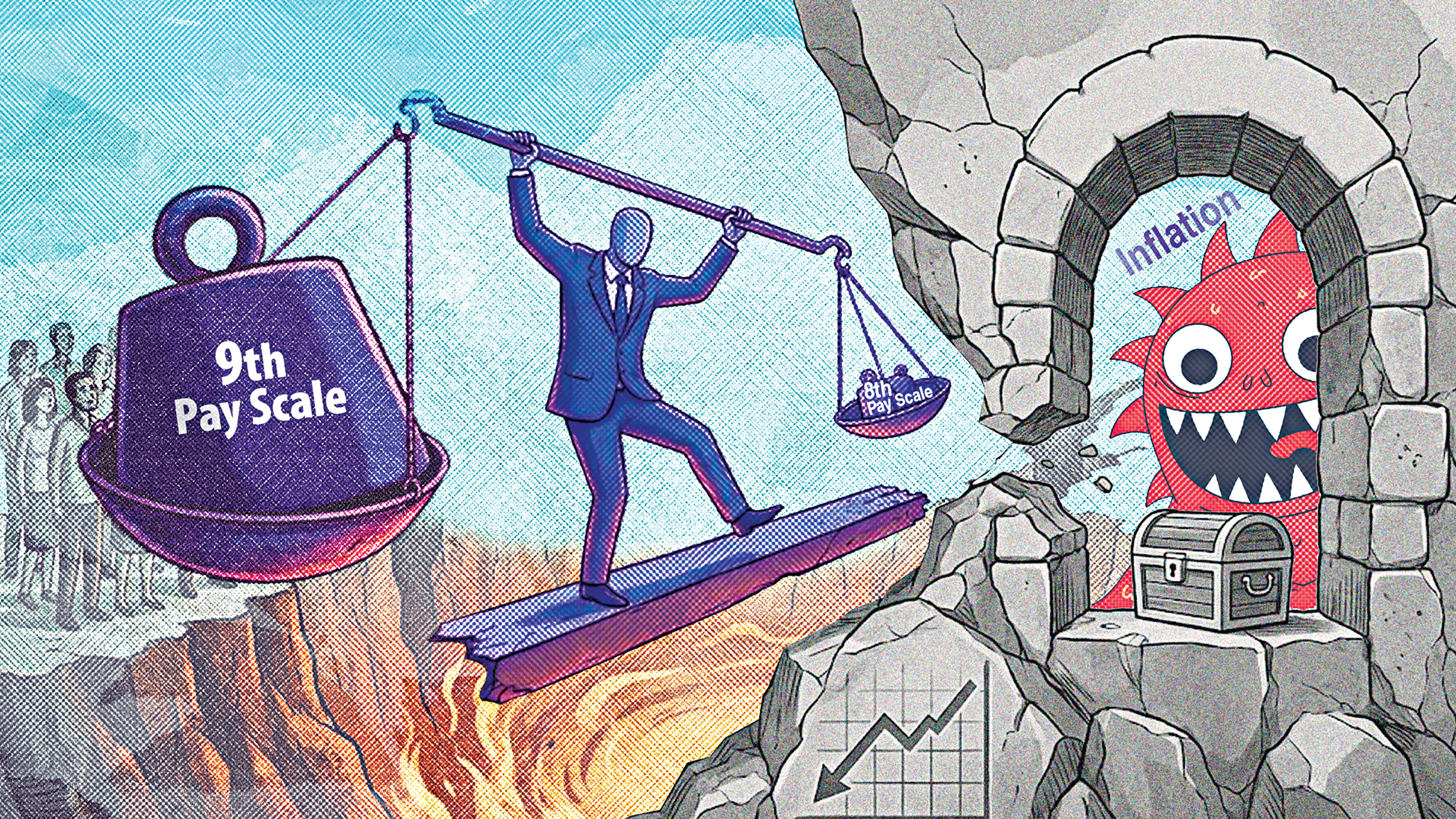
None of this is an argument against revising public sector pay. Sustained wage compression carries serious long-term costs of its own. But the fiscal arithmetic cannot be ignored. The phased implementation is a prudent decision but what remains missing, at least publicly, is an equally credible and phased strategy for revenue reform. Without that, the new pay scale will be another test of Bangladesh’s already fragile fiscal capacity.
 For all latest news, follow The Daily Star's Google News channel.
Comments