


Nine years without MRI service!
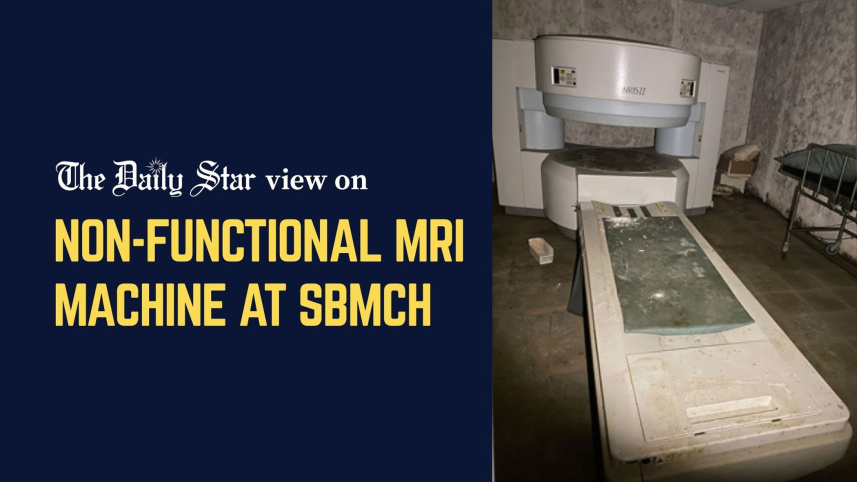
It is difficult to understand how an MRI machine at a public hospital can remain out of order for nearly nine years. This is the situation at Sher-e-Bangla Medical College Hospital (SBMCH) in Barishal, where the machine was reportedly installed in 2007 and continued operating despite technical problems until it became completely non-functional in 2019. Its prolonged unavailability has forced patients to seek MRI services at costly private facilities, placing an additional financial burden on them, particularly those from low-income backgrounds.
Essential medical equipment can become non-functional over time, but it is unacceptable for it to remain so for years while patients are deprived of vital services. Why did the authorities not repair the machine or arrange a replacement much earlier? While the government hospital charged Tk 3,000 for an MRI, private diagnostic centres in Barishal charge at least Tk 7,000, with the cost rising further when multiple scans are required. How are low-income patients expected to bear this additional expense? Why was there no interim arrangement to provide affordable MRI services to the patients?

Apparently, the non-functional MRI machine is not the only problem facing SBMCH. A 2025 report found that other essential equipment, including CT scanners, ultrasonography, X-ray and echocardiogram machines, were also out of order, pushing patients towards private facilities for necessary tests and treatment. Many other public hospitals and health complexes face similar problems. Shortages of doctors and other staff have also been crippling the upazila health complexes for decades. These longstanding problems must be addressed urgently to restore the quality and reliability of public healthcare.
Reportedly, a new MRI machine is expected to be installed at the hospital by January 2027. We hope this deadline will be met and that the machine will be made operational without further delay. The health authorities must also ensure that the hospital has the technical capacity and maintenance arrangements needed to keep such equipment functional in the long term. Moreover, they should assess the condition of essential equipment at other major public hospitals and ensure that those are operational. Public hospitals are supposed to provide affordable healthcare, and that objective cannot be fulfilled if vital diagnostic services remain out of reach.
 For all latest news, follow The Daily Star's Google News channel.
Comments