


Salinity’s silent intrusion
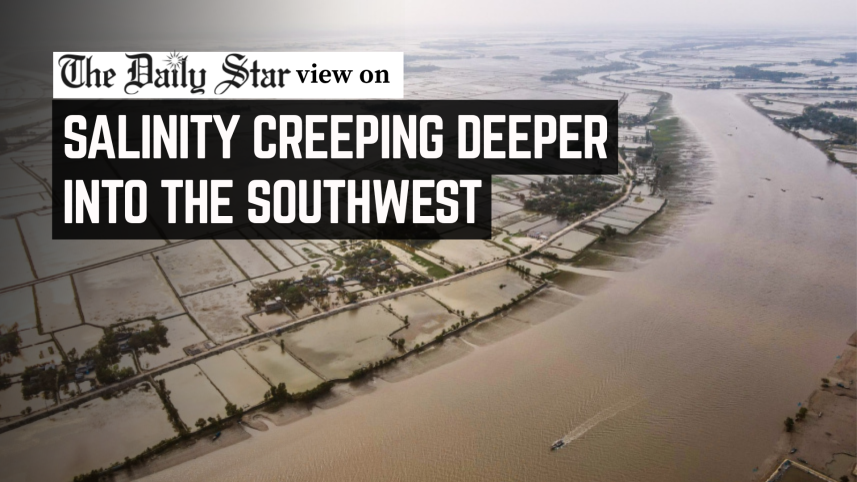
The alarming rate of salinity intrusion in southwestern coastal Bangladesh has emerged as a serious threat to nearly 4.4 crores people living in the coastal region. According to a report published in this newspaper, the speed and extent of salinity expansion across 18 of the country's 19 coastal districts demonstrate that the crisis demands urgent attention. The findings of the government-run Soil Resource Development Institute (SRDI) should serve as a wake-up call for policymakers to take effective measures to address this evolving crisis.
Official data show that, over the 15 years since 2009, the area affected by salinity has increased by nearly 100,000 hectares, with about 68 percent of cultivable land in the region now affected by salinity. The consequences have been severe: declining crop yields, shrinking freshwater supplies, deteriorating living conditions, and mounting public health risks. The SRDI study has also found that salinity spread beyond the traditional coastal belt, reaching Jashore Sadar and the upazilas of Kashiani and Muksudpur in Gopalganj district for the first time. While salinity in the coastal zone is partly driven by natural factors such as storm surges and sea-level rise, human activities have also significantly accelerated the process.

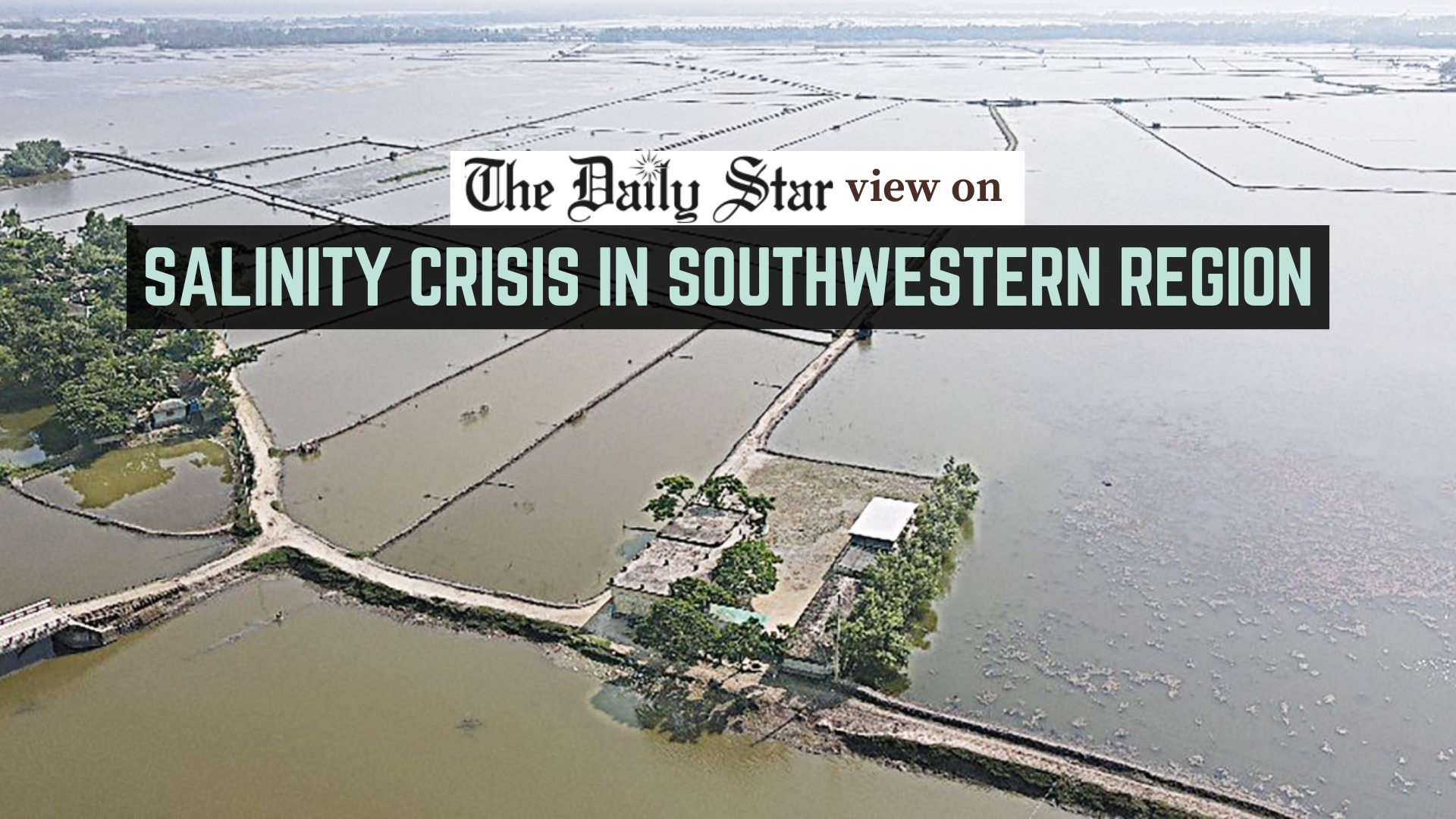
One of the major causes is the Farakka Barrage built upstream in India, which has reduced the downstream flow of freshwater into Bangladesh. Other human interventions include coastal embankments that often obstruct natural tidal flows, trapping saline water inside protected areas. Many sluice gates constructed to regulate waterlogging have fallen into disrepair, allowing saline water to remain stagnant for prolonged periods and further degrade the soil. Unregulated expansion of shrimp farming has also contributed significantly to the crisis. Since shrimp cultivation requires saline water, large areas of cropland have gradually been converted into shrimp farms, accelerating soil salinisation and reducing the availability of arable land.
Agriculture in saline-affected regions has thus become increasingly difficult during the dry season, despite the development of several salt-tolerant crop varieties by agricultural scientists. Salinity is also undermining livestock production by reducing the availability of freshwater and grazing resources. As freshwater sources become increasingly scarce, many communities are exposed to growing health risks and deteriorating living conditions. As a 2024 study by the Department of Environment warned, if current trends continue, the impacts on food production and rural livelihoods will be even more severe than previously projected. Climate scientists have also cautioned that rising sea levels could submerge 12 to 18 percent of Bangladesh's coastal areas by the end of the century. Numerous studies have documented increasing internal migration as families are compelled to abandon their homes and livelihoods in salinity-affected coastal villages.
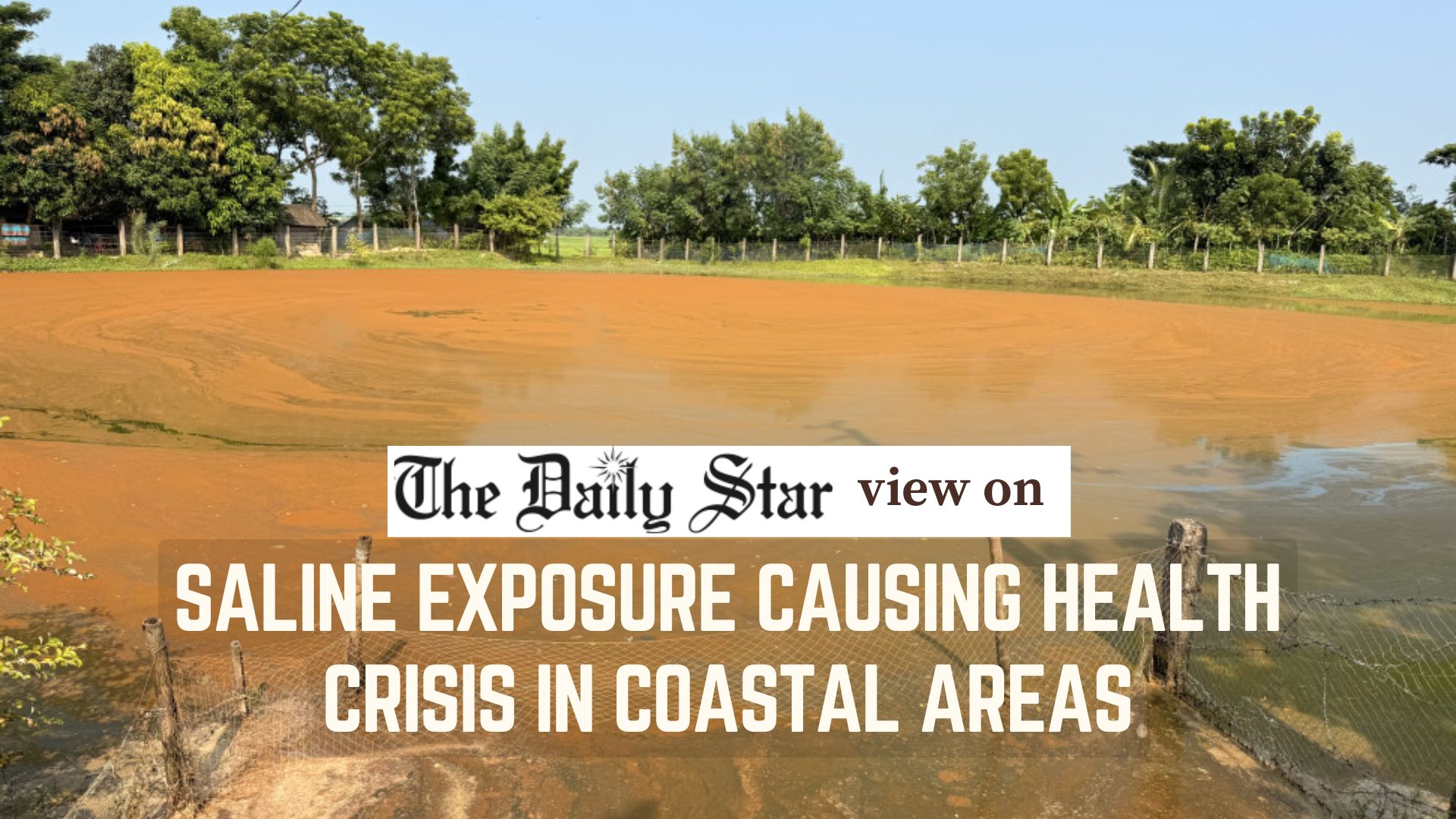
This slow-moving but relentless environmental crisis can no longer be ignored. Bangladesh must adopt a comprehensive and efficient water management strategy that restores natural river flows, ensures adequate freshwater availability, rehabilitates embankments and sluice gates, and regulates environmentally harmful land-use practices. Without decisive action today, salinity intrusion will continue to erode agricultural productivity, threaten food security, and displace millions of people in the decades ahead.
 For all latest news, follow The Daily Star's Google News channel.
Comments