


From a shrine pond to a Mirpur flat: We keep mourning what we fail to protect


The removal of the last crocodile from the pond at the shrine of Hazrat Khan Jahan Ali in Bagerhat ended a centuries-old tradition. The local deputy commissioner deemed it a necessary act of public safety following the tragic death of a child who was recently dragged away into the pond by the predator. The incident exposes layers of legal, ethical, moral, political and biological issues that question the very essence of our humanity.
Legend has it that the 15th-century saint-pilgrim Khan Jahan Ali released two big crocodiles in the pond that he had dug out next to his mosque. The reptiles would keep polluters away, and the freshwater species in a saline-prone pond also helped the ecological balance. For generations, these wild animals were folded into faith, memory, local economy, and ritual expectation. Devotees would feed the descendants of the darling pets of the revered pir and contribute to the mazar currency. When the original descendants died, the government replaced them with mugger crocodiles imported from India and kept the tradition alive. The animal remained at the core of tourist attraction, both loved and feared.

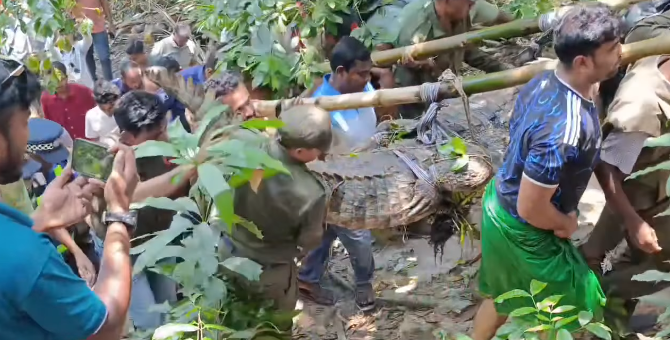
For many, those crocodiles were the source of wish fulfilment. This process of human meaning-making does not change the fundamental nature of a crocodile; it remains a crocodile regardless of our perceptions. A crocodile does not become holy simply because it is placed in a sacred pond. It has nothing to do with our offering, curiosity or safety.
Yet, it has become a part of our living tradition. The best that could have been done was to protect visitors and local residents from this large carnivorous reptile which has been brought in by design to a captive location. There should have been barriers, regulated access, clear warning systems, proper feeding rules, and trained wildlife supervision. Instead, we relied on habit, sentiment, and miracle. We allowed dangerous human-animal contact to continue. When the crocodile killed a dog and later a child, the boundary between sacred spectacle and public danger collapsed, and the tragedy made the arrangement morally indefensible.
Instead of framing the issue as a debate on tradition versus modernity, we need to ask whether we are capable of caring for what we claim to value. If the crocodile was heritage, why was it not managed responsibly? If the child’s safety mattered, why was the danger not addressed earlier? If the shrine was sacred, why was its ecology left to improvisation?
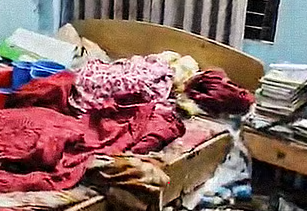
We move from the sacred shrine of Bagerhat to Dhaka to understand the case of Nurjahan Begum, the 75-year-old woman who was found dead in her home in Mirpur. What shook the public was not only the loneliness of her death but also the profile of her children: a senior government official, a university teacher, and a well-settled expat, as well as a school teacher who lived in the same residence. On paper, the family is successful. In reality, an elderly mother seems to have vanished behind a closed door.

Given the ongoing legal process, we should handle the details of this case with care. This was not the familiar story of abandonment caused by visible poverty. This was abandonment, or at least frightening neglect, in the shadow of social achievement that exposes a moral wound.
Mothers are deified for their sacrificial role in society. The success of a mother depends on upholding the Napoleonic equation of a virtuous mother and a good nation. We turn parental sacrifice into a national mythology. Mothers are praised for giving up comfort, food, sleep, ornaments, leisure, and occasionally their health so that their children may become “established.” But what happens to the mother after the children are established?
Not long ago, the para, or neighbourhood, was the glue that held life together in our society. The whole community would keep its members under a close eye. If an elderly person did not appear in the morning, someone noticed. “If the kitchen fire was not lit,” someone asked. If a familiar voice went missing from the courtyard, absence became news. The modern city has changed that architecture. We now live in flats, behind doors rather than among neighbours. We have gained privacy and mastered the art of concealing loneliness. A person can be alive in one room and socially invisible in another.
It’s time for us to recognise that this family failure is also a social failure. We have taught our children to compete, achieve, migrate, publish, administer, and accumulate. But have we taught them how to sit beside an ageing parent without impatience? Have we taught them that care is not charity but an obligation of love?
After public outrage, the state responded through administrative punishment, just like the Bagerhat deputy commissioner. The Parents’ Maintenance Act, which maintains that children are legally accountable when they abandon parents, was invoked. Nurjahan’s eldest son, a high-ranking government official, was made an OSD.
This situation is the tragedy of our time, where the human-animal, sacred-profane boundaries are being reconfigured. The efficiency and success of educated modern people are devoid of empathy and kindness. We are becoming successful without becoming humane. The crocodile in Bagerhat and the locked room in Mirpur may seem like unrelated stories. One belongs to a shrine pond, the other to an urban flat. One concerns a wild animal, the other an elderly mother. Yet, both reveal the same moral architecture.
We create systems of use and reverence and then abandon the beings within them when they become inconvenient. We worship symbols but neglect responsibilities. We perform grief after failing to practice care. The harder task is not mourning but noticing things before they happen. We need to notice devotion before it becomes an unsafe spectacle. We need to notice an elderly parent before they disappear inside the home. We need to notice how our professional titles are becoming a poor substitute for human decency. Until we learn that care is not an emotion but a daily discipline, we will continue to weep after the fact.
Dr Shamsad Mortuza is vice-chancellor at the University of Liberal Arts Bangladesh (ULAB).
Views expressed in this article are the author's own.
Follow The Daily Star Opinion on Facebook for the latest opinions, commentaries, and analyses by experts and professionals. To contribute your article or letter to The Daily Star Opinion, see our guidelines for submission.
 For all latest news, follow The Daily Star's Google News channel.
Comments