


We cannot avoid the moral questions behind the measles and Ad-din crises

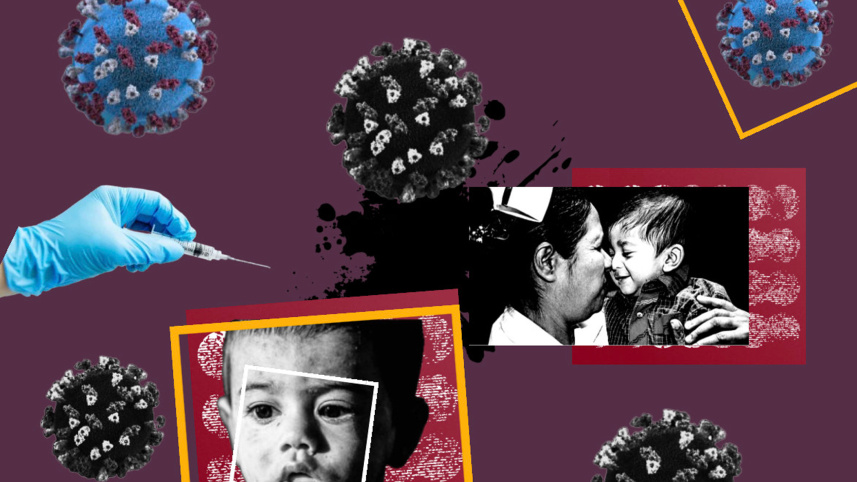
Reading a recent report by The Daily Star on the number of measles victims, I could not help but link the number “666” printed in red with something ominous. As someone who takes interest in popular imagination and is alert to the ongoing apocalyptic narrative, the number triggered something unnerving. The Book of Revelation assigns the number to the Beast, probably a coded way to describe Nero Caesar, who was known for persecuting Christians. The number got simplified in popular imagination through horror films and books to represent the Devil. When the combined death toll from confirmed and suspected measles-related fatalities in Bangladesh hit 666 on June 18, it symbolised not superstition but our collective neglect of human lives.
But who is the real devil here? The real beast is roaming outside the scriptures. It operates openly within our administrative practices. It is no secret that the interim government, despite warnings from Unicef, delayed the procurement of the vaccines that could have prevented the deaths of these children.

We pause at 666, not because the number is mystical. We pause because behind each number, there is a name, a face, a family. Behind each death there is a virus that is conditioned by our inefficiency, ignorance, and indifference. And the outcome is so monstrous that it exposes the vulnerability of our system that has stopped caring.
Our selective morality further contributes to this monstrosity. We are a country capable of instant outrage. We instantaneously react when the optics present us with a dog snatched by a crocodile or a rape victim’s body severed and brutalised by a pervert. But we fail to notice the pain of scattered deaths across wards in different hospitals. It seems only an image of piled up bodies would bring out the outrage the situation demands. The slow and incremental grief delivered through measured announcements results in routine probes, urging us to move on.
Should we be thankful that these 666 and growing numbers arrived without spectacle? The silent letters tell the tale of the quiet cruelty of preventable death. The measles outbreak is not only a public health emergency; it is a moral audit. Many of these children came from underprivileged backgrounds. How would we face them when the time comes? This moment seems to be the end of innocence.
The same question returns in another recent tragedy: the deaths of six newborns at Ad-din Medical College Hospital. A newborn is not in a position to cast a vote or lodge an accusation. It arrives with a sincere plea: protect me. Yet, the hospital administration failed to do so despite its Hippocratic Oath to curing with care. The tragedy demands proper investigation and accountability. At the same time, it demands that we sift accountability from theatre.
The cancellation of a hospital licence may satisfy the public desire for visible punishment. The state’s actions create a headline that signals seriousness. But serious accountability is not merely the act of locking a door after children have died. It must ask harder questions to find out who was responsible and what exactly failed. What safeguards have been introduced so that the same tragedy is not repeated elsewhere? Punishment is necessary, but punishment without diagnosis can turn out to be a mere public ritual.
The Ad-din case also reveals another “monster” in our institutional closet. The pervasive desire to snap off heads in order to cure headaches is a troubling phenomenon. Too often have we seen blunt actions in situations that require precision. If the hospital fails, we must hold those responsible for the failure accountable through legal and administrative channels. But accountability should not create a second ring of victims. I read about the foreign students who became stranded when the medical college was suddenly closed. The patients had to be relocated, and junior doctors, interns and employees became unemployed.
The health minister later clarified that the hospital, not the medical college itself, had been closed. But how can you teach medical students without hospital facilities? Foreign students, who have come to Bangladesh trusting our institutional promises, should not discover overnight that their education has become collateral damage in an administrative punishment. To say this is not to defend negligence but to demand intelligent accountability.
The measles outbreak and the Ad-din deaths share a similar moral landscape. In both cases, children died where protection should have been strongest. In both cases, the immediate grief is tied to bureaucratic motion. In both cases, we might find ourselves trapped in a cycle of announcement, blame, and forgetfulness. The repetitive nature of our experience eventually makes us comfortably numb. The shock effect of the first death soon wears off, and the human faces get masked by numbers and figures.
To penetrate the data and unearth the human faces buried behind the numbers, we must rethink our citizenship. We need to renew our commitments to our children. To protect them, we need more than politically correct rhetorical statements. We must identify the reasons for the failure of vaccination coverage. Instead of diluting the issue with blunt, spectacular punishments, we need precise actions.
We also need accountability that is both firm and fair. A hospital or an administrator cannot hide behind reputation or political connection when children die under its care. The public deserves transparent findings. Families deserve compensation and truth. Patients deserve continuity of care. Students deserve a viable educational pathway. The healthcare system deserves reform rather than episodic punishment. The challenge is to act before a crisis strikes.
By the time this column is read, the number “666” will have passed; it may already have changed. More children may be added to the count to remind us consistently of the monstrous decision that caused these deaths. The beast is the moral arithmetic by which a society learns to count dead children without changing the conditions that killed them. We don’t need an exorcist to annihilate this evil. We need vaccines, oxygen, accountability, and compassion to maintain our humanity.
Dr Shamsad Mortuza is vice-chancellor at the University of Liberal Arts Bangladesh (ULAB).
Views expressed in this article are the author's own.
Follow The Daily Star Opinion on Facebook for the latest opinions, commentaries, and analyses by experts and professionals. To contribute your article or letter to The Daily Star Opinion, see our guidelines for submission.
 For all latest news, follow The Daily Star's Google News channel.
Comments