



Silent role of MFS to keep the economy going
7 April 2020
•
Economics
Navigating the socioeconomic perils of Covid-19 in Bangladesh
6 April 2020
•
Economics

Financial mobility in an immobile world
4 April 2020
•
Economics

Stimulus for Bangladesh’s export-oriented enterprises
4 April 2020
•
Economics

COVID-19 has exposed the fragility of our economies
28 March 2020
•
Economics

Economic threats in the time of corona
27 March 2020
•
Economics

COVID-19 and Bangladesh’s macroeconomic challenges
22 March 2020
•
Economics

Implementing SDG 6: Watering the seeds of development
25 February 2020
•
Economics

How the free-rider problem affects youth employability
19 February 2020
•
Economics
Rising economy, falling stock markets
21 January 2020
•
Economics

Reading behind the numbers
We have some good news to cheer. According to a report published by the World Economic Forum (WEF) Bangladesh has become more competitive in 2017 as compared with 2016.
2 October 2017

Debunking the myth of clean coal
The debate over the excessive reliance on coal-based thermal power generation has very little to do with our negligible role in the exponential accumulation of atmospheric GHGs. Just to give you some context, in 2013, coal's share in power generation was about three percent. The 2016 Power Sector Master Plan proposes to raise it to 50 percent, totalling about 20,000 megawatts by 2030.
25 September 2017
Transforming electricity consumers into producers
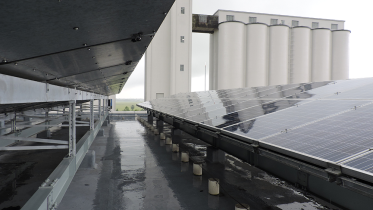
Tapping solar energy, Bangladesh has been able to provide access to electricity to over 12 percent of her population outside the grid network through the installation of more than 4.5 million solar home systems. Despite its huge potential, however, consumers of grid-connected electricity are yet to exploit the power of the sun to their advantage.
23 September 2017
Running the final mile
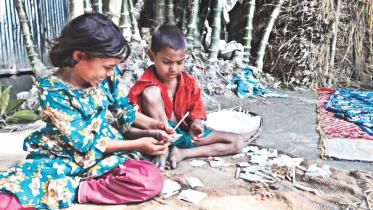
Bangladesh has endorsed elimination of poverty as a national goal, and the country can be proud of its achievements in this respect during the last 25 years.
10 September 2017

Are we entering into a "jobless" growth phase in South Asia?
Jobless" growth is the phenomenon when an economy experiences growth without an expansion of jobs. In recent times, South Asia is considered to be the fastest growing region in the world.
8 September 2017
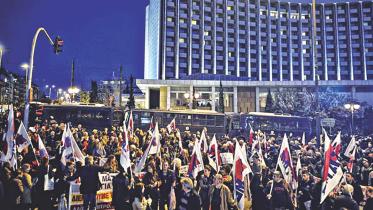
Greece is not out of the woods, yet
For many years now, Greece has been considered the “sick man” of the European Union (EU). The Greek economy was on the verge of collapse right after the major world economic...
29 August 2017

How to stimulate the stock market?
One common discourse in the financial and policy arena of Bangladesh is the idea that higher rate on national savings schemes discourages investment in the stock market.
21 August 2017
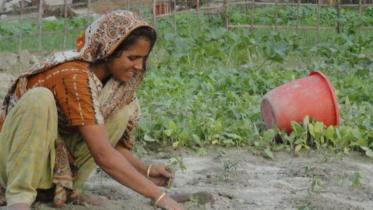
Can we get there by 2030?
The title of this essay may raise a few eyebrows in Bangladesh. Bangladesh has already embraced the Sustainable Development Goals (SDGs), and there is no doubt that the government and civil society are marching ahead to reach the various targets.
11 August 2017
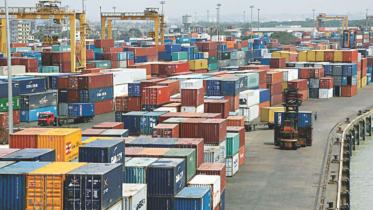
Rising current account deficit: How vulnerable are we?
First things first, let's recall that a current account shows the flow of goods and services, primary and secondary income between a country and the rest of the world.
28 July 2017
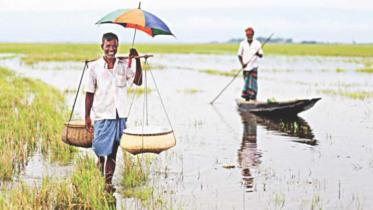
Can Bangladesh become a welfare state?
The National Social Security Strategy approved by the Cabinet in 2015 points to a strong political commitment of Bangladesh to become a welfare state.
16 July 2017

What ails the commercial research industry?
Here is an example of an organisation that benefitted substantially from research: Courtyard by Marriott found out that business travellers needed hassle-free service, relevant information, and time to relax during their travels. They made their check-in and check-out procedures efficient; seeded their website with maps, restaurant types and locations, and promotional materials; and introduced quiet lounges which didn't have music or TV noise to cause distraction. I don't need to elaborate on Marriott's customer satisfaction ratings or their bottom line!
9 July 2017

The biggest disruption is in jobs
The 20th Anniver-sary of the Asian financial crisis and 10th Anniversary of the North Atlantic financial crisis brought back a sense of déjà vu—we have been here before.
8 July 2017
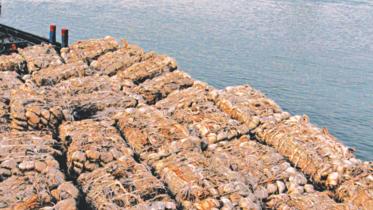
UK'S trade and development commitment to Bangladesh
Trade flourishes where there are high levels of education, developed financial sectors, strong governance, accountable institutions, and transparency that combats corruption.
4 July 2017
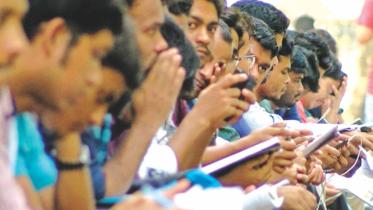
Instilling a strong work ethic early in life
. On one side, commentators are rightly holding the government accountable to generate enhanced youth-based human capital growth. However, on the other side, we also need to look at non-public policy factors which are preventing individuals in Bangladesh from being employed.
3 July 2017
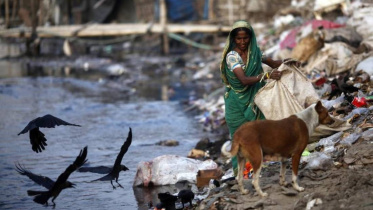
Are South Asian countries ready to meet the targets of SDGs by 2030?
How should we read the SDGs as far as the priorities of the South Asian countries are concerned? In my view, SDG 7 (affordable and clean energy), SDG 8 (decent work and economic growth) and SDG 9 (industry, innovation, and infrastructure) are at the heart of priorities mainly because of the fact that South Asian countries have national priorities aligned with these SDGs, and more importantly, these SDGs have strong linkages with other SDGs.
1 July 2017
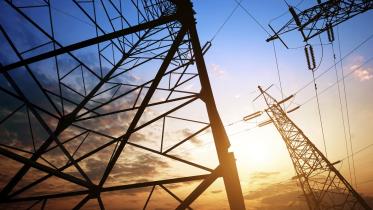
Budgetary allocation for energy is not enough
Has the finance minister addressed these issues and is this budget adequate to meet the challenges stated above? An equally important issue is this: do the responsible agencies have the capacity and capability of implementing such a large budget?
28 June 2017

The curious case of rice price hike
A minister was telling me the other day that if people don't mind spending Tk. 300 on a cheese burger, why can't they afford a little more for rice?
21 June 2017
Budget without a basis
Our finance minister has proposed a mega budget of Tk 4,00,266 crore for FY2017-18, of which Tk 1,53,331 crore is earmarked for Annual Development Programme (ADP).
18 June 2017

Addressing underutilisation of labour
Bangladesh has been making steady economic progress over the past decades. But Bangladesh will not be able to achieve eight percent GDP growth rate by 2020 unless major concerns relating to its labour force and employment are adequately addressed.
17 June 2017
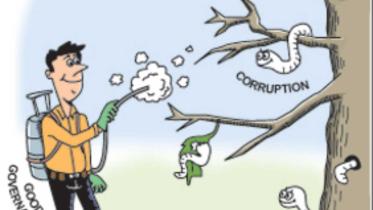
Can Bangladesh continue to grow without 'good governance'?
If we look at the growth pattern of Bangladesh from 1990, we discover two specific characteristics...
13 June 2017