


How long will the untimely death of children be met with silence?

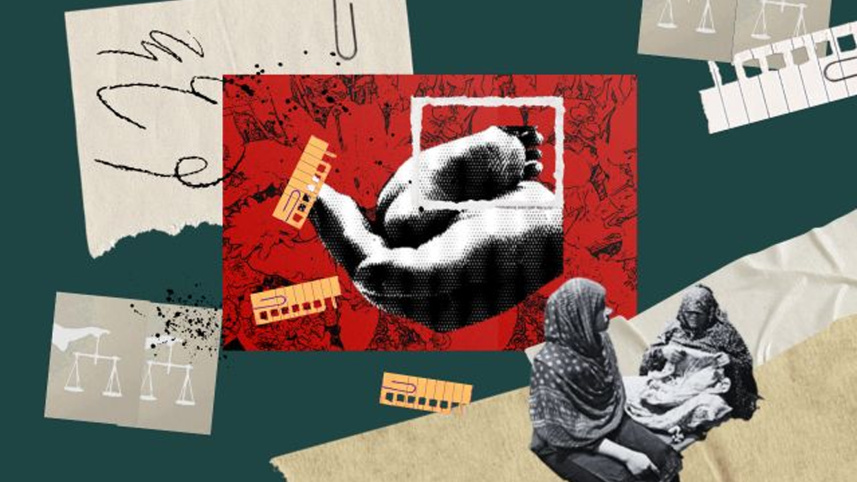
In the early hours of May 27, the day before Eid-ul-Azha, six newborns died at the same hospital where they had been born hours before. Yet to see the world, know their parents, or celebrate their first Eid, the infants died because of an acute failure in the post-operative ward of Ad-din Medical College Hospital in Dhaka. According to the investigation carried out by the hospital authorities, the blame was conveniently put on the shoulders of two employees from the lowest levels of the hierarchy.
Infant mortality in Bangladesh was nearly halved between 1990 and 2019. However, the newborn mortality rate has risen slightly in recent years, to 26 deaths per 1,000 live births. Most infant deaths occur in the first day or week of life due to poor care at the time of birth, often because there is no skilled professional available to care for them. Only 6 in 10 deliveries in Bangladesh are attended by a skilled health professional, one of the lowest rates in the world. Those born in rural areas and/or to the poorest families are also most likely to die before they turn five.

But the six infants at Ad-din hospital successfully bypassed the greatest statistical threats facing a newborn in this country. Their parents made all the right choices: they avoided unassisted home delivery, sought care at an established medical facility in the capital, and entrusted their babies to professionals in a post-operative ward. The babies beat the staggering odds of suffering birth asphyxia, which claims so many lives in the first critical hours. Still, they died, not because of a lack of resources, medical access, or parental foresight but because the hospital that was trusted to keep them safe was negligent.
Ad-din Medical College Hospital has agreed to provide Tk 80 lakh in compensation to each of the victims’ families, alongside promises of lifelong free medical treatment, educational support, and job opportunities. While this financial settlement may offer a lifeline to the grieving parents, does it ensure any amount of public accountability? When a medical institution fails so catastrophically that six newborn lives are cut off at once, is it not tantamount to murder?
To understand what children are to a nation is to look into the very foundation of why societies form in the first place. Depending on the lens you look through, children represent the engine of a society’s future survival, the ultimate test of a government’s legitimacy, or the physical embodiment of human potential. When that potential is extinguished prematurely, it is a failure of the state.
The probe committee formed by the Directorate General of Health Services (DGHS) reported a sequence of structural and administrative failures: an irregular air conditioning system, inadequate ventilation, poor lighting, absence of any physician on duty, and delayed medical interventions that left initially stable newborns to deteriorate and die without timely intervention. But the government’s duty does not end with submitting a report. To prevent a catastrophe of this degree from ever recurring, the authorities must hold the hospital’s top management criminally accountable. Safety rules must also be enforced nationwide. This means shutting down unsafe wards and ensuring no private hospital can ever treat a patient’s life as cheap, disposable collateral.
The cruel lack of oversight at Ad-din hospital and the insufficient course of seeking accountability make one wonder whether we have become desensitised to the sufferings of children in Bangladesh.
Eight-year-old Ramisa was taken from in front of her house in Dhaka’s Pallabi and discovered later, raped and decapitated, in the adjacent flat, only a few feet away from her frantic parents. A 10-year-old student was found hanging in the bathroom of a residential madrasa in Dhaka’s Banasree, an incident that was followed by allegations of the boy being sexually abused by an older student. In Netrokona’s Madan upazila, an 11-year-old girl became pregnant after being raped allegedly by her madrasa teacher. At least 628 children have died from measles and “measles-like” symptoms since March 15 due to a massive failure of the country’s public health supply chain. And almost one year ago now, on July 21, 2025, a fighter jet crashed into Milestone School and College in Dhaka’s Uttara, killing 28 children and leaving many others with severe burn injuries.
Unfortunately, the list goes on. All these incidents involving the most vulnerable citizens of our country represent a breakdown of systemic safety nets and could have been prevented with strict, proactive enforcement of the rules and regulations we already have.
On paper, the country’s laws are a strong shield for its children. The constitution promises the fulfilment of basic needs, and the Children Act, 2013 ensures safety and justice for the most vulnerable. Recent updates to the Women and Children Repression Prevention Act try to speed up legal trials and enforce zero tolerance for abuse. Yet, a fatal gap between the law and reality becomes evident daily in terms of how those who harm children have no or inadequate accountability.
This gap culminates in our trust in the system being broken again and again. We tell mothers to go to modern hospitals to keep their babies safe. We send our children to schools and madrasas to become educated. We want to trust the system. Yet, for the parents of those newborns who died at Ad-din hospital, as well as for so many others, these institutions became death traps.
BNP and 11 other political parties, ahead of the February 12 election, made a promise to our children by signing the Unicef-backed Child Rights Manifesto, which sets practical goals to ensure that every child in Bangladesh survives, learns, and is protected. The political parties committed to creating safer communities free from violence and pledged to turn these priorities into decisive action once elected. Now that the BNP is the ruling party, these promises must be reflected in our current reality. We don’t need more speeches or politically motivated promises; we need our children to stay alive and safe.
Laws and probe reports don’t protect anyone. A piece of paper cannot breathe for a suffocating baby, nor can it fight off a predator. Only uncompromising action can do that. It is time to stop accepting excuses. If we keep allowing the very places meant to keep our children safe become responsible for their harm, we are failing the most basic test of humanity.
Sifat Afrin Shams is a member of the editorial team at The Daily Star.
Views expressed in this article are the author's own.
Follow The Daily Star Opinion on Facebook for the latest opinions, commentaries, and analyses by experts and professionals. To contribute your article or letter to The Daily Star Opinion, see our guidelines for submission.
 For all latest news, follow The Daily Star's Google News channel.
Comments