


An ode to the humble bicycle

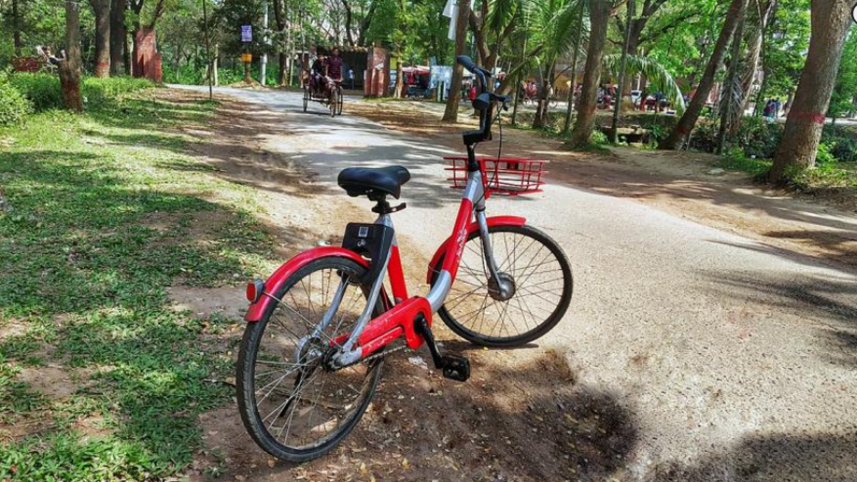
On this World Bicycle Day, it is worth reflecting on the incredible technology that is the bicycle. I love walking, but I cannot help but admire the efficiency of the humble bicycle. For trips of more than a kilometre or two and for carrying groceries, the bicycle offers tremendous advantages.
First of all, bicycles do not pollute the environment. When we consider how many people live in Dhaka and how many daily trips they generate, the benefit of travelling without polluting cannot be overstated. Want cleaner air? Support the creation of better bicycle infrastructure.

Bicycles also occupy less space, as several bicycles can be stored in the space occupied by a single car. Bicycles are light and easily manoeuvrable; they can be packed closely together or in multi-level bicycle parking. Bicycles occupy minimal road space compared to cars too, and in crowded city conditions, they often move faster than cars.
Bicycles are also inexpensive to buy and maintain. Even high-quality bicycle infrastructure is vastly cheaper to build than roads for cars. Every trip made with a motorised vehicle costs the government money for road-building and repair, provision of parking, and the social costs related to pollution, congestion, and crashes. On the other hand, every trip by bicycle saves the government money and improves quality of life. In the UK, for instance, every mile driven instead of walked or cycled costs approximately $2.91; and in the US, it costs $8.25. Additionally, the costs of purchase, operations and maintenance, fuel, and insurance for a bicycle total approximately $3.00 per 100km travelled, while a private car is six times more expensive, costing approximately $18.00 per 100km.
Bicycles also promote better health, both because they do not create pollution and also because they provide an excellent source of daily exercise, helping prevent non-communicable diseases.
Bicycles are comparatively safer than cars, and the danger with bicycles exists mostly due to motorised vehicles on the roads. But if more people used bicycles, drivers would become more aware of their presence, and traffic collisions could decline. Meanwhile, more cars on the road mean more pollution, congestion, and crashes.
Bicycles can help one to build community. When travelling in cars, people are isolated. On a bicycle, other people become more accessible and visible. Conversations can arise while pedalling through the streets. Ever joined a mass bike ride? They are joyous events. Many years ago, my colleagues organised a twice-weekly bicycle training for children on a residential street in Dhanmondi. They successfully transformed a street of isolated individuals into a community gathering spot where neighbours came together and friendships formed.
In different cities around the world, I have witnessed how the bicycle improves people’s lives. The bicycle (like the rickshaw and rickshaw van) can be an almost free means of reaching one’s employment, or even a form of employment itself. It enables independent mobility for the young and old. People carry groceries, babies, and other items on their bicycles. People can attach a small wheeled trailer and use it to move bulkier and heavier items. Bicycle couriers whiz through cities, delivering items far faster than is possible by a car that can stay stuck in traffic for hours. Classes where volunteers teach people how to repair bicycles can be community gatherings that lead to sources of income or to saving money and gaining confidence among those learning the new skill.
Not everyone can or wishes to cycle. But the more trips we shift from motorised vehicles, especially cars and motorcycles, to bicycles, the better our cities become. There are many people, not just men or the youth, in Bangladeshi cities who would love the freedom, speed, and fun of travelling by bicycle if it were made safer and more convenient to do so. A policy to dedicate a fixed percentage of the transport budget to providing high-quality bicycle infrastructure (separate paths, protected lanes, intersection treatment, and protected bicycle parking) would make a huge difference in alleviating congestion and pollution in our cities.
Depending on foreign countries to supply fuel at low prices is clearly not a sustainable strategy. Nor is allowing air pollution rates to reach among the highest in the world. We can fantasise about high-tech solutions (or magic wands) that make cars clean and space-efficient. In the meantime, we have a solution readily available, if only our policymakers would take it seriously and invest in it properly. And for that to happen, we need to raise our voices in praise of the bicycle and all the ways it could make our cities and lives vastly better.
Debra Efroymson is executive director at the Institute of Wellbeing, Bangladesh, and senior adviser to Canadian NGO HealthBridge.
Views expressed in this article are the author's own.
Follow The Daily Star Opinion on Facebook for the latest opinions, commentaries, and analyses by experts and professionals. To contribute your article or letter to The Daily Star Opinion, see our guidelines for submission.
 For all latest news, follow The Daily Star's Google News channel.
Comments