


Securing the future for our women athletes

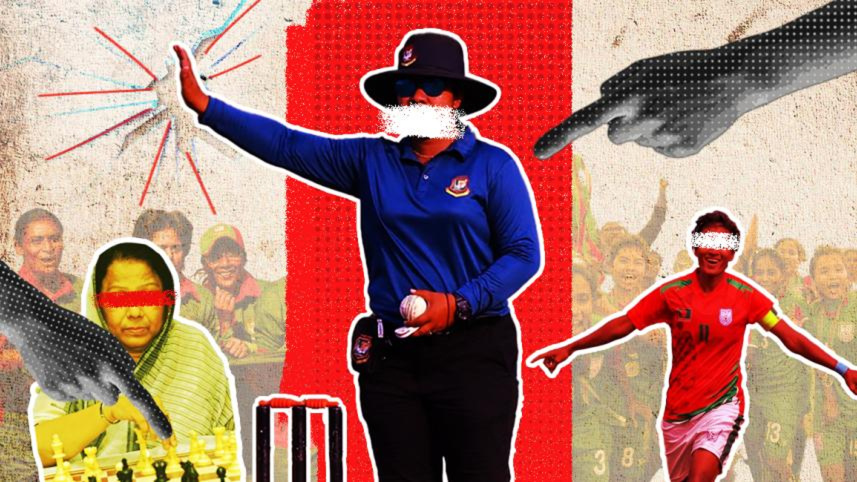
The government’s nationwide “Notun Kuri Sports” initiative is a commendable effort to provide our children with a healthy platform to develop their talents. It is also a timely move to nurture the next generation of athletes who can represent Bangladesh on the global stage. The programme that officially began just a month ago has already seen a considerable number of participants signing up from across the country, which further goes to show that our talent pool is not concentrated to the big cities.
Particularly encouraging is the number of female participants in the initiative—with over 44,133 girls signing up between April 12 and 17, out of some 1,60,779 digitally registered participants in that same period. Bangladesh’s women athletes have been making headlines by competing with merit in both domestic and international platforms. Therefore, female participation in sports is a matter of pride and worth celebrating. However, finding talent often is just the beginning of a much larger story. We have a harder question to face: what comes after these girls are discovered?

Most athletes can compete only until a certain age, and few make it to national teams or secure long-term professional contracts. This contributes to uncertainty for many, and particularly for families from rural areas, who often find themselves asking: what happens to our daughter’s future after she spends years in sports? Will she ever have educational, financial, and social acceptance?
To build a sustainable sports framework for women athletes, we must address these concerns with utmost priority and take steps to link sports to long-term career paths.
India has increased the number of sports scholarships and jobs across central and state government agencies for athletes through schemes like “Khelo India.” Australia has a school-to-club system where young athletes can continue their studies alongside sports activities. In many parts of Europe, too, local clubs serve as community centres where athletes receive coaching, healthcare, and career advice from a young age.
Drawing on these examples, Bangladesh needs to build a solid framework for sustained sports participation by the youth. Programmes like Brac Bank’s “Aporajeyo Alo” have already demonstrated how institutions can empower women by providing visibility, support, and confidence. The initiative added four young girls to the national women’s hockey team, and in their first outing, the team qualified for the Asian Games 2026.
Beyond partnerships, another challenge that needs to be addressed is unequal access to sports facilities. To develop talent nationwide, modern sports facilities must expand beyond the capital to districts and smaller cities. These should include good turf grounds, athletics tracks, indoor stadiums, pools, physiotherapy support, and trained coaches. We must also ensure proper maintenance of these facilities.
It is equally important to strengthen local sports clubs. In many countries, local clubs act as the backbone of talent development. They find young athletes, organise competitions, provide training, and connect school sports to national teams. In Bangladesh, many clubs struggle financially and lack modern training facilities. Without strong local clubs, talent hunts may become one-off events rather than sustained systems.
Financial support is also a key factor. Many athletes drop out due to the rising cost of transportation, nutrition, and equipment. Providing travel support, stipends, and scholarships would enable more rural families to participate, making sports accessible to those who cannot afford them.
Beyond the financial sphere, safety and social support for women, in particular, demands more attention. For parents to feel confident about their children participating in sports, they need to be reassured that their the young athletes will train in safe places under good supervision and have uninterrupted access to basic amenities.
The government should also increase the number of female coaches, trainers, and administrators at every level. Former female athletes can play an important role here. Building community awareness is also important as social acceptance often determines whether a girl can continue playing after adolescence or not. And to bring all these efforts together, the media can play a unifying role.
We celebrate women athletes when they win championships, but stories from the grassroots rarely get the attention they deserve. The country needs to see more stories from villages and small towns so that they can go on to inspire more people, leading to wider participation.
Considering these intertwined opportunities and challenges, the government deserves credit for reviving a nationwide sports talent hunt. But the real success of this initiative will depend on whether these girls can keep moving forward five or 10 years from now—with dignity, education, financial stability, and professional opportunities.
Shafiq R Bhuiyan is vice-president and head of internal communication and CSR at BRAC Bank.
Views expressed in this article are the author's own.
Follow The Daily Star Opinion on Facebook for the latest opinions, commentaries, and analyses by experts and professionals. To contribute your article or letter to The Daily Star Opinion, see our guidelines for submission.
 For all latest news, follow The Daily Star's Google News channel.
Comments