


When can political rivals in Bangladesh safely distrust each other?

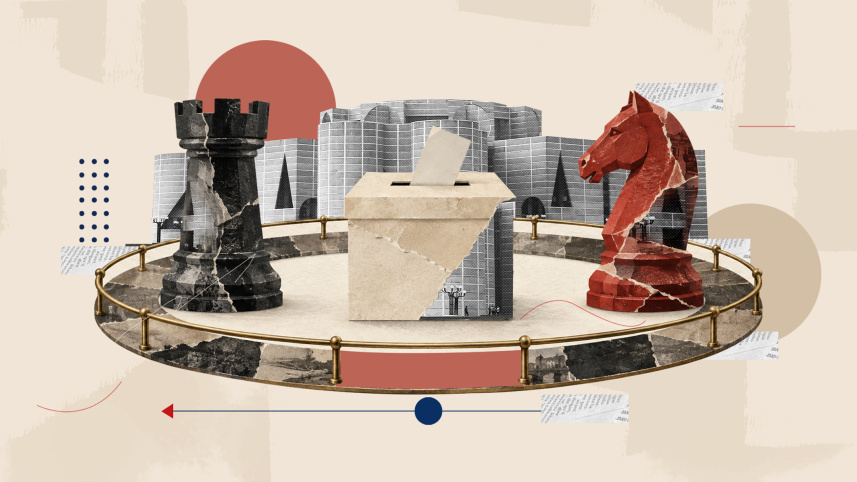
Over the past two years, one word has repeatedly come to my mind as I explored politics in Bangladesh: “trust”. In Bangla, we translate it as astha or bishwas. But I am interested in something beyond its literal meaning. What does trust mean when we think about politics, not as a matter of personal goodwill or moral character, but as a condition of political life? The purpose of this article is to examine whether our political crisis can be addressed through this concept.
We often talk about democracy and the many conditions that are necessary for it—the need for one’s opponent to be a good person is not one of them. There is no particular reason to expect that BNP, Awami League, Jamaat-e-Islami, or NCP should have confidence in one another’s goodwill. In fact, the idea of democracy is almost the opposite. I understand democracy as a structure in which political parties can safely distrust one another. This may sound dialectical or even contradictory, but let me explain it.

When we speak of the separation of powers in a democracy, the logic behind it is precisely that we do not place unlimited trust in an elected executive. Being elected does not mean that a government can do whatever it wants. That is why there is a parliament, why we speak of an independent judiciary, why empowering the Election Commission matters, why media freedom is necessary, and why power is distributed among different organs of the state. Democratic institutions, in other words, are built on the assumption that it is not safe to trust anyone in power completely. Power cannot simply be left to the goodwill of individuals.
What I am trying to argue is that politics can function reasonably even without trust in individuals, but not without trust in institutions. It is in this context that I also want to look at “trust” as a philosophical question.
Thomas Hobbes identified a fundamental problem of political order. In his view, human beings cannot be certain about the future behaviour of others. You may want peace, but that does not mean that your opponent will also want peace. Even if you put down your weapon, there is no guarantee that your opponent will not point one at you. This uncertainty produces fear. And when we begin to act out of fear, we create an environment that ultimately becomes more insecure for everyone.
I want to examine the trust issue in Bangladesh’s politics through this Hobbesian framework, and the question that becomes most important then is: if one political party gives up power, what will the other party do to it?
Our political system has still not produced a credible answer to that question or concern. But if we look at our history, we can see moments when political parties, despite distrusting one another, tried to find an institutional solution. One of the most important examples is the Magura-2 by-election of 1994. Seen in our present context, the political significance of that episode becomes much clearer. The opposition then did not just object to the result of one parliamentary poll. At the centre of its protest was a more fundamental question: if the government in power is itself a party to the election, how can it simultaneously act as a neutral referee? In other words, how far can a party with a direct interest in winning or losing an election be trusted to ensure the neutrality of that election?
The political consequence of this distrust was later reflected in the caretaker government system. An idea gradually took the form of an institutional arrangement.
Many people see the caretaker government system as an example of the failure of democracy in Bangladesh. Their argument is that, in a normal democratic system, elections should be held under an elected government; Bangladesh could not do this because its political parties did not trust one another. But to me, the caretaker government was an important institutional innovation aimed at addressing a specific political problem. Parties at least acknowledged this problem, effectively accepting that they did not trust one another enough to allow the incumbent to oversee an election. Therefore, there needed to be—for a specific period—a structure in which competing sides could have greater confidence. In other words, parties worked out an arrangement that could make political cooperation possible despite mutual distrust.
Put simply, I do not need to believe that you are a good person, and vice versa. What we need instead is a set of rules under which, even if you act with bad intentions, it is not easy for you to break those rules. In political science, this can be described as a “credible commitment mechanism.” It means not just making a promise but also creating an institutional arrangement that makes that promise credible. This, to me, is the most important political significance of the caretaker government system. It did not create trust among our political parties. Rather, it acknowledged the reality that they did not trust one another and tried to create an institution that could manage that distrust.
In this context, I think the debate over post-2024 politics cannot remain limited to creating new institutions or amending the Constitution. We also need to address that philosophical problem. From that perspective, one of the most important steps in reforming our political culture should be to create a system that guarantees the security of the loser. In other words, we need a political system in which losing power does not mean losing the state; losing government authority does not mean losing one’s right as a citizen; losing an election does not mean being expelled from history or politically erased; and being in opposition does not mean becoming an enemy of the state.
If Bangladesh can create this minimum guarantee, then perhaps, over time, trust may return to politics. A political party would then know that even if it loses power, it will still have a political existence. Its leaders and activists would not face state repression simply because they are in opposition; they would retain the right to organise politically, have the space to express their views, and, most importantly, have a real possibility of returning to power through a future election.
This assurance of a “tomorrow” is, in fact, the foundation of democratic trust. A political party accepts defeat today only when it believes that politics does not end with today’s election. But if it believes that a defeat means the end of its political existence, then the incentive to hold on to power at any cost becomes much stronger.
This is why I think the real test of our democratic reform is not simply who comes to power or what kind of constitutional structure is created. We have changed governments many times, amended the Constitution, created new institutions, dismantled old ones, and built interim arrangements. But we have still not produced a durable answer to one question: if my opponent comes to power, will I be safe? Perhaps this is the greatest unfinished task of democracy in Bangladesh.
Asif Bin Ali is a geopolitical analyst and doctoral fellow at Georgia State University in the US. He can be reached at abinali2@gsu.edu.
Views expressed in this article are the author's own.
Follow The Daily Star Opinion on Facebook for the latest opinions, commentaries, and analyses by experts and professionals. To contribute your article or letter to The Daily Star Opinion, see our guidelines for submission.
 For all latest news, follow The Daily Star's Google News channel.
Comments