


Why Keir Starmer's fall should surprise no one

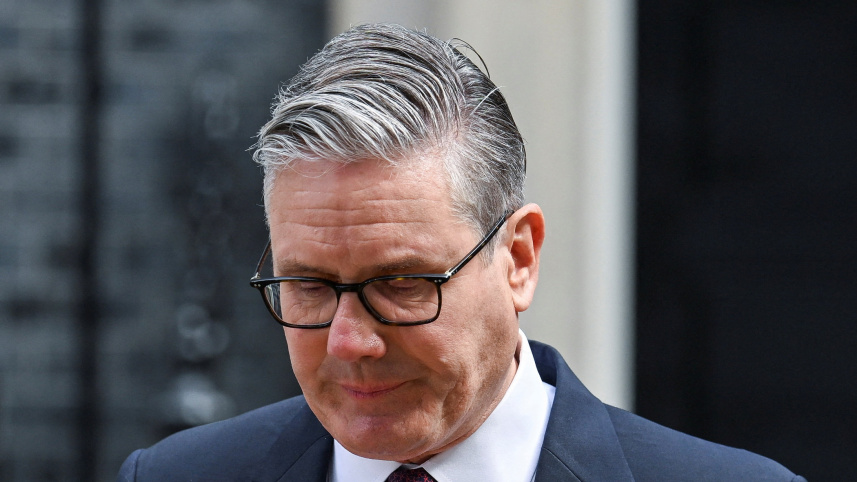
When Keir Starmer stepped up to the lectern outside 10 Downing Street and announced his resignation on June 22, the moment carried a quiet, unsettling weight of recognition—that Britain had been here before. Just two years earlier, Labour had swept back into power with 412 seats and the largest parliamentary majority in a generation. The crowds that greeted Starmer on Downing Street in the summer of 2024 had not been seen since Tony Blair’s landslide of 1997. That such a commanding mandate could dissolve so completely and so quickly suggests the problem runs deeper than any one leader’s failures.
The immediate triggers of Starmer’s fall are not difficult to enumerate. His government began badly, with the politically costly withdrawal of winter fuel payments from pensioners, a move that stung the very voters Labour needed to retain. A string of policy reversals followed, each one chipping away at the image of serious, principled governance Starmer had carefully cultivated in opposition. The appointment of Peter Mandelson as British ambassador to the United States, and the subsequent revelation that Mandelson had failed security vetting before being approved anyway, was damaging as it raised the question of whether Starmer was actually in control of the government he nominally led. Then came the local elections in May—Labour’s worst performance in decades, with nearly 1,500 council seats lost across England—and the decisive blow: Andy Burnham’s emphatic by-election victory in Makerfield, defeating Reform UK for a seat the insurgent right had been expected to challenge. Burnham’s return to Westminster made Starmer’s position untenable almost overnight. More than 90 Labour lawmakers called for the prime minister to go, including his own health secretary.

Burnham’s entry into this unfolding story is rich with political symbolism. Nicknamed the “King of the North” for his tenure as Greater Manchester’s mayor, during which he overhauled public transport and oversaw genuine economic regeneration, his appeal rests on something conspicuously rare in British national politics: a record of actually delivering. Burnham is a career politician who reinvented himself as a regional administrator, and that combination of insider knowledge and outsider credibility has made him a distinctive figure. His defeat of Reform UK in Makerfield is being read by some as evidence that Labour can compete against populist right-wing politics if it finds the right messenger.
Yet, the questions surrounding Burnham remain substantial. He has been deliberately vague about his policy programme beyond broad commitments to devolution and cost-of-living relief. His stance on immigration—the issue that arguably contributed more than any other to Starmer’s political erosion—remains strategically ambiguous. Political charisma without clear direction has a way of burning through quickly, as this past decade of British leadership has repeatedly demonstrated.
Which brings the argument to the number that matters most: seven prime ministers in roughly a decade. David Cameron gambled the country’s constitutional future on a referendum and lost. Theresa May spent three bruising years attempting to deliver a Brexit deal that satisfied nobody. Boris Johnson—whose personal mandate was genuine and substantial—collapsed under the weight of his own conduct. Liz Truss lasted 45 days, her brief tenure ending in a near-financial crisis of her government’s own making. Rishi Sunak governed with competence but without conviction in a party that had lost its bearing. And now we have Keir Starmer’s exit, who rescued Labour from its post-Corbyn collapse only to be pushed out by the party he had rebuilt. This is not a series of individual misfortunes, but instead points to a structural issue.
It is not incidental that this period of sustained turbulence began almost precisely a decade ago with the Brexit referendum. While the vote did not cause every problem Britain now faces, it catalysed a volatility that hasn’t fully subsided even a decade later. It divided the country along cultural and generational lines that cut cleanly through both major parties. The referendum introduced a political culture of purity testing—in Labour and the Conservatives alike—that made sustained governance harder. The promise of “taking back control”—of borders, laws, trade, and national identity—has not been redeemed in terms that ordinary voters can feel in their daily lives.
The economic picture offers little comfort. Britain’s productivity has been weak for nearly two decades. Real wages remain squeezed by the long legacy of austerity and successive global shocks. Bank of England estimates suggest the UK economy underperformed by roughly 6 percent compared to where pre-Brexit trajectories might have placed it—not an argument for relitigating the 2016 referendum, but a figure that helps explain why successive governments have been unable to make voters feel materially better off. Starmer’s Labour raised business taxes and still failed to generate the growth it had promised. The cost-of-living crisis did not relent on Labour’s watch, and with it, public patience ran out.
Starmer’s government also attempted to walk an inherently unstable line on Europe: pursuing a closer relationship with the EU while ruling out rejoining the single market, the customs union, or accepting free movement. The resulting “reset” was modest—welcoming in Brussels, but too incremental to produce the economic dividends that deeper integration might have offered. Labour had boxed itself in. It could neither fully exploit the benefits of EU alignment nor speak honestly to voters who had backed Brexit expecting something transformative. The paralysis reflects a wider British reluctance to confront the post-Brexit question directly.
Meanwhile, the old two-party architecture is under visible strain. Reform UK, polling around 30 percent nationally, reflects a genuine realignment among post-industrial communities that once formed Labour’s electoral base. The Conservatives face what serious observers describe as an existential crisis. The Greens, the Liberal Democrats, the SNP, and Reform UK have each claimed significant portions of an electorate that neither major party can reclaim simply by changing its leader. In Washington and in European capitals, this revolving door of prime ministers has generated a mixture of concern and puzzlement.
Andy Burnham, should he become Britain’s next prime minister, will inherit a governing challenge that personal warmth and political skill cannot alone resolve. The deeper task facing him would be rebuilding public trust after years of broken promises, costly reversals, and scandals that confirmed the electorate’s worst suspicions about political elites.
Britain’s relationship with its post-Brexit identity remains unresolved. The country is neither fully reconciled to the consequences of leaving the European Union, nor politically prepared to revisit that question openly. Rejoining is not a straightforward option; it would require negotiating re-entry under terms far less favourable than those Britain voluntarily surrendered in 2020. But the present arrangement—a semi-detached relationship with the continent, constrained trade flexibility, and a domestic debate conducted mostly in code—reflects evasion rather than a settlement.
Britain’s next prime minister needs to offer an honest account of where the country stands—economically, geopolitically, and in relation to the European neighbourhood it chose to leave but cannot afford to ignore. This demands not only political talent, but also the kind of strategic honesty that British politics has conspicuously lacked for the better part of a decade.
Syed Raiyan Amir is a researcher and journalist.
Views expressed in this article are the author's own.
Follow The Daily Star Opinion on Facebook for the latest opinions, commentaries, and analyses by experts and professionals. To contribute your article or letter to The Daily Star Opinion, see our guidelines for submission.
 For all latest news, follow The Daily Star's Google News channel.
Comments