


Why our ports need a sustainability scorecard

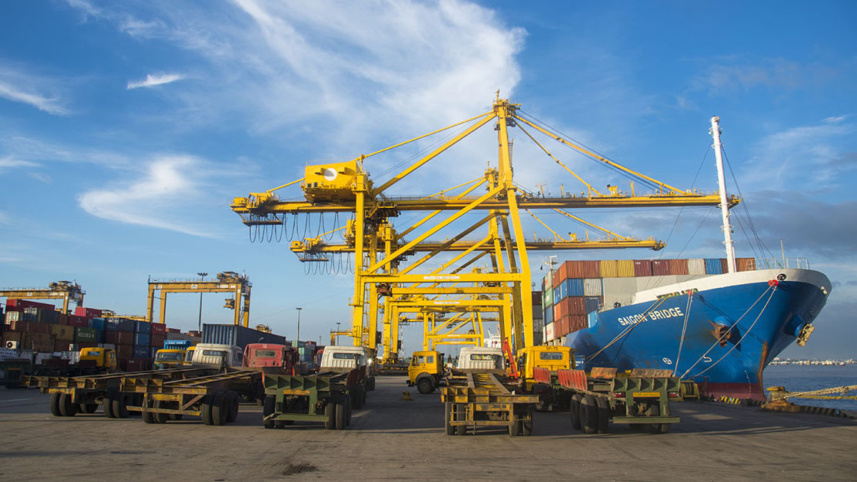
Bangladesh is investing heavily in ports, with private operators increasingly entering the sector. But as our port infrastructure expands, one pertinent question that remains largely unanswered is: how should we judge whether ports are becoming genuinely sustainable?
For years, this debate has often focused on capacity, congestion, emissions, dredging, or “green port” initiatives. These issues are important, but none covers the full spectrum of sustainability. A modern port must be environmentally responsible, economically efficient, and socially accountable. We, therefore, need to move from broad sustainability language to a port sustainability scorecard to measure real progress.

A useful basis for this comes from the latest research of Mohammed Mojahid Hossain Chowdhury, conducted along with Wenming Shi and Wei Zhang. In the study, the researchers reviewed 302 sustainability projects reported in the World Ports Sustainability Program (WPSP) database between 2014 and January 2025—of which 292 were used for detailed analysis. They identified 45 sustainable port management practices under the Triple Bottom Line framework: 18 environmental, 12 social, and 15 economic practices.
If applied to our ports, such an approach can help us assess what they are doing to become more sustainable. Instead of asking whether a port is “green” or “smart,” we can ask what it is actually doing, why it is doing it, and whether the results are measurable.
If we dig further into the study, we see that 38 percent of the analysed projects concerned environmental sustainability, 37.7 percent social sustainability, and 24.3 percent economic sustainability. Globally, sustainability is, therefore, no longer simply an environmental agenda. Community engagement, occupational safety, workforce welfare, operational resilience, digitalisation, and connectivity increasingly belong to the same conversation.
For Bangladesh, that has immediate relevance. We often treat environmental compliance, port efficiency, labour conditions, digitalisation, and logistics connectivity as separate policy subjects. But a port does not function in compartments. A cleaner terminal that remains inefficient is not sustainable. A highly automated terminal that ignores its surrounding community is not sustainable. Nor is a commercially successful port sustainable if its hinterland connections remain unreliable or costly.
The study’s economic findings are especially striking. Of the 71 projects classified under economic sustainability, 50 concerned digitalisation and smart-port technologies, including integrated Port Community Systems, AI and big-data applications, blockchain and IoT, automation, cybersecurity, terminal-management systems, and advanced digital infrastructure. That should change how we think about port digitalisation: it is not merely an IT project or a convenience for users. Done properly, digitalisation becomes an integral part of economic sustainability because it reduces uncertainty, improves productivity, and strengthens coordination. A Port Community System, for example, can reduce duplication, improve cargo visibility, and connect the port with customs, shipping lines, terminal operators, freight forwarders, inland depots, etc.
The research also contains a warning highly relevant to us: sustainable hinterland and foreland connectivity was among the least represented areas in the global dataset.The researchers observed that economic sustainability initiatives frequently remain concentrated inside port boundaries rather than extending across port-centric logistics systems.
This is a mistake that Bangladesh should avoid. Chattogram port cannot be judged only by what happens at the berth, in the yard, or at the port gate. The performance of off-docks, inland container depots, road corridors, rail links, inland waterways, customs processes, and cargo-information flows ultimately determines whether a port investment creates wider logistics efficiency. Bay Terminal and Matarbari should, therefore, be viewed as parts of the larger freight system, not merely as terminal projects.
Perhaps the most practical contribution of the research is its sustainability driver matrix. The 45 identified practices are linked to three broad motivations: regulatory compliance, operational efficiency, and social commitment. Different sustainability problems, therefore, require different management responses. Regulation-driven practices need monitoring, inspection, and reporting. Efficiency-driven practices need investment, optimisation, and performance benchmarking. Socially driven practices need collaboration, consultation, and transparent engagement. Bangladesh often relies heavily on regulation, even where incentives, technology, or stakeholder cooperation may be more effective.
This is where a national port sustainability scorecard could help. We should not mechanically copy all 45 global sustainable practices; indicators must reflect our regulatory environment, port size, geography, institutional capacity, and stakeholder priorities. The framework could begin with three pillars: environmental performance, social responsibility, and economic-logistics performance.
Environmental indicators could include energy efficiency, emissions, waste reception, water management, and biodiversity protection. Social indicators could cover occupational safety, workforce development, community engagement, and grievance handling. And economic-logistics indicators could include vessel turnaround, yard efficiency, digital integration, interoperability, cargo visibility, hinterland connectivity, resilience, and customer satisfaction.
A common scorecard would not mean identical targets for every port, however. Chattogram, Mongla, Payra, Matarbari, and future terminals are naturally expected to operate under different physical, commercial, and institutional conditions. But they can still report through a common architecture that allows comparison over time and makes accountability visible. Each port could publish an annual sustainability statement against common indicators, with targets and year-on-year progress. This would help policymakers identify investment needs, operators assess their performance, and the public see whether port expansion is producing balanced outcomes.
Bangladesh’s changing port-governance model makes such a framework even more important. The country is moving towards greater private participation and a landlord-style model: Patenga Container Terminal is operated by RSGTI, Laldia Container Terminal is being developed under a long-term concession with APM Terminals, while negotiations over New Mooring Container Terminal continue with DP World. As Bay Terminal and Matarbari take shape, international operators are likely to play a larger role. Sustainability, therefore, cannot remain an obligation of the port authority alone. Future concession agreements and performance frameworks should require operators to work against common sustainability indicators and publish annual sustainability statements. Global expertise should bring not only productivity and technology, but also measurable environmental, social, and economic accountability.
The research itself cautions against simplistic ranking. The World Ports Sustainability Program database is based on voluntarily reported projects and does not represent the complete performance of every port. Nor does the study claim that particular practices automatically cause better performance. The framework should, therefore, be treated as a starting point for assessment and prioritisation, not an automatic league table.
Bangladesh is entering a new phase of port development involving larger vessels, new terminals, private operators, deeper channels, automation, and greater integration with global supply chains. Measuring success only by annual throughput or berth productivity is no longer sufficient. We also need to ask, are our ports becoming cleaner, safer, better connected, more efficient, more transparent, and more beneficial to the communities and businesses that depend on them? A sustainability scorecard would not answer every question, but it would force us to ask the right ones and, more importantly, to measure the answers.
Ahamedul Karim Chowdhury a maritime, logistics and supply chain policy analyst, is former head of Kamalapur Inland Container Depot (ICD) and Pangaon Inland Container Terminal.
Views expressed in this article are the author's own.
Follow The Daily Star Opinion on Facebook for the latest opinions, commentaries, and analyses by experts and professionals. To contribute your article or letter to The Daily Star Opinion, see our guidelines for submission.
 For all latest news, follow The Daily Star's Google News channel.
Comments