


What is the Blade Battery, and why does it matter for electric cars?
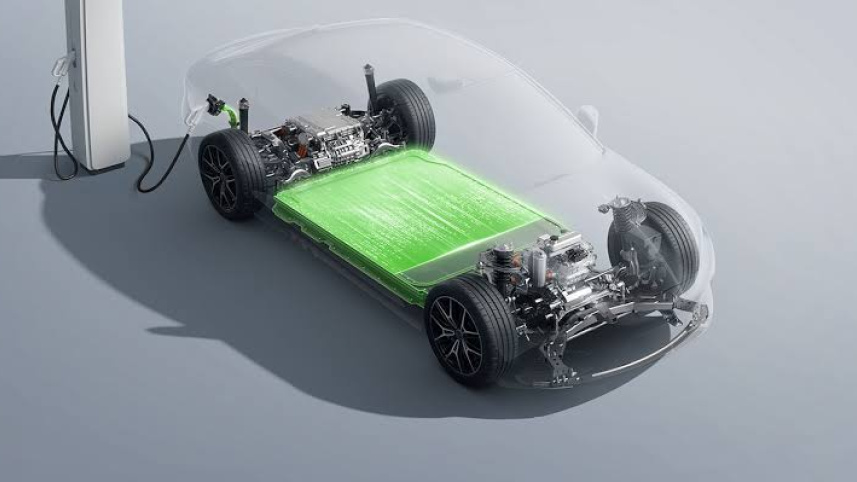
A battery shaped like a blade sounds like a marketing exercise. But in 2020, the BYD introduced its Blade Battery as a way to overcome one of the main disadvantages of traditional lithium iron phosphate, or LFP, batteries: they are generally less energy-dense than nickel-based alternatives.
The solution wast that instead of putting relatively small cells into modules and then combining those modules into a pack, the Blade Battery used long, narrow prismatic cells arranged closely together. The cells can also form part of the pack’s structure. The result was a battery that used the available space more efficiently.

What is actually inside a Blade Battery?
The original Blade Battery is a lithium-ion battery using an LFP cathode.
LFP stands for lithium iron phosphate. Unlike the nickel manganese cobalt, or NMC, chemistry widely used in electric vehicles, LFP does not require nickel or cobalt in its cathode.
That brings several advantages. Iron and phosphate are comparatively inexpensive, while LFP batteries tend to have long cycle lives and better thermal stability. The International Energy Agency says LFP batteries also have lower flammability than nickel-rich alternatives and have become substantially cheaper to produce. In 2025, LFP packs were more than 40% cheaper on average than NMC alternatives, according to the agency.
The compromise is energy density. An NMC battery can generally store more energy for a given weight or volume. The IEA says the gap has narrowed, but it remains important, particularly for long-range vehicles and in cold climates.
Why is it called a Blade Battery?
The individual cells are unusually long and thin, giving them a blade-like appearance.
Researchers at RWTH Aachen University who examined a Blade cell measured it at about 965mm long, 90mm high and only 14mm thick. The exact dimensions vary between applications, but the principle is the same: make each prismatic cell long enough to occupy a substantial part of the battery pack.
Traditional packs usually group cells into modules before installing those modules inside a larger protective case. Modules make assembly and replacement easier, but their frames, connections and other components consume space and add weight.
Blade-style cell-to-pack construction removes much of this intermediate structure. Academic research into cell-to-pack systems has found that eliminating modules can reduce structural components and improve the amount of the pack occupied by active battery cells.
BYD says its original Blade design improved battery-pack space utilisation by more than 50% compared with earlier conventional LFP pack designs. That is a manufacturer claim rather than a universal figure for every battery pack, but independent research supports the broader principle that cell-to-pack construction can increase pack-level energy density.
In simple terms, LFP stores less energy per kilogram than some rival chemistries, so BYD tries to waste less room around the cells.
Does the Blade Battery give an electric car more range?
Not automatically. A vehicle’s range depends on battery capacity, efficiency, aerodynamics, weight, temperature, tyres and driving conditions, among other factors.
The Blade architecture helps because its efficient packaging allows manufacturers to fit more usable battery capacity into a given amount of space. But an NMC cell can still have substantially higher cell-level energy density.
The RWTH Aachen analysis, for example, measured about 160 watt-hours per kilogram for the BYD Blade LFP cell it examined, compared with 241Wh/kg for the Tesla 4680 NMC cell in the study. The comparison illustrates the chemistry trade-off rather than determining which complete battery pack or vehicle is superior.
LFP also tends to perform less strongly in very cold conditions. That can reduce available range and charging performance unless the vehicle uses effective battery heating and thermal management.
What is Blade Battery 2.0?
BYD unveiled its second-generation Blade Battery in March 2026 alongside a new high-power charging system called Flash Charging. The company says the new battery increases energy density by 5% over the first generation while dramatically improving its ability to accept high charging power.
BYD says a compatible vehicle and 1,500kW Flash Charger can take the battery from 10% to 70% charge in five minutes and to 97% in nine minutes under suitable conditions. At minus 30C, the company claims a 20%-to-97% charge takes 12 minutes. These figures are manufacturer test claims and require BYD’s matching high-voltage vehicle and charging infrastructure; they should not be read as charging speeds available from an ordinary public charger.
The second generation also shows why “Blade Battery” is better understood as an evolving battery architecture rather than the name of one fixed chemistry. BYD’s Canadian site describes Blade Battery 2.0 as using an LMFP – lithium manganese iron phosphate – cathode and a silicon-carbon anode.
Why does the Blade Battery matter?
For years, electric-car manufacturers faced a relatively straightforward choice: use comparatively cheap and durable LFP batteries but accept lower energy density, or use nickel-rich batteries to obtain more energy from a smaller and lighter pack.
 For all latest news, follow The Daily Star's Google News channel.
 The Blade Battery demonstrated one way of changing that calculation. Better packaging could compensate for some of LFP’s weakness at cell level.
The wider industry has moved in the same direction. Cell-to-pack and cell-to-chassis architectures are increasingly used to strip out structural material that does not store energy. At the same time, LFP has moved from a mainly Chinese and lower-cost technology towards the centre of the global electric-vehicle market. It accounted for more than 55% of EV battery capacity deployed worldwide in 2025, according to the IEA.
Aalthough Blade is BYD's technology and its own vehicles remain its main application, other manufacturers have also used batteries supplied by the company.
Toyota, for example, says its bZ3 electric saloon uses a BYD-supplied lithium iron phosphate battery as part of an electrical system developed jointly with BYD for the Chinese market.
BYD batteries have also appeared in some European Tesla Model Y variants. European type-approval information showed a German-built rear-wheel-drive Model Y using a structural BYD battery pack, and industry reporting identified the cells as Blade batteries.
For electric cars, the contest is no longer simply about finding a cell that stores the most energy. Manufacturers are trying to balance cost, safety, charging speed, durability, weight, packaging and ease of manufacture.
The Blade Battery is one answer to that problem – not a perfect battery, but an influential example of how rethinking the shape of a cell can change what an established chemistry can do.
Comments