Bonolata Sen's Natore: A topographic reading

Bogura Road is a long, winding road that weaves through Barishal City from the west to the east, eventually leading to the Kirtonkhola River. Where Gorosthan Road splits at a sharp angle from Bogura Road was once the family home of Bengal's most reputed recluse and poet, Jibanananda Das. Much of the city has changed since the poet left town permanently in 1946 during the anxious time of Partition. The original house was taken over and mauled beyond recognition, and now a pathetic building claims to be an auditorium and library in the poet's name. The "city" itself now sports 10–12-storeyed buildings, traffic-jamming motor cars, and shiny shops selling shiny things.
What would the poet have thought about his Barishal now, a "town-place" that he imagined as a synonym for Ruposhi Bangla? In the vast body of literary criticism on Jibanananda's works, there is little discussion of the city or town. In a landscape of hijal, tomal, jarul, and the fragrance of grass – always grass, "lying under a jhau tree on a bed of grass" – and the flight of the owl in moonlight, the poet is seen primarily as the minstrel of Bengal's deep nature, or a lyricist of deeply felt love poems.
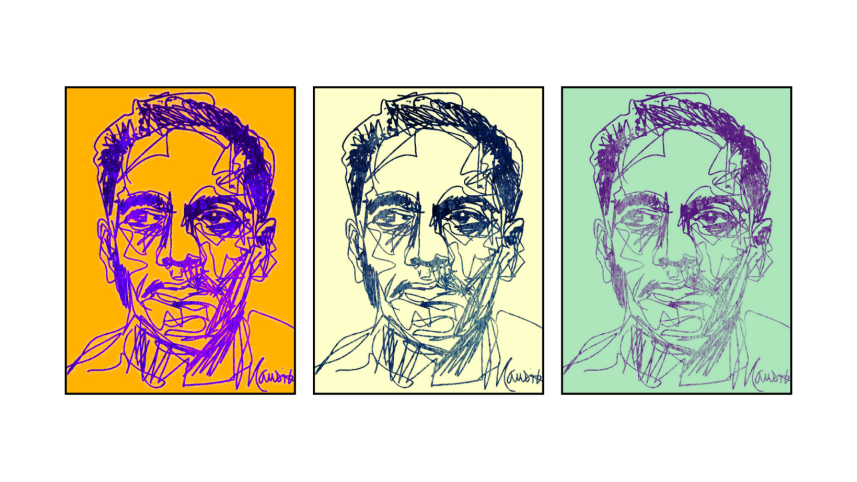
Jibanananda's well-wisher and renowned writer Buddhadeva Bose suggested that "the natural environment looms much larger and more alive in the poet's imagination than does the woman of his love" (quoted in Clinton Seely, A Poet Apart). Hailing Jibanananda as an "ecopoet", quite a few scholars and critics have advanced the notion of a rapport between nature and human beings in his poems. Things are a bit murkier than that.
Considered a love poem at first reading, "Bonolata Sen" is undoubtedly the most acclaimed creation of Jibanananda Das. What made the poem immediately popular is the enigma of a woman with an arboreal name and the eyes of a bird's nest. The novelist and writer Shahaduz Zaman thinks that the mysterious woman became more famous than the poet who created her. Since the poem was first published in 1935, the identity of the woman with the dark hair of Vidisha and the face of a Sravasti sculpture has remained a mystery. Is Bonolata Shobhona, the long-lost love of the poet; Suronjana, someone he met somewhere; Suchetana, a belle from a distant island; a courtesan he encountered in a dark space; a girl he met on the train to Natore; or a political prisoner in Rajshahi? We don't know, and we should not particularly care. If Bonolata did not exist, she had to be invented.

In a book of poems bearing the same title, Bonolata Sen, published in 1946, we see a recurrence of deep, dark hair and travelling through a thousand years. It is a book of inexplicable longing, perhaps in the sense of the Irish word cumha or the Portuguese saudade, suggesting a "profound homesickness, a deep yearning for a person or place".
Moving at many levels, the immediate notion of a love poem in "Bonolata Sen" is superseded by a more melancholic idea of a "return home". Travelling for thousands of years across vast seas and ancient landscapes, the weary poet-narrator recalls the momentary bliss he received from Bonolata Sen of Natore. In asking the poet, in an endearing way, "Where have you been all this time?", Bonolata assures us of their prior acquaintance. While there is much ado about Bonolata, there is little about the place name, Natore. Why Natore and not Alfadanga, for example, we wonder? And, of course, why not Barishal, the town that was the poet's beloved home-place? I wish to discuss a different course here with the famous poem, arguing that our poet remained suspended between two topographical commitments.
In discussing Jibanananda's poem, early critics make reference to the nineteenth-century American poet Edgar Allan Poe and his poem "To Helen". While there may have been some intimations of the beauty of Helen ("Thy hyacinth hair, thy classic face") in "Bonolata Sen" ("ondhokar Vidishar nisha" and "Sravastir karukarjo"), what is more evident in both is the journey of the seafarer in desiring to reach home. As in Homer's Odyssey, Poe magnifies the return as a reclamation of classical sites and therefore the ethos of Greece.
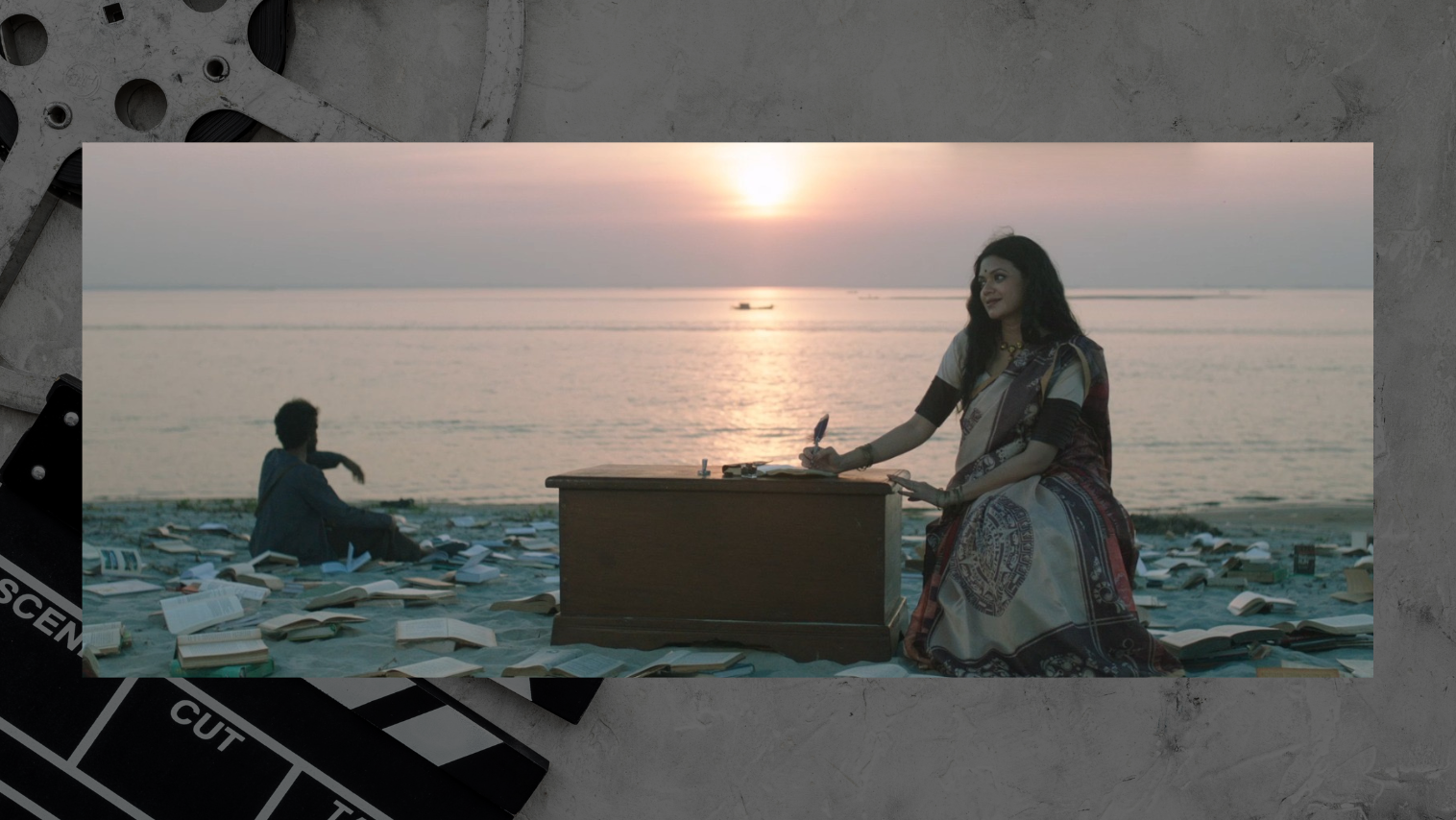
While the desire for a return endures in both poems, there is a difference. In "Bonolata Sen", places from classical India are invoked (Vidarbha, Vidisha, and Sravasti), just as Troy and Sparta in ancient Greece are in Poe's poem, but in Jibanananda's reckoning the classical sites of ancient India have dissolved into the darkness of time. Uttered five times, the word "ondhokar" is a leitmotif in the poem. Unlike Poe's port of arrival, Jibanananda's destination is not a classical site, but a rather modest and contemporary town in northern Bangladesh. And, unlike the royal Helen from the glorious city of Troy, whose face launched a thousand ships, the enigmatic Bonolata is an unknown woman from that small town who has beguiled a poet from Barishal.
As with Bonolata, the appeal of Natore remains a mystery. Perhaps there is a poetic cadence to the name, one that is better than Barishal. Other than the utterance of Natore, there is nothing much in the poem about the town. Even now, Natore is a minor town with one main road cutting across it, lined with unremarkable buildings. The only distinguishing feature is the 300-year-old zamindari that ruled over much of northern Bengal in the eighteenth and nineteenth centuries. But we can be sure that Jibanananda finds Bonolata neither in the city nor in the village, but in that undistinguished little town.
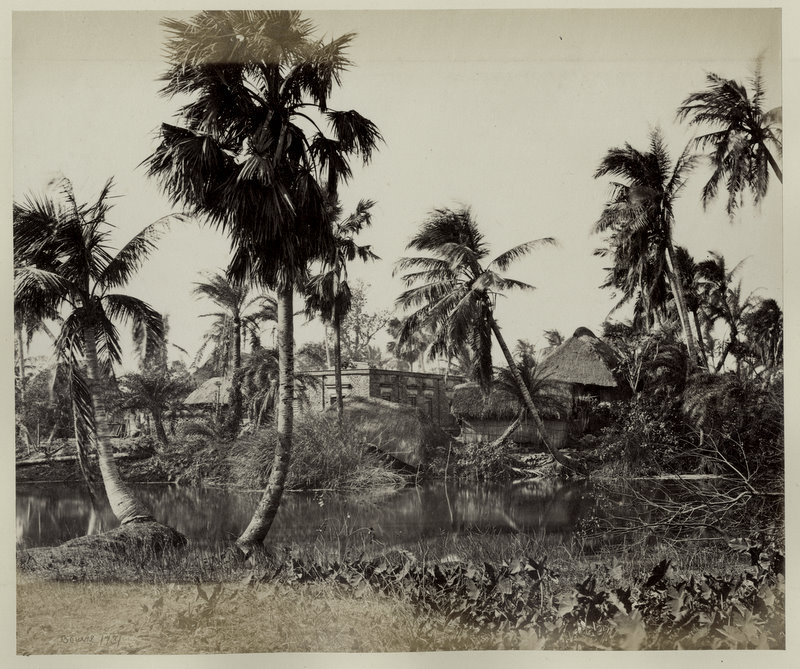
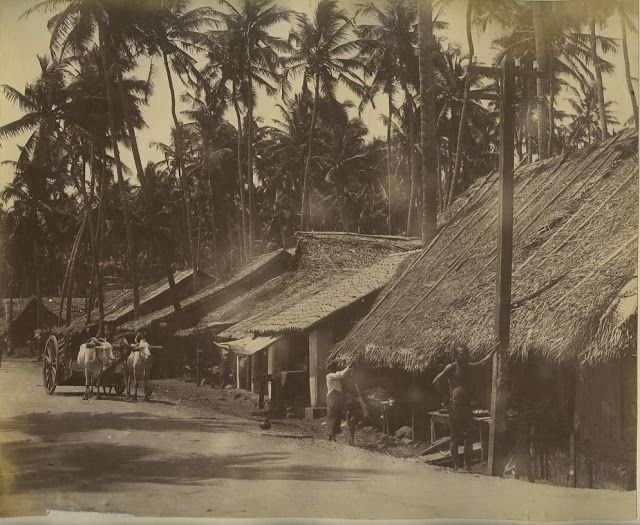
Jibanananda lived in a similar town in his own time, both in his childhood and when he returned from Calcutta as an adult to teach at Brojomohun College. That town, Barishal, was, however, nestled in a wondrous landscape of rivers and canals, dark foliage, and tall trees. Small towns in Bangladesh in the 1930s and 1940s were a medley of quiet and unassuming dwellings, mostly one-storey thatched structures, with the exception of the finely wrought colonial buildings.
Throughout his life, Jibanananda remained suspended in an oscillation between two urban situations – the metropolis (Calcutta), which he sought and which tormented him at the same time, and an imagined place, perhaps a small town but imbued with the textures of nature, as he had witnessed and experienced them in Barishal town. While in Calcutta, he would detest his sorry financial state and the bickering of his fellow poets, and pine for the intimacy and natural setting of the small town, and when in Barishal, he would become frustrated by the pettiness of his colleagues as well as family members there, and long for the literary energy and cultural milieu of the big city.
Writer Bina Roy remarks that Jibanananda preferred the solitariness of a crowd because the crowd creates a kind of screen. In the mofussil town, one does not have such a screen (see Shahaduz Zaman, Ekjon Komlalebu). In a letter, Jibanananda once wrote that the towns in the mofussil are intellectually backward in many ways. There, the thing called culture is hardly present; there is little practice of literature (Amin al Rashid, “Jibananander Barishal-Kolakata Tanatani,” in Jibanananda magazine). In his later life, both the metropolis and the mofussil turned out to be “hellish”, as he noted in his diaries.
Jibanananda writes in another well-known poem, “On City Sidewalks”: “From footpath to footpath in Calcutta—footpath to footpath— / Like primeval serpentine sisters tram lines are spread out / Under my footsteps; I walk on, feeling their poisonous vapid / Touch in the blood coursing through my veins. / It is drizzling—the wind is somewhat chilly; / I remember some faraway grassy green land rivers and fireflies— / Where are they now? / Have they lost their way?” (trans. Marzia Rahman and Amy Parsons).
Again, Jibanananda writes in the poem “The City”: “You have seen many big cities, my heart / The bricks and stones of those cities / The dreadful plundered eyes of words, work, hope, despair / Have burnt to ashes within my bitterness / But still I have seen the sun rise by the enormous cloud over the city / Seen the sun across the river at the harbour / Its load like the amorous peasant’s in the orange field of the clouds / Above the gas lights and high towers of the city too I have seen—stars / Flying towards a southern ocean like a multitude of wild swans.” (trans. Arunava Sinha)
Jibanananda Das's life is a pure aporia, a predicament never reconciled. The Black American singer Josephine Baker, who lived a life of self-exile in Paris in the 1930s, sang and made famous the song “J’ai Deux Amours” (“I Have Two Loves”). She sang: “Manhattan is beautiful, / But why deny it, / What puts a spell on me is Paris, / Paris in its whole.” Jibanananda too had two loves – Calcutta and Barishal. While his sentiment for Calcutta was expressed in a more critical way, the latter, Barishal, formed a more complex imaginary and topography, derived from a conflation of the small town and its rural milieu. The “grassy green land rivers and fireflies” are an invocation of the landscape of Barishal that he remembers.
From recent publications on Jibanananda Das, especially the work of Bhumendra Guha, we learn that the poet was a keen observer of the city, especially Calcutta. In a novel that I will discuss later, the poet makes a character speak of Calcutta's imperial architectural glory: "Yes, Calcutta had become like Athens, but now remains less than Athens; now it's falling, there is no chance."
In an essay titled "The City" (1952), quoted extensively in Guha's book Nirbachito Jibanananda Das, Jibanananda deplores how Calcutta had developed as a city – if it had adopted the "modern science of city building rather than any specific foreign or indigenous design…", Calcutta would have worn a much better look. It would have if, the poet argues, "it had grown like a tree" following the guidance of Nature. But he also talks about the innate character of Calcutta that is loved by many – the discoveries that are "known, half-known and sometimes hidden from most", the habit of strolling through odd corners of the city, and "the pattern of loveliness, color, harmony and power that the city reveals." Like the French poet Charles Baudelaire, who coined the term flâneur, Jibanananda was a walker of the city, especially at night. The habit of strolling through odd corners would lead to many of his poetic moments, such as Mohin's horses or the serpentine tram lines.
The oscillation between two topographical realities is a deeply felt emotion in the work of many poets. We are not sure whether Jibanananda knew the work of the Portuguese poet Fernando Pessoa (1888–1935) and the Greek-Alexandrian poet Constantine Cavafy (1863–1933), for the poems of both echo an urban disquietude and a longing for elsewhere. In the poem "The City" (written between 1905 and 1915), Cavafy writes of an anguish:
"You said: 'I'll go to another land, I'll go to another sea. / Another city will be found, a better one than this… / Wherever I turn my eyes, wherever I look, / the blackened ruins of my life I see here, where so many years I've lived and wasted and ruined.'"
The poem then presents a repartee: "Any new lands you will not find; you'll find no other seas. / The city will be following you. In the same streets / you'll wander. And in the same neighbourhoods you'll age, / And in the same houses you will grow grey. Always in this same city you'll arrive."

For these poets, the oscillation leads to one locus, the city that has been following them. For Jibanananda, despite the aporia, it was the small town of Barishal. But what is not directly available is what the poet thought about that small town, the district town or the mofussil town that registers in the name Natore. What is the nature of that small town in Jibanananda's imagination? In his many poems, short stories and novels, the poet himself hardly talks about the town where he was born and grew up. When he does, it is through euphemisms and allusions. In his novel Basmatir Upakhyan (1948), or The Tales of Basmati, we find some generous description of the town curiously called Basmati.
The town of Basmati is in all likelihood Barishal. The main character, a poor college professor named Sidhharta Sen (an indication of the poet teaching at Brojomohun College in Barishal), talks about his Chhatu Kaka, who has not left Basmati for some big city like Calcutta or Darjeeling: "Lest he suffer like a fish out of water in the heat of Calcutta's high intellect and wealth, he loves living in Basmati." The little town offers a quiet, secluded and gentle way of life, as well as a kind of ghoroa-ness (domesticity) in poverty that contrasts with the imperiousness of borolokpana in the big city.
Chhatu Kaka goes on his walks along the river of Basmati, a shadow of Jibanananda Das's experience in Barishal. The bluish-red brick-chip road along the river goes on for three or four miles. Tall jhau trees line the western side of the road, forming a quaint vista for a long stretch. Near at hand, the waters of the river are hardly noticeable – steamers, jetties, small boats, fishing boats, and bajras have covered it all. On the far side, when the sun sets, a colourful glow appears on the water. In that setting, Chhatu Kaka keeps staring at the Dhani River. Ashokananda, the poet's brother, gives a similar description of their walks in the landscape of Barishal (as noted by Amin al Rashid).
In an article on the virtues of a small town, I once wrote: The expression paa fellei describes the horizon of a small town – you can have what you need as soon as you step out. Some have described this as the "horizon of reach", in which one's corporeality is manifested in the act of walking that determines what is traversable and available. A small town is a psycho-geographic extension of one's body.
As in Barishal, there is also an Oxford Mission in Basmati, where the landscape is like Kashmir. "There are big fields, ponds, a church, boarding – everything is there, tall pine trees, debdaru, blood-red, yellow, blue, and pink flowers. For a quarter of half a mile there are flower beds; it looks wonderful when in full bloom. There are also foreign seasonal flowers, a few dighis, the small thatched-roof huts of the mission fathers. It's natural, green and quiet, although I do not know what kind of people the fathers are."
Basmati is a strange name for a town. Named after a rice variety that is rather exotic in Bengal, Basmati is compared with the young woman Roma, a principal character in the novel. Roma's face and mature mind are like this deep, intimate paddy, this rice called basmati. Describing basmati as an impressive grain, we read: "Is there anything more beautiful in this world?" Roma can collect accolades if she goes to Calcutta, but it is better if she stays in the beautiful town of Basmati. The big city will destroy her; many go there merely "to dig their graves", as the poet would write in his essay on the city.
Pure development is only possible in Basmati. We find a Roma–Basmati equivalence in the novel, just as we might seek a Bonolata–Natore equivalence in the famous poem. The longing of the poet collapses the lover into the land. In reflecting on our poem, we may want to consider this equivalence.
We encounter another dialogue in which Roma accosts the professor:
"You hate Calcutta."
"I love the city."
"You don't like Basmati?"
"No."
"Which one do you like more?"
Tasting the pleasant flavour of clove in his mouth, and looking at the dense mehedi forest, Siddharta answers, "Basmati the most from the point of view of life, but…"
But we also note an apprehension about the future of such towns. Another character in the novel, Bonochhobi, exclaims at one point: "The city has changed a lot from before. Everything is inflated, the number of people has increased a lot… In a few years, Basmati will become quite showy."
Whether Basmati or Barishal, or Natore in the north, the small town in Jibanananda's mind is an extension of the natural landscape that one finds readily in a village milieu.
Nirad Chaudhuri, writing about his hometown of Kishoreganj in the 1930s in An Autobiography of an Unknown Indian, provides a picture of the townscape in which indistinguishable huts and habitations are shrouded by trees and vegetation. On returning to Kishoreganj from Calcutta after the great cyclone of 1919, Chaudhuri notes: "I myself, arriving home one dark night from Calcutta… had very great difficulty in finding the town among the fallen trees."
In Basmatir Upakhyan, Professor Siddharta's poor home is described at the beginning of the novel. The homestead occupies an area of four bighas with two almost dry ponds. The house, without electricity, is not pucca, although the floor is. The roof is thatched, the walls are a patchwork of hogla leaves, bamboo, and even some tin plates. The architecture is no different from that of rural homesteads.
What we find in these scattered descriptions is a continuum between the town, the village, and the rural landscape. The nature of small towns in Bengal, even until the 1950s, is that of an extended village.
In another Jibanananda novel, Shofolota Nishfolota (1932), a Calcutta resident apologises that, living in that big city, he is unable to distinguish between a para-gao and a district town.
There, in the hyphenated state of "Bonolata Sen–Natore", the poet-traveller wished to return. The poet has crossed oceans and aeons, becoming tired and listless, homeless in a nether zone. In Bonolata Sen's eyes, in one of the most poignant of metaphors, he sees a bird's nest. He should be home at last.
Like "To Helen", it's a poem of returning home, ghore fera. Bonolata had to be invented so that the wayfarer poet could return home. Or she was always there, waiting for the weary to come home. The poet only gave her a name. Bonolata is Hestia, the Greek goddess of the hearth, always compared and contrasted with Hermes, the god of movement and perturbation. Hestia represents the stability of the home, tending the sacred fire of the hearth. As a wayfarer, or paribrajok, Hermes moves from place to place, from port to port. In the Greek duality between nostos and telos, in which nostos is the longing to return, as in nostalgia, and telos is moving forward, the former is the repository of Bonolata.
For a thousand years, the poet has journeyed from the seas of Sinhala to the waters of Malay. He has travelled through many places. In the poem "Poth Hata", we find that he has also walked Babylon. He has been to Vidarbha, Vidisha, and Sravasti, all cities of once-glorious empires, but in the end they are now "dhushor nogoris", destined to dissolve into the night because of the foamy fury of the world. But Natore – or call it Basmati or Barishal – endures. In the heart of the present land, in a quiet little town, which is more geography than history, and which is more of an idea than a specificity, there is, perhaps even in the darkness, the promise of returning home, as all birds do eventually ("shob pakhi ghore fere"), and where all rivers cascade down towards a single destination. The tiny little town is the eventual site of redemption for our listless and wayfaring poet.
Kazi Khaleed Ashraf is an architect and writer. He is the author of several books, including The Great Padma: The Epic River that Made the Bengal Delta. He also directs the Bengal Institute for Architecture, Landscapes and Settlements.
Send your articles for Slow Reads to slowreads@thedailystar.net. Check out our submission guidelines for details.

Prabhat Patnaik speaks / Why the Global South must rethink export-led growth

Bhotekoshi flood: Another warning from the Himalayas. Are we listening?
Renewing the Ganges Water Sharing Treaty: What should Bangladesh do?

What it really costs to live in Dhaka
Why Nepal’s devastating floods should no longer surprise us

What kind of doctors does Bangladesh need?
Why aren’t we talking about the health risks of battery rickshaws?
What six South Asian economists taught the world about development

Can Dhaka’s Pink Bus break a four-decade pattern?